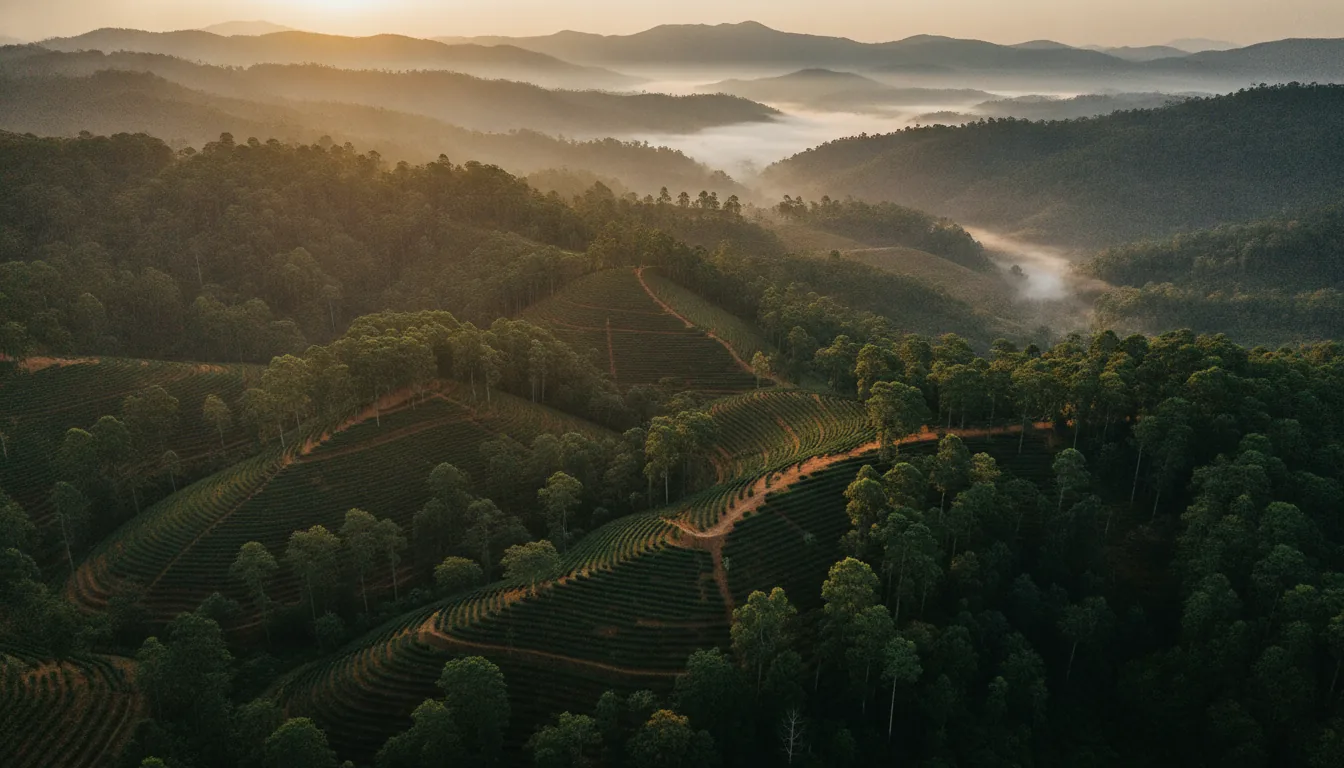

You are trying to work out how much coffee estate to own, and the listings only make it harder. Each one quotes a different acreage at a different price, as if the answer were a number to solve for. It is not. The right size is set by what you want from the land, and it starts smaller than the market suggests.
The right size is how much of a managed coffee estate you want to own and tend, from a registered half-acre up. A half-acre is the minimum and a complete, registered unit in your own name. Larger parcels are available. Size is a question of intent, not yield or budget math.
Table of Contents
How much coffee estate you should actually own
The answer is simple: as much managed estate as fits what you want from it — and no less than a registered half-acre. That half-acre is both the minimum and a complete unit held in your own name. Anything beyond it is a decision about intent, not an obligation.
Most listings frame the choice around acres and price. But that frame answers a different thing entirely — what land costs, not how much you should hold. Here, ownership starts at a half-acre in your own name and grows only as far as you choose to take it. Begin with what you want the land to do for you, then size it to match. And the right place to start is the floor: the smallest parcel you can own.
The smallest estate you can own
The smallest is a half-acre of managed coffee estate — 20 guntas — registered in your own name. It is the minimum unit and a complete one, with its own land record. You do not need to buy acres to own real, managed land.
In Karnataka, land is measured in guntas, and 1 acre is 40 guntas, so a half-acre is 20 guntas, close to 21,780 square feet. That is a defined, registered extent — not a share or a token — and it carries the same managed care as any larger parcel. For what you own at each size and how the title works, the Estate-Size page covers the detail. And knowing the floor is a half-acre raises the obvious next point: whether that is actually enough.
Why a large estate isn’t what makes it worth it
A half-acre is a complete, registered, managed unit, worth owning on its own. You do not need a large estate for it to count. A larger holding gives you more land to visit and pass on — not a better title or better care.
The market implies otherwise, because listings run from a few acres to a hundred and more. That is inventory framing, not guidance. A half-acre gives you registered land in your name, farmed and protected the same way as the largest parcel on the estate. Size adds scale, not legitimacy. What it does change is what the land can be for you, which is the real decision.
Matching size to what you want – a half-acre or several
Match the size to your intent. A half-acre suits an owner who wants a personal foothold to visit and belong to. Several acres suit a family building a larger holding to grow into and pass on as land. Both are registered in your name and managed the same way.
Think in terms of use, not acreage. If you want a place that is yours in the hills — somewhere you go as an owner walking your own coffee rows — a half-acre is a full answer. If you are thinking across a family and across years, a larger parcel gives you more land to hold together and hand on, since a half-acre passes to your family as land, not as a company share. Confirm any inheritance detail with your own advisor. Entry and premium formats sit on this same spectrum — the same working estate at different scales. And once you have a size in mind, it helps to know what actually shifts as you scale up.
What changes as the estate gets bigger
As the estate gets bigger, the scale of land and crop area grows: more coffee, pepper and timber under your name. What does not change is your registered title or the managed service, which is delivered per owner at every size.
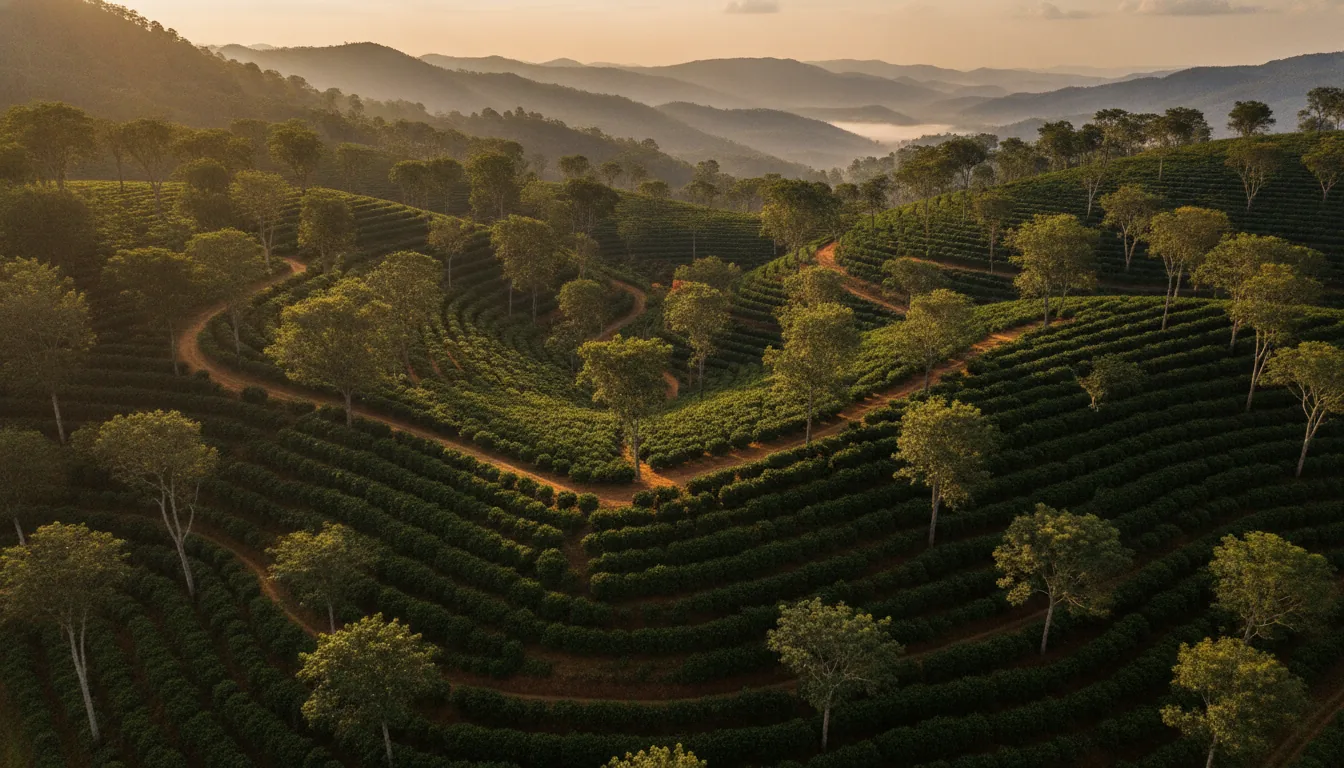
A larger parcel means more rows to walk and a bigger extent on your land record. It does not mean a different class of ownership or a higher tier of care. The agronomy, security, roads, fencing and water, and your dedicated relationship manager reach a half-acre exactly as they reach several acres. Bigger is more of the same land, held the same way — which points to what holds steady no matter the size.
What stays the same at every size
At every size, three things stay the same: the land is registered in your own name, the estate is managed the same way per owner, and coffee, pepper and timber grow together as one working estate. Only the scale of what you own changes.
This is the point the listings miss. Whether you hold a half-acre or several acres, you hold a registered title, you receive the same managed service, and your land is part of the same three-crop estate. Size is the one variable; everything that makes the ownership real and cared-for is constant. For how that ownership works across sizes, see how estate size works.
Frequently asked questions
What is the smallest coffee estate I can own?
A registered half-acre, which is 20 guntas, held in your own name. It is the minimum and a complete, managed unit with its own land record. Larger parcels are available if you want more.
Can I add more land later?
Yes. A half-acre is the minimum, and larger parcels are available, so you can start with a foothold and hold more over time. The managed service and your title work the same way at any size.
Does what I own change as the estate gets bigger?
No. Your registered title and the managed service stay the same at every size. Only the scale of land and crop area changes. A bigger parcel is more land held the same way, not a different kind of ownership.
Is coffee, pepper and timber grown at every size?
Yes. Every parcel is part of one working estate of coffee, pepper and timber. A half-acre and a several-acre holding carry the same three-crop mix and the same managed care.
Start at the floor, then size to intent
The question was never really how much coffee estate you should own — it was what you want the land to be for you. Start at the floor: a registered half-acre in your own name, complete and managed, is real ownership on its own terms. From there, size is a choice, not a requirement. A larger holding gives you more land to walk, hold together and pass on — but not a better title and not better care. Those stay constant at every extent.