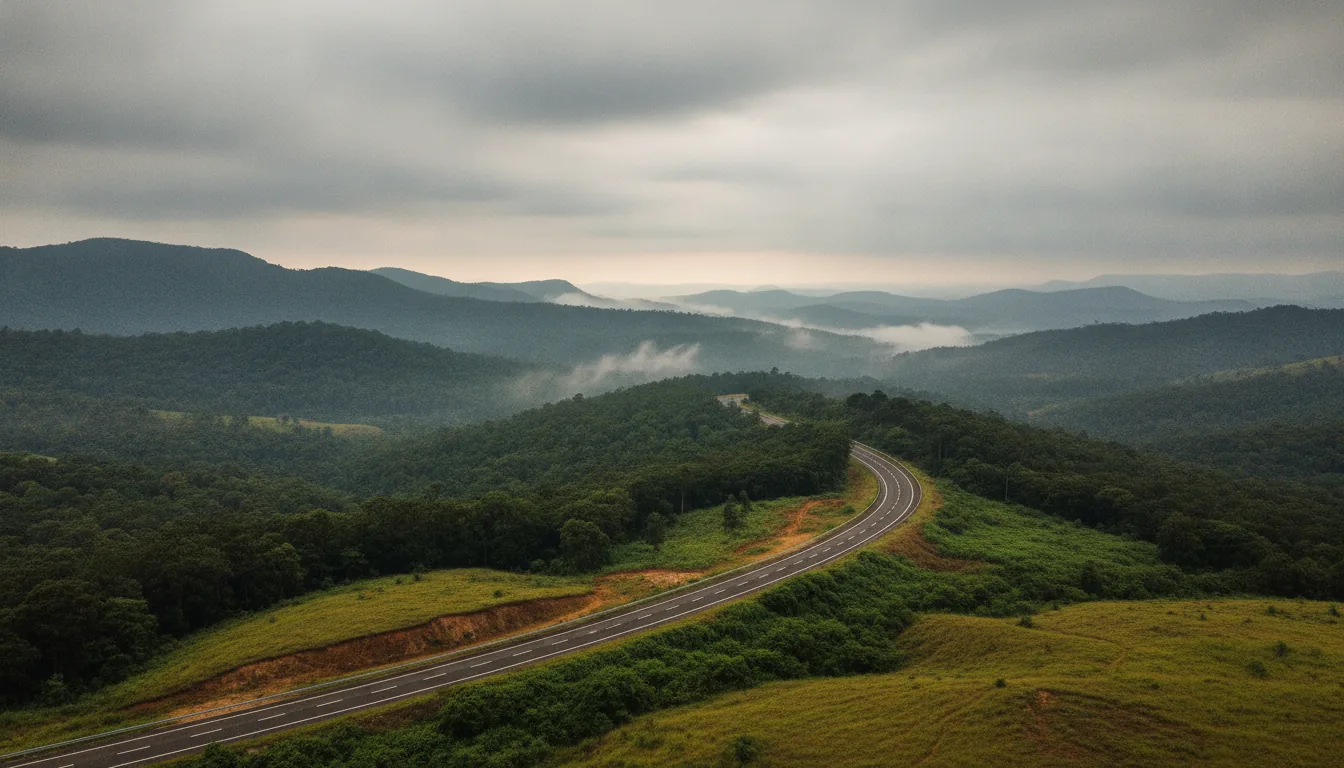
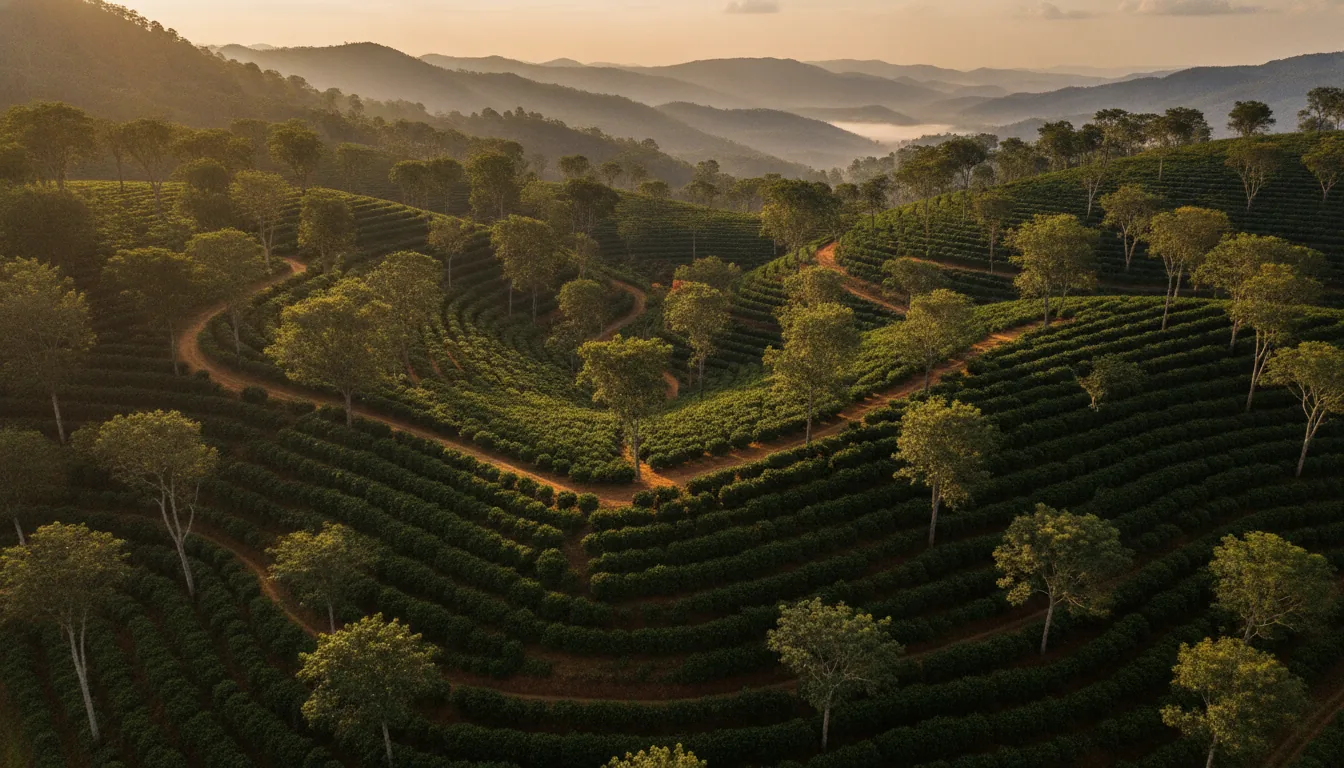
Search for a coffee estate for sale in Karnataka and you will find listings that use the same word for very different things. This guide covers where estates come up, what you will be offered, and how to buy one cleanly, with Coffee Board of India figures behind the comparisons.
The short answer
Every coffee estate for sale in Karnataka sits in one of three belts in the Western Ghats: Belur-Sakleshpur in Hassan district, Chikkamagaluru, and Kodagu (Coorg). On the market you will find working estates of every size, raw plantation land, managed estates, and half-acres of managed coffee estate registered in the buyer’s own name. A clean purchase rests on clear land records, a registered sale deed and mutation. Euphora, in Belur-Sakleshpur, is the estate Acres Community has opened.
At a glance
- Three coffee belts – Hassan, Chikkamagaluru and Kodagu, all in the Western Ghats.
- Know the format – Working estate, plantation land, managed estate or a managed half-acre.
- Clean records first – RTC, encumbrance certificate and a registered sale deed.
- Euphora is open – A managed coffee, pepper and timber estate in Belur-Sakleshpur.
In this guide
Where in Karnataka do coffee estates come up for sale
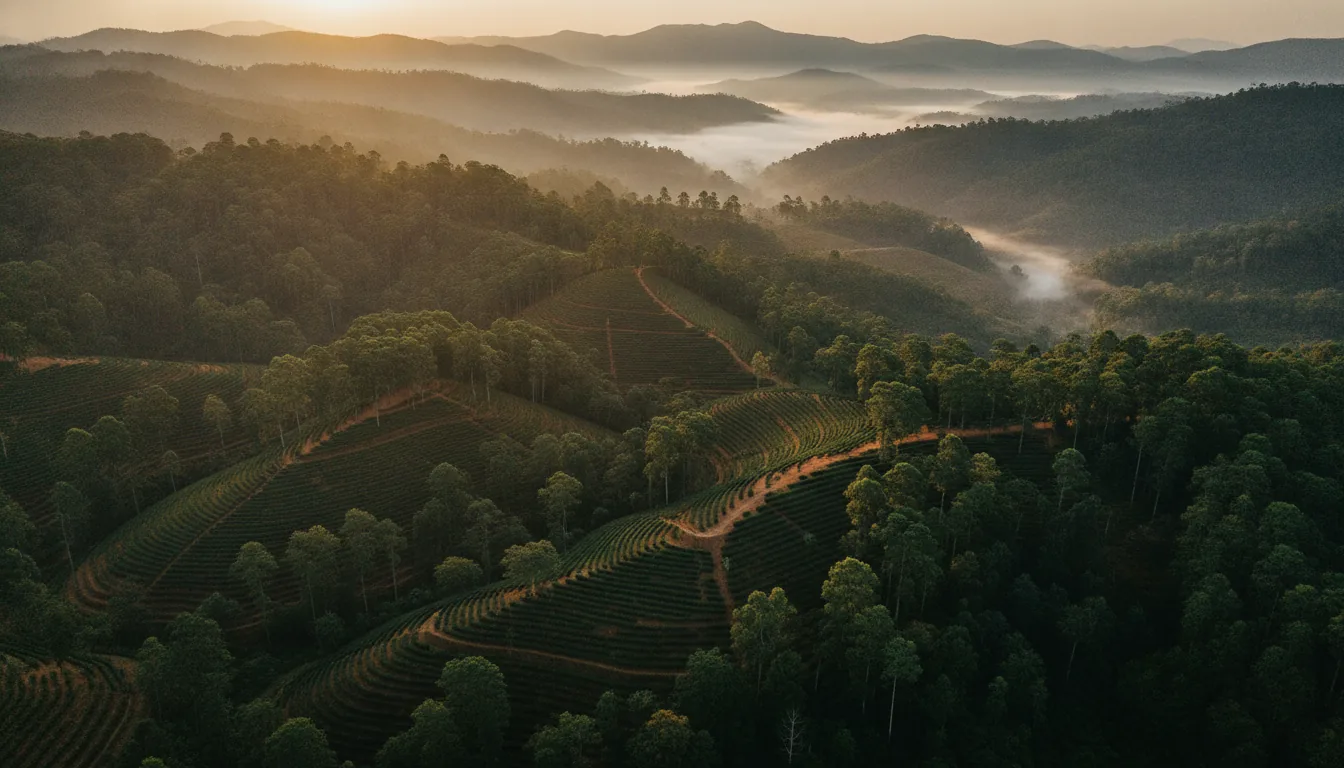
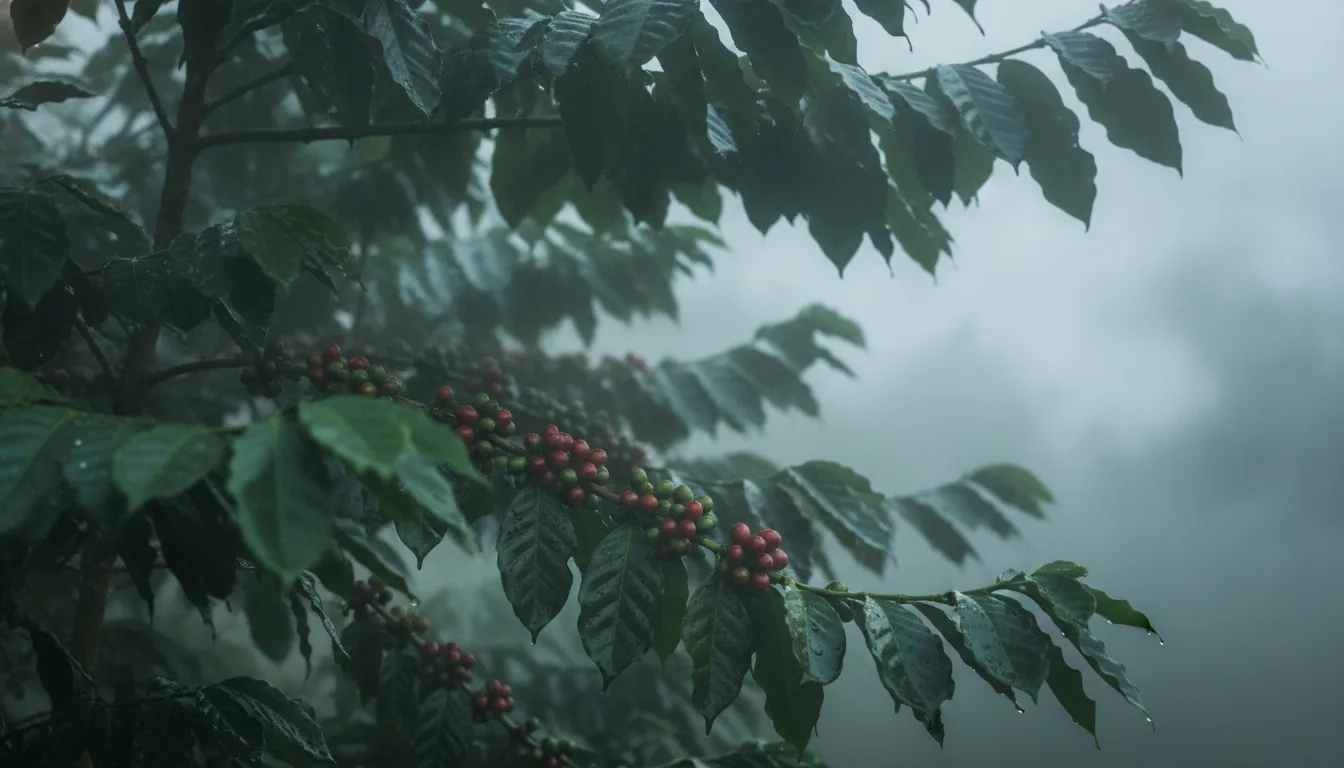
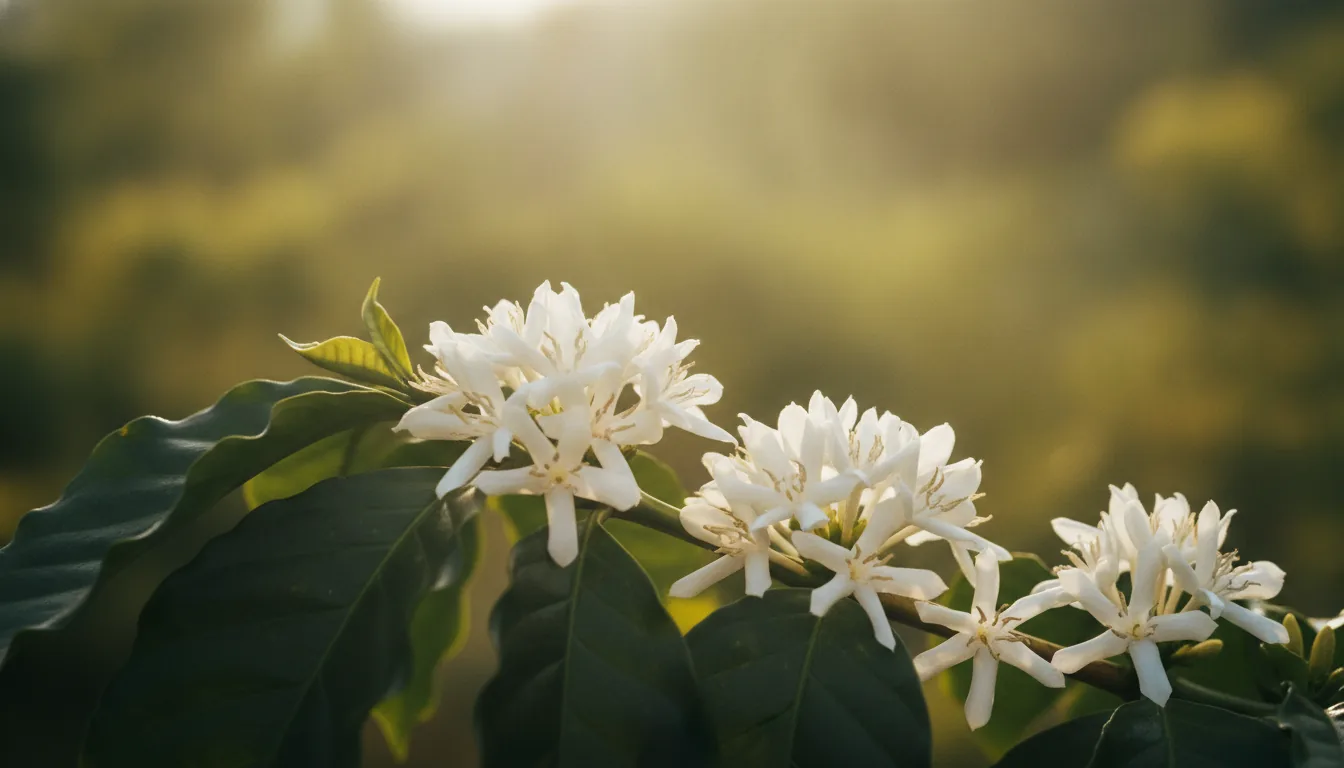
Coffee estates in Karnataka come up for sale in three belts of the Western Ghats: Belur-Sakleshpur in Hassan district, Chikkamagaluru, and Kodagu, also known as Coorg. All three grow arabica and robusta under shade, with pepper and other crops planted between the coffee.
Locals call this hill country the Malnad. The Coffee Board of India maps each belt as its own coffee region, and the differences a buyer should know are height, rain and what grows alongside the coffee. No belt is better than another. They are different, and the table shows how.
| Belt | District | Coffee Board region | Elevation | Rainfall | Main coffee | Typical intercrops | What Acres has here |
| Belur-Sakleshpur | Hassan | Manjarabad | 900 to 1,100 m | 1,000 to 2,500 mm | Arabica and robusta | Pepper, cardamom, orange, arecanut, banana | Euphora, open now |
| Chikkamagaluru (incl. Mudigere) | Chikkamagaluru | Chikmagalur; Bababudangiris, known as the birthplace of coffee in India | 700 to 1,200 m (Bababudangiris 1,000 to 1,500 m) | 1,000 to 4,500 mm | Arabica and robusta (Bababudangiris: arabica) | Pepper, cardamom, arecanut, orange, vanilla | No current Acres estate. |
| Kodagu (Coorg) | Kodagu | Coorg | 750 to 1,100 m | 1,000 to 2,500 mm | Arabica and robusta | Pepper, cardamom, orange, banana, arecanut | No current Acres estate. |
Listings name the taluks and villages inside each belt. In Hassan you will see Sakleshpur, Belur and Alur. In Chikkamagaluru, a coffee estate for sale in Mudigere, Kottigehara or Koppa is common. In Kodagu, listings name Madikeri, Virajpet and Somwarpet.
For a closer look at each belt, read our guides to coffee estates in Sakleshpur, Chikmagalur coffee estates and coffee estates in Coorg, or set the three side by side in our Sakleshpur vs Coorg vs Chikmagalur comparison.
Our buying guides by belt cover coffee estates for sale in Coorg and in Chikmagalur. If the drive from the city matters most, start with our guide to coffee estates near Bengaluru.
These three belts are not a small corner of Indian coffee. Between them, they grow most of it.
Why is Karnataka where India’s coffee estates are
Karnataka is where India’s coffee estates are because the state grows close to 70% of the country’s coffee. The Coffee Board of India’s post-blossom estimate for 2026-27 puts Karnataka’s crop at 2,79,275 tonnes out of a national 4,04,000 tonnes.
That crop comes from three districts. Kodagu is the largest coffee producer in Karnataka at 1,31,420 tonnes, most of it robusta. Chikkamagaluru follows at 1,02,155 tonnes and grows the most arabica of the three. Hassan, home of the Belur-Sakleshpur belt, adds 45,700 tonnes.
The holdings behind those numbers are mostly small. Of Karnataka’s 82,282 coffee holdings in 2024-25, 80,071 were under 10 hectares, by Coffee Board figures. A market this large and this varied means the word “estate” covers very different things.
What kinds of coffee properties are on the market
Coffee property on the market in Karnataka comes in five common formats: working coffee estates of any size, raw or neglected plantation land, estates sold with a homestay or resort building, managed estates, and half-acres of managed coffee estate registered in the buyer’s own name.
Listings run from about one acre to well over a thousand. Search for a coffee plantation for sale and you will see all five formats side by side, often under the same word. Knowing which one you are looking at is the first step to comparing them fairly.
| Format | What usually changes hands | What to ask |
| Working coffee estate (any size) | Planted coffee land with its shade trees and intercrops, sold as a running estate. | Does the title cover the full area being sold, and who runs the estate after handover? |
| Raw or neglected plantation land | Plantation land with old, unkept or little planting. | What needs replanting, and what do the land records and conversion status show? |
| Estate with a homestay or resort building | Coffee land sold together with a built property. | Which part is agricultural, which part is converted, and do the records match both? |
| Managed estate | Estate land where a team handles farming and upkeep for the owner. | What does management cover, who provides it, and whose name is on the land record? |
| Half-acre of managed coffee estate in your own name (the Acres Community model) | A registered half-acre or more, with its own land record, inside an estate run as one working whole. | Is the unit registered in your name, and what does the managed service include? |
None of these formats is wrong. Each suits a different buyer, and our guide to what “coffee estate” actually means explains how the term is used. If you are weighing bare land rather than a planted estate, see our guide to agricultural land for sale in Karnataka’s coffee districts.
Knowing the format tells you what is being sold. It does not tell you what you will live with after the sale.
What do most listings leave out
Most listings leave out the land records, who runs the estate day to day, and whether the water and the road hold up through the monsoon. They give acreage, crops and a phone number, so the buyer has to ask for the rest.
Before a site visit, ask for these:
- The RTC and survey numbers for the full area being sold.
- An encumbrance certificate, to see any loans or charges on the land
- Whether any part of the land has been converted to non-agricultural use
- Who will manage the estate after handover, and what that covers
- Where the water comes from, and how the road holds in the wettest months
A seller with a clean estate will have these answers ready. Our list of questions to ask before buying a coffee estate goes further, and our piece on what makes a coffee estate worth more explains why the same answers shape an estate’s value.
Before any of those questions, a city buyer usually has a more basic one.
Can I buy a coffee estate in Karnataka if I am not a farmer
Under current law, a resident Indian who is not a farmer can buy a coffee estate in Karnataka. The Karnataka Land Reforms (Second Amendment) Act, 2020 removed the old rules that kept agricultural land for farmers and capped a buyer’s non-farm income.
The 2020 amendment did this by omitting Sections 79A and 79B. The state government has since said it intends to restore them, but no law bringing them back has been passed so far. Holding ceilings still apply. Because this can change, confirm the position with your own lawyer at the time of purchase. Our guide on who can buy agricultural land in Karnataka covers the detail.
NRIs and OCIs cannot buy agricultural or plantation land in India under FEMA, and the 2020 change in Karnataka does not alter that. Under the FEMA rules, they can hold such land only if they inherit it.
Once you know you can buy, the next question is what a clean purchase looks like on paper.
What does a clean purchase of a coffee estate need
A clean purchase of a coffee estate needs three things: land records that match the land, a sale deed registered at the Sub-Registrar’s office, and mutation that puts your name into the revenue record. Registration transfers the title; mutation completes the record.
Before you agree to buy, see the RTC, also called the Pahani, which is the land’s record of rights, tenancy and crops. Ask for the survey sketch and an encumbrance certificate too. Karnataka keeps the RTC on its Bhoomi land records system and handles registration and the encumbrance certificate through Kaveri.
Our guide to estate land records (RTC, mutation, EC) explains each document, and our guide to the buying process from enquiry to title deed sets out every step in order.
Records settle who owns the land. They do not settle who looks after it once you are back in the city.
What does owning a half-acre of managed coffee estate mean
Owning a half-acre of managed coffee estate means you hold a registered half-acre in your own name, with its own land record, while a managed service runs the farming, security and upkeep. The land is yours. The daily work is handled for you.
At Acres Community, “managed” covers four things:
- Farming and crop care for the coffee, pepper and timber
- Security for the estate
- Roads, fencing and water
- A dedicated relationship manager for each owner
Half-acre is the minimum, and larger parcels are available. You can sell your half-acre independently, with Acres Community holding first right of refusal. It passes to your family as land, not as a company share.
If you are searching for a managed coffee estate for sale, this is what one looks like in practice. Our guides explain what a managed estate is, what owning a coffee estate in Karnataka involves, and how much coffee estate you should own.
One estate offers this model today.
Which coffee estate can I buy today
The coffee estate you can buy today is Euphora, a 17-acre managed coffee, pepper and timber estate in the Belur-Sakleshpur corridor of the Western Ghats. Owners buy a registered half-acre of managed coffee estate, or more, in their own name.
Euphora sits in Hassan district, in the Manjarabad coffee region on the table above. See Euphora, our managed coffee estate in Sakleshpur, for the estate itself, or read our page on coffee estate for sale in Sakleshpur. A site visit is the best way to walk the land, the planting and the roads for yourself.
Enquire for current pricing or book a site visit to Euphora.
Looking in Chikkamagaluru or Kodagu? Acres Community has no estate for sale in either belt right now. Register interest and we will contact you if that changes.
Frequently asked questions
Where is coffee mostly grown in Karnataka?
Coffee in Karnataka is mostly grown in Kodagu, Chikkamagaluru and Hassan districts, in the Malnad hill country of the Western Ghats. Together these three districts make up close to 70% of India’s coffee crop, according to the Coffee Board of India.
Which district in Karnataka is the largest producer of coffee?
Kodagu, also called Coorg, is the largest coffee-producing district in Karnataka. The Coffee Board of India’s post-blossom estimate for 2026-27 puts its crop at 1,31,420 tonnes, mostly robusta, ahead of Chikkamagaluru and Hassan.
Where can I buy a coffee estate in Sakleshpur?
You can buy a half-acre of managed coffee estate at Euphora, a 17-acre coffee, pepper and timber estate in the Belur-Sakleshpur corridor run by Acres Community. Each unit is registered in the owner’s name, and larger parcels are available.
How do I buy agricultural land in Karnataka?
To buy agricultural land in Karnataka, check the RTC, survey sketch and encumbrance certificate, register the sale deed at the Sub-Registrar’s office, then complete mutation so the revenue record shows your name. Confirm your eligibility with a lawyer before you sign.
Can NRIs buy a coffee estate in Karnataka?
No. Under FEMA, NRIs and OCIs cannot buy agricultural or plantation land in India, and that includes a coffee estate in Karnataka. They can hold such land only through inheritance, and should take independent legal advice on their own case.
Is there a minimum size for a managed coffee estate?
At Acres Community, the minimum is a half-acre of managed coffee estate, registered in your own name with its own land record. Larger parcels are available under the same managed service.
Coffee country you can own
While the world visits, you belong.
Acres Community sells half-acres of managed coffee estate, each registered in the owner’s own name. Enquire for current pricing at Euphora, or book a site visit and walk the land. Searching in Chikkamagaluru or Kodagu? Register interest.