
Can I buy agricultural land in Karnataka if I have never farmed
Yes. Since the 2020 amendment to the Karnataka Land Reforms Act, 1961, farming experience is not a condition of purchase in Karnataka. Sections 79A, 79B and 79C, which restricted who could acquire agricultural land, were omitted by that amendment.
Before 2020, the Act filtered buyers by who they were. It asked whether you were an agriculturist, and it asked what you earned outside farming. Both filters are gone. The amendment omitting those three sections was notified on 13 July 2020, and the reporting at the time described the effect in one sentence: anyone can buy.
So the first gate is open. What follows on this page is everything that is still shut, or half shut, or currently being argued over. Eligibility to buy is a separate question from what you end up holding at the end of a purchase, and the second question is answered in detail in the documents that come to you at handover. It also sits inside the wider picture of what ownership of an Acres Community estate involves.
Table of Contents
What did the 2020 amendment to the Karnataka Land Reforms Act actually change
The amendment omitted Sections 79A, 79B and 79C in full, ending the income test and the restriction on acquisition by non-agriculturists. It also raised the ceiling on holdings under Section 63 and amended Section 81 to restrict mortgages except to specified institutions.
Section 79A is the one that decides this page’s question. It prohibited the acquisition of agricultural land by a person with an assured annual income of ₹25,00,000 or more from non-agricultural sources. That prohibition was eliminated outright. Sections 79B and 79C were omitted in the same stroke. The sources confirmed for this page record the omission of all three and the detailed working of 79A; where they do not set out the internal working of 79B and 79C, this page does not fill the gap.
Section 80 is reported inconsistently. One account has it repealed alongside the 79 series. Another has it surviving with a new title, Restrictions in transfer of certain land, and with the clauses barring transfer to non-agriculturists deleted. Those accounts were not reconciled, so only the practical effect is stated here: the bar on transferring agricultural land to a non-agriculturist is gone. Section 81 was amended so that mortgages are restricted except in favour of specified institutions such as cooperative societies and financial institutions. A new Section 80-A was inserted, which prevents conditions under the Act being relaxed for land granted during periods of prohibition under the 1978 statute protecting land granted to Scheduled Castes and Scheduled Tribes.
One of those omissions carries a number you have almost certainly already read somewhere.
Is the ₹25 lakh income limit still real
No. The ₹25 lakh figure came from Section 79A, which barred anyone with an assured annual income of ₹25,00,000 or more from non-agricultural sources from acquiring agricultural land. Section 79A was omitted in 2020, and the income test went with it.
This is the single most misreported fact about buying land in Karnataka, and it is worth understanding why it persists. The figure was recent law. An amendment in 2015 had raised the income threshold from ₹2 lakh to ₹25 lakh, so ₹25 lakh was the live number right up until the 2020 omission. Five years of articles, checklists and advice were written against it.
The result today is a search page that argues with itself. Widely-read guides still print ₹25 lakh as a current rule, and they do not even print it in the same direction: some tell readers they may buy only if non-agricultural income is below ₹25 lakh, others tell them they need income above it. Several go further and instruct the reader to file an income affidavit or to seek Deputy Commissioner permission on the strength of that figure. Consolidated copies of the Act still circulating online reinforce the error, because they show Sections 79A, 79B and 79C as in force and are marked as last amended in 2015. That version predates the amendment that removed them.
The practical consequence for a well-paid professional is simple. Your income does not disqualify you, no matter what it is, and there is no threshold to declare yourself under. Which raises the next question, since so much of the surviving advice tells you to go and get permission from someone.
Do I still need a farmer certificate or Deputy Commissioner permission
No. Eligibility no longer depends on agriculturist status, so no farmer certificate or income affidavit is needed to establish your right to buy. The Act defines an agriculturist as a person who cultivates land personally, a test that no longer gates purchase.
The instruction to obtain Deputy Commissioner permission belongs to the pre-2020 position, when a buyer’s status and income determined whether a purchase was permitted at all. With Sections 79A and 79B omitted, the permission that flowed from that test has nothing left to attach to. Guidance still repeating it is describing a rule that was removed, not a step you have missed.
Two things are worth separating from this. Changing the use of agricultural land to a non-agricultural purpose is a different process under different provisions, and it is not covered on this page. And the registration and record work that a purchase does require, from enquiry through to a deed in your name, is its own subject: see how a purchase moves from first enquiry to a registered title. With who you are settled, the next limit is how much.
How much agricultural land can one person or family own in Karnataka
Section 63 sets the ceiling. The 2020 amendment raised it from 10 to 20 units for an individual or a family of up to four, and to a maximum of 40 units for larger families. One unit is reported as 5.4 acres of dry land.
The full formula reads as follows. An individual, or a family of not more than four members, may hold up to 20 units. A family of five or more may hold 20 units plus four additional units for every member beyond five, with the aggregate not extending to forty units. Reported in acres, that is a rise from 10.8 to 108 acres for the first category, and from 108 to 216 acres for the second. Those acre figures are as reported by the sources consulted for this page and should be treated as reporting, not as an official conversion table.
For the reader of this page the number matters less than the distance from it. A half-acre of managed coffee estate, or several half-acres held together, sits nowhere near a ceiling written in hundreds of acres. The holding limit is a real provision of the Act and worth knowing by name, but it is not the constraint that will decide your purchase. What might make a difference is the kind of land you are looking at.
Is a coffee or plantation estate treated differently from ordinary farmland
Partly, and the current detail could not be confirmed for this page. The Act defines plantation crops as cardamom, coffee, pepper, rubber and tea, and its arrangement of sections places a provision on plantations inside the chapter dealing with exemptions.
That provision is Section 104, titled Plantations, and it sits in Chapter VIII, the exemptions chapter. The Act’s own statement of objects records that plantations receive exemptions from ceiling limits. The operative text of Section 104 as it currently stands was not retrieved during research for this page, so nothing is claimed here about how that exemption applies today. If the treatment of plantation land matters to your decision, have the current text checked against the Act before you rely on it. Being told what is not confirmed is more useful than being told a clean answer that may be five years out of date.
One point of vocabulary, since the statutory list can mislead. Cardamom appears in the Act’s definition of plantation crops. An Acres Community estate is worked as coffee, pepper and timber. The definition is the law’s, not a description of the crops on the ground. Beyond the crop, some land carries restrictions that have nothing to do with who is buying it.
Which land can nobody safely buy, whoever they are
Eligibility is about the buyer; some restrictions attach to the land itself. Land granted under protections for Scheduled Caste and Scheduled Tribe grantees, and forest-adjacent or eco-sensitive land, are the categories most worth having checked before you commit to a parcel.
The 2020 amendment is itself the clearest signal here. While it was removing the restrictions on who could buy, it inserted Section 80-A, which prevents conditions under the Act being relaxed for land granted during periods of prohibition under the 1978 statute protecting grants to Scheduled Castes and Scheduled Tribes. That category was deliberately left protected while others were opened up.
Alongside it, buyers and their advocates commonly check three things: whether the land was originally granted under those protections, in which case its transferability may be restricted however many hands it has passed through; whether it is forest-adjacent or inside an eco-sensitive zone, where farming, construction and fencing can all be limited; and whether any part of it sits in a lake bed or a buffer zone. Each of these is checked in the land records rather than assumed from a site visit, and the record trail is set out in the land records behind an estate, and what each one proves. That is the land side. There is one remaining restriction that attaches to the buyer, and it is absolute.
Can an NRI or OCI buy agricultural or plantation land in India
No. A non-resident Indian or an OCI card holder cannot purchase agricultural land, plantation property or a farmhouse in India. The restriction sits in the Foreign Exchange Management (Non-Debt Instruments) Rules, 2019, and it applies nationally, not only in Karnataka.
This is a foreign exchange restriction rather than a Karnataka one, which is why the 2020 amendment did not touch it. The 2019 Rules took effect on 17 October 2019 and replaced the earlier regulations governing acquisition and transfer of immovable property in India. The route recognised in the source consulted for this page is inheritance: agricultural property can come to a non-resident that way. Purchase cannot.
Acres Community does not operate a purchase route for non-residents, and nothing on this page should be read as a way around the rule. What ownership looks like when a family member is abroad is covered separately in [what changes for an NRI owne. Anyone in this position should take their own advice on their specific circumstances before acting.
Could these rules change again before I buy
Possibly. In September 2024 the Chief Minister announced an intention to restore Sections 79A and 79B, arguing that the 2020 removal weakened protections for farmers. Research for this page found no source confirming that reinstatement has been enacted.
The 2020 changes were made by one government and have been publicly opposed by the one that followed. The announced intention was to bring back the two sections that this page tells you are gone. As matters stand, the 2020 position holds and the restrictions remain omitted. But absence of a source confirming reinstatement is not the same as proof that nothing has changed, and this is not a settled corner of the law.
The practical instruction is short. Before you sign anything, have your advocate confirm the current text of the Karnataka Land Reforms Act as at that date, rather than relying on any article, including this one. It is also why year-stamped guides are unreliable: a page that was accurate in 2019 is wrong today, and a page that is accurate today could be wrong later. Ask what the Act says now.
Frequently asked questions
Who cannot buy agricultural land in Karnataka?
Since the 2020 amendment, no resident Indian is barred on grounds of income or occupation. The restrictions that remain attach either to residency status, because non-residents cannot purchase, or to particular categories of protected land.
Can a salaried person buy agricultural land?
Yes. A salary from non-agricultural work is not a disqualification in Karnataka, because the income test in Section 79A was omitted in 2020. The size of the salary makes no difference to eligibility under the Act.
Can a government employee purchase agricultural land?
The Karnataka Land Reforms Act has set no occupational bar on purchase since the 2020 amendment, so government service is not a disqualification under the Act. Anything arising from your own terms of service is a separate matter and is worth checking with your employer.
Can a normal person buy agricultural land in India?
The position differs from state to state, and this page covers Karnataka. In Karnataka, a resident Indian with no farming background may buy, following the 2020 omission of Sections 79A, 79B and 79C.
Can a non-agriculturist buy agricultural land in Karnataka?
Yes. The sections that restricted acquisition by non-agriculturists were omitted by the 2020 amendment. The Act’s definition of an agriculturist, a person who cultivates land personally, no longer determines who is allowed to buy.
Once you know you can buy
Eligibility is the first gate, not the last question. If the answer here is that you are allowed to buy, what follows is the harder and more interesting part: what you would actually be buying, and what comes to you when it is done.
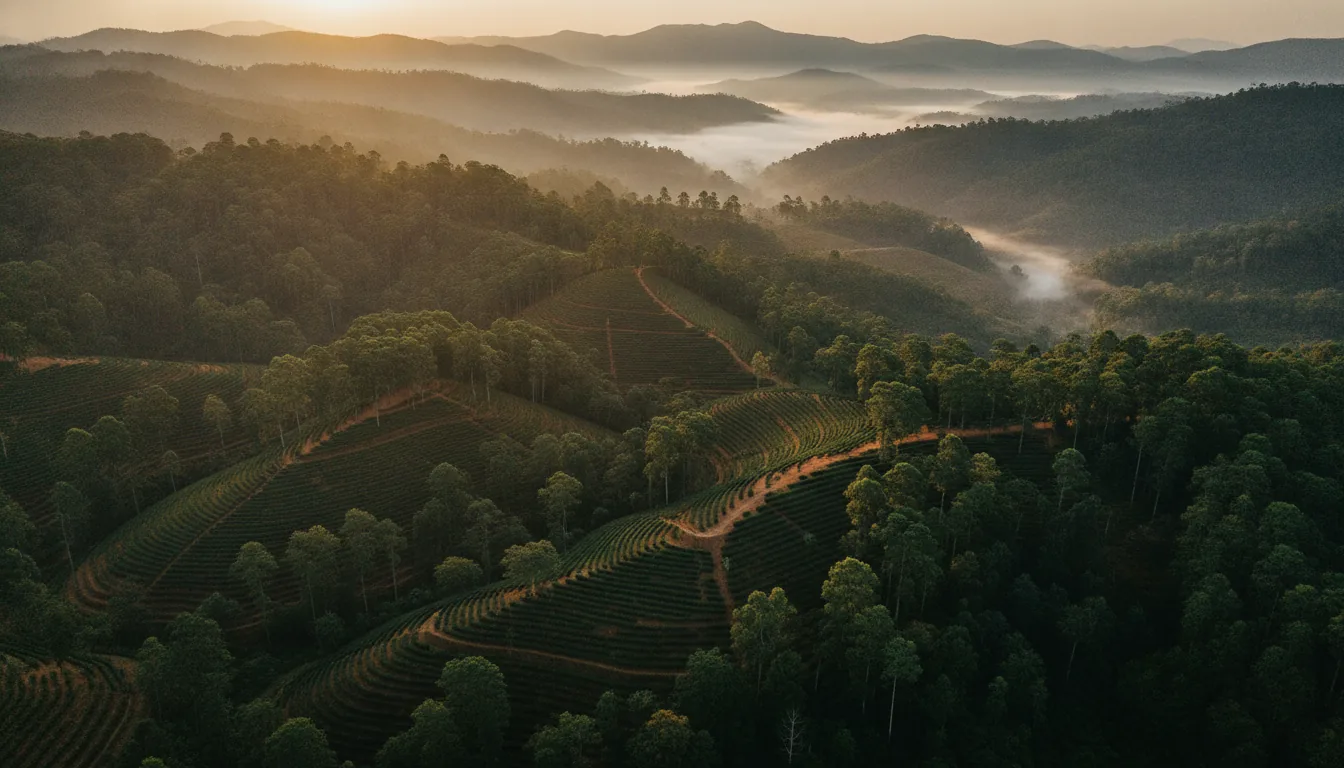
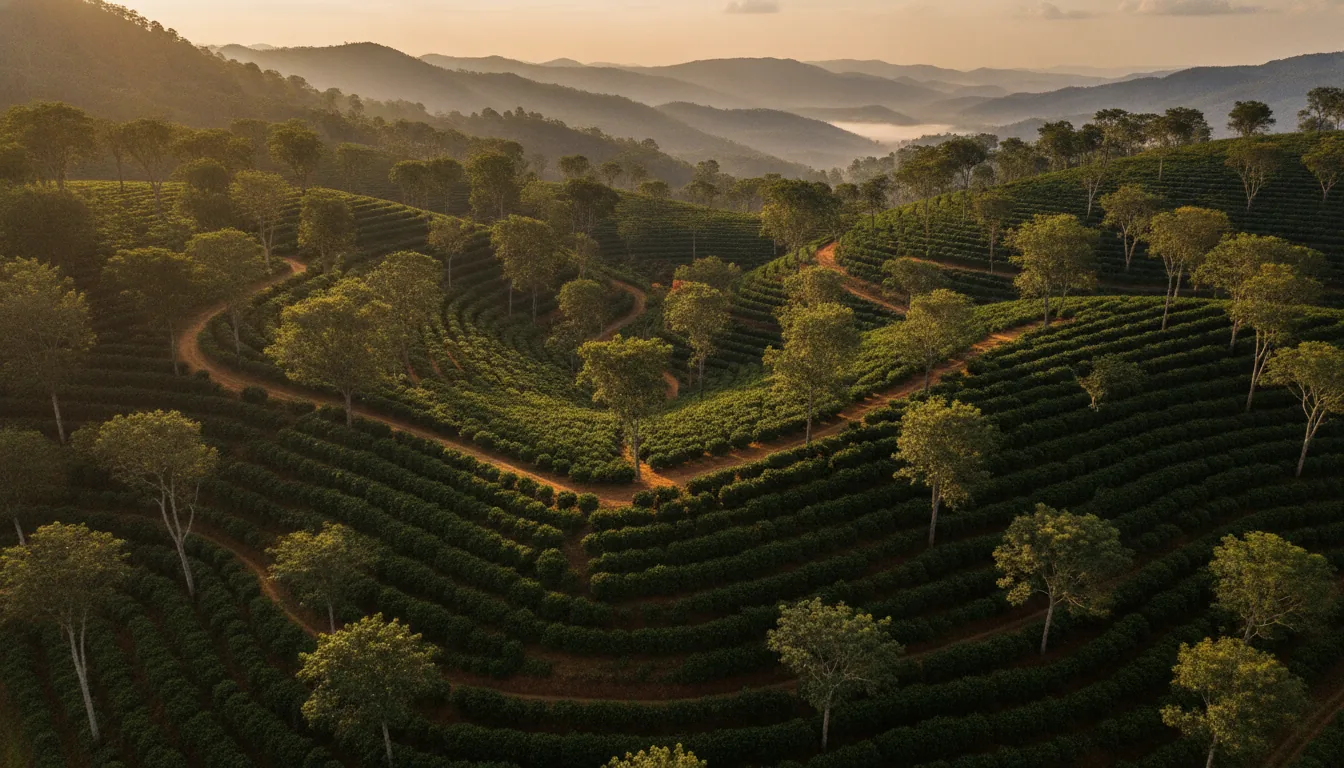
Acres Community sells half-acre units of managed coffee estate in the Belur and Sakleshpur belt. Half an acre is the minimum and larger parcels are available. Each half-acre is a properly registered piece of land in the owner’s own name with its own land record, and the estate around it is farmed and cared for, secured, and served by roads, fencing, water and a dedicated relationship manager. Read how ownership works across an Acres Community estate for the full picture, or look at the estate Acres Community is selling in Belur-Sakleshpur.
When you want the position confirmed for a specific parcel, write to us and ask. We will tell you what needs checking, and you can enquire for current pricing at the same time.
While the world visits, you belong.