You are weighing Coorg against Sakleshpur and Chikmagalur, and you want the honest measure of the place, not a per-acre price tag and not a plantation tour. This is Coorg coffee country described the way an owner would meet it: the crops that share the ground, the terrain that shapes them, and the year that runs through it all.
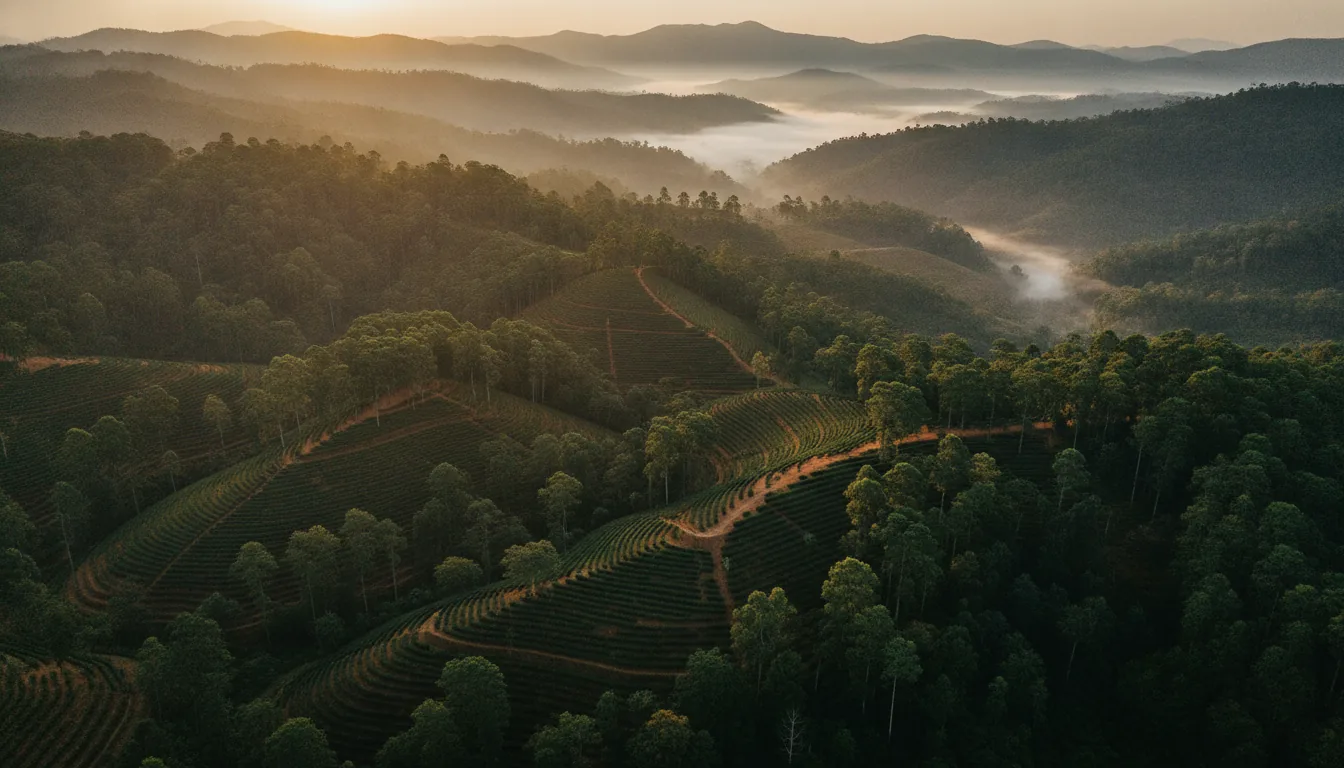
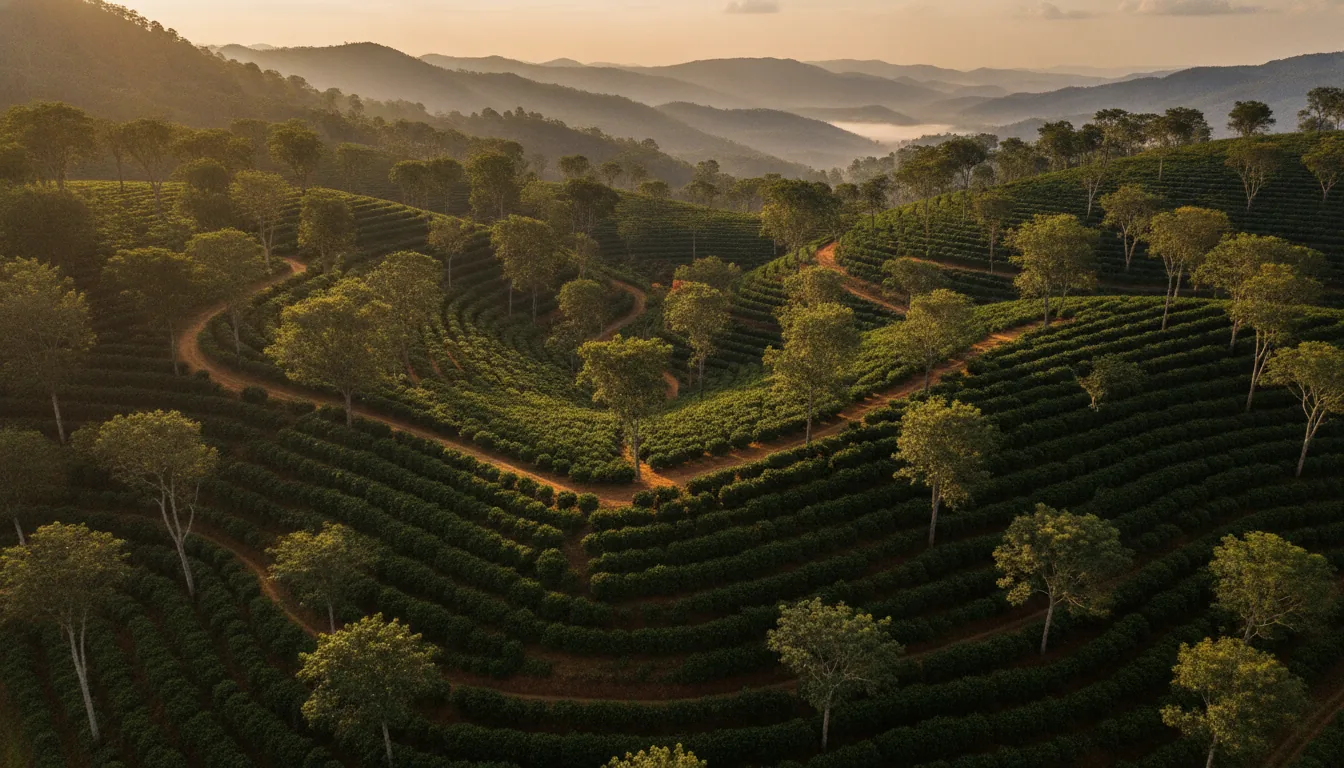
Coorg, officially the district of Kodagu, is the largest coffee and pepper district in India: a high, wet, shade-grown country where coffee shares the soil with pepper and cardamom. It is made up mostly of small holdings rather than a few giant estates, which is exactly why a managed half-acre sits naturally here.
Table of Contents
What makes Coorg’s coffee country different from Sakleshpur or Chikmagalur
Coorg, officially Kodagu, is the wettest and most Robusta-heavy of the three, and the most spice-rich. It is the largest coffee and pepper district in India, built mostly of small holdings rather than a few giant estates.
All three sit in the Western Ghats and all three grow good coffee, so the difference is one of character rather than category. Coorg carries more rain than either Sakleshpur or Chikmagalur, and that rain pushes its coffee toward Robusta and its shade canopy toward a dense spice mix. Pepper and cardamom are not add-ons here; they are part of how the land has been farmed for generations. And where a single large estate can define a stretch of Chikmagalur, Coorg reads as thousands of smaller holdings stitched together, a pattern that shapes everything from how the crop is grown to how ownership is held.
The fuller side-by-side of the three regions belongs in its own piece. Here the point is narrower: if you are drawn to Coorg specifically, you are drawn to the wet, spice-dense, smallholder version of coffee country, and that has real consequences for what you would own and grow. That reputation is not marketing. It rests on numbers.
Is Coorg really famous for coffee
Yes. Kodagu is the largest coffee and pepper producing district in India, and coffee is the backbone of its economy. It accounts for close to 44% of Karnataka’s coffee area and roughly half the state’s production.
Those figures describe the district, not any single holding, and they are worth reading as reputation rather than arithmetic. Coorg coffee is prized in the trade for its blue-tinged colour, clean beans and fine liquoring in the cup, and close to 80% of what the district produces is exported. Coffee is also woven into Coorg’s history: tradition holds that the shrub arrived generations ago in the time of the Coorg Rajahs, from seed carried out of Mocha, and it has shaped the hills ever since.
For someone considering ownership, the takeaway is simple. When you own a half-acre of managed coffee estate in this district, you are inside a coffee culture with real depth behind it, not a novelty crop in an unlikely place. What that coffee actually is, bean by bean, comes down to variety.
Arabica or Robusta: which does a Coorg estate grow
Mostly Robusta. Robusta covers roughly three-quarters of Coorg’s coffee area and leads in Madikeri, Virajpet, Ponnampet and Kushalnagar. Arabica is the main crop in the drier east, around Somwarpet, where the terrain suits it.
The split follows the rain. Coorg’s wetter western reaches favour Robusta, a hardier bean that handles heavy monsoon and lower elevations, while the drier eastern pocket around Somwarpet gives Arabica the cooler, gentler conditions it prefers. Neither is a lesser choice; they are two answers to two microclimates inside the same district.
For an owner, this matters less as a decision to make and more as a thing to understand. A managed coffee estate in Coorg will most often be Robusta-led, in keeping with the district, and the exact variety on any given piece of land follows the land itself. Coffee, though, is only the anchor crop. The canopy above it and the vines within it carry more.
What grows alongside the coffee – pepper and cardamom
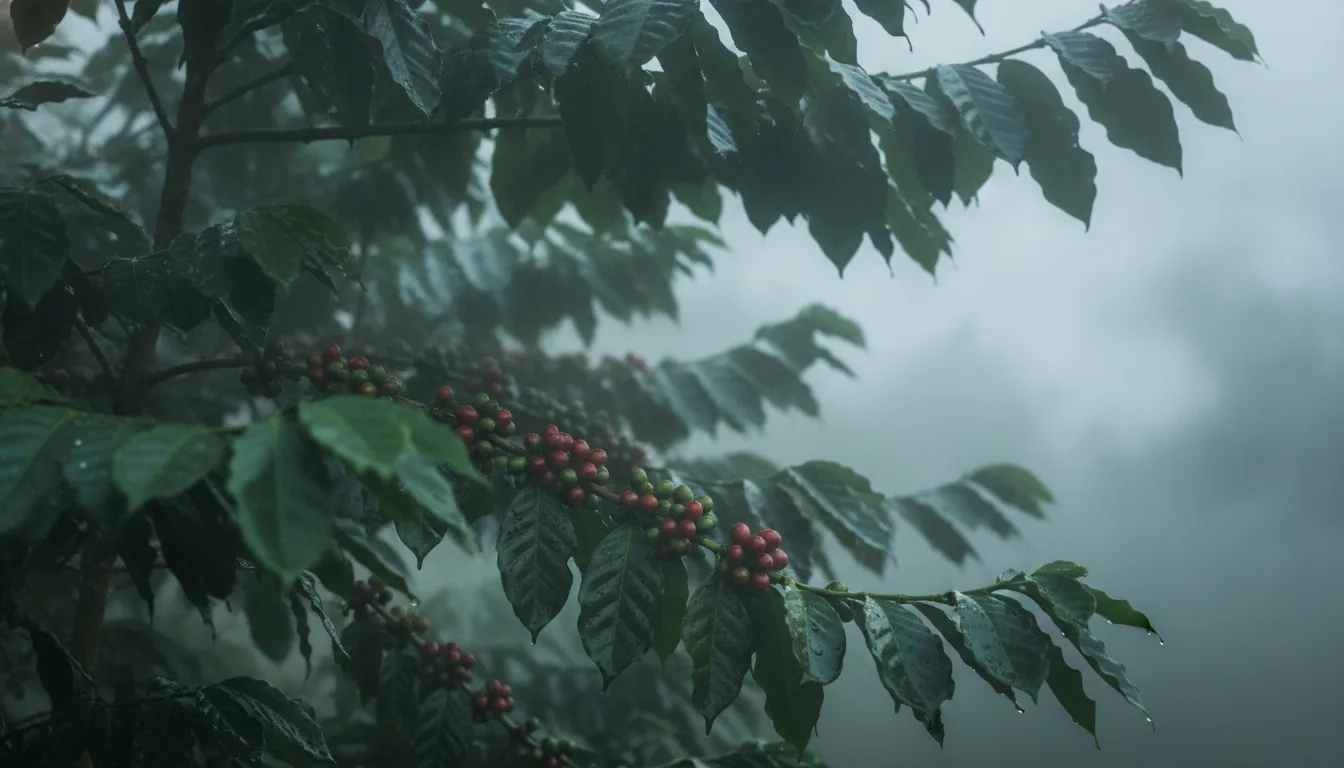
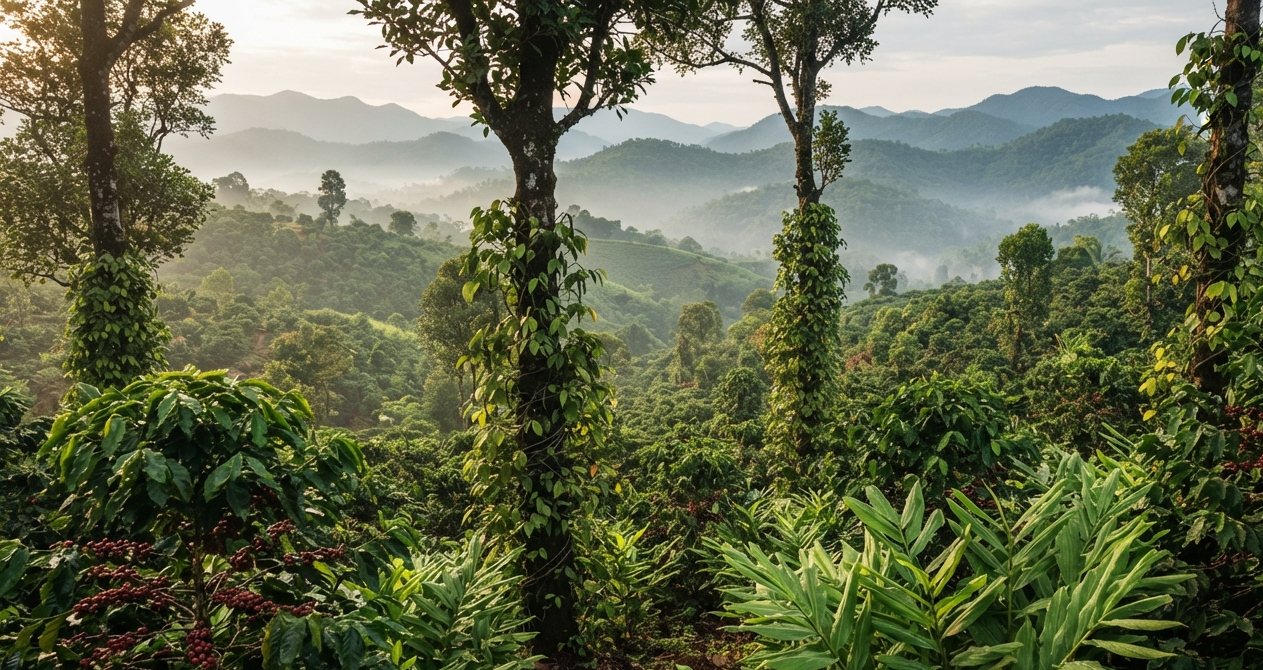
Coffee here is grown as polyculture. Pepper vines climb the shade trees, cardamom grows in the wetter shade, and oranges, vanilla and arecanut share the same ground. Kodagu produces nearly a quarter of India’s black pepper.
This layering is the defining feature of a Coorg estate. Tall shade trees hold the canopy, pepper vines run up their trunks, coffee bushes fill the middle, and spices take the damp floor below. The mix is not decorative; the multicrop structure builds the microclimate the coffee needs, holding moisture and shade through the dry months.
Pepper is Coorg’s great second crop. The district grows close to a quarter of all the black pepper in India, and on most estates the vine and the coffee bush have grown together so long that they are hard to think of separately.
Cardamom earns its own place in this belt. It is a shade-loving spice that thrives in exactly the wet, high, canopied conditions Coorg offers, and it sits alongside coffee, pepper and the wider crop list of the district, which runs to paddy, rubber, oranges, vanilla, arecanut and honey. Cardamom here is part of Coorg’s regional crop character. A half-acre of managed coffee estate with Acres is farmed for coffee, pepper and timber; the cardamom is the country around it, the signature of the belt you would be buying into. That belt runs on a calendar of its own.
What does the estate year look like, from blossom to harvest
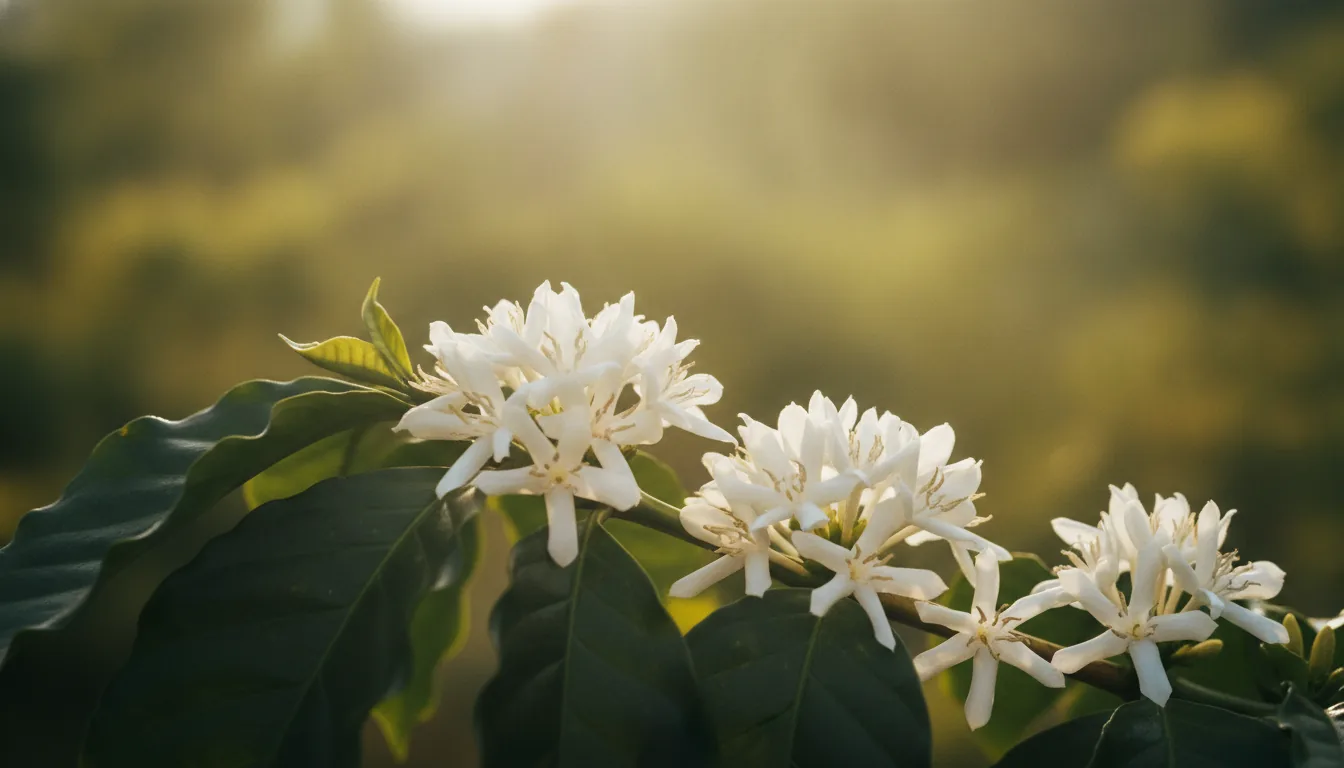
The year turns on rain and blossom. Coffee flowers across March and April, when the bushes carry fragrant white blooms, and the monsoon arrives from June to August. The berries then ripen and are harvested once the rain has eased.
Blossom is the moment the estate announces itself. For a short spell in the first months of the year the coffee bushes cover themselves in white flowers, and the smell carries across the hills. Then comes the rain. Coorg takes one of the heaviest monsoons in Karnataka, and those months of downpour swell the berries and feed the pepper and cardamom alongside them.
After the rain eases, the estate moves into its slower, working half of the year: ripening, picking, drying and curing the beans that will mostly leave the district for export. An owner does not have to run any of this. On a managed estate the crop calendar is somebody’s full-time job. What the year gives the owner is rhythm and reason to return, a place that looks and feels completely different in blossom than it does deep in the monsoon. That rhythm is set by the land, so the land is worth understanding.
What is the land, altitude and rainfall like across Coorg
High, wet and green. Kodagu sits on the eastern slopes of the Western Ghats, rising from about 50 metres to 1,750 metres at Tadiandamol. Madikeri stands near 1,170 metres and sees more than 3,200 mm of rain a year.
The district covers roughly 4,102 square kilometres of ridge and valley, with Tadiandamol its highest point at 1,750 metres and Madikeri, the district town, perched near 1,170 metres. Rainfall is the headline: Coorg has the fourth-highest rainfall of any district in Karnataka, and Madikeri alone takes more than 3,200 mm a year, most of it between June and August. Temperatures stay mild for the latitude, with January mornings near 11°C and summer days in the mid-twenties. The Kaveri, one of South India’s great rivers, rises here at Talakaveri in these very hills.
Within that single climate, the estate areas themselves differ from north to south and east to west, which is a subject in its own right. maps that ground taluk by taluk. For this guide, the point is the setting as a whole: high, wet, forested Western Ghats country, the kind of land coffee, pepper and cardamom have always wanted. The real question for a reader is what it means to own a piece of it.
What would owning a piece of this coffee country actually involve
It means owning a half-acre of managed coffee estate: a registered piece of land in your own name, with its coffee, pepper and timber farmed for you. In a district built of small holdings, a half-acre belongs naturally.
Start with what “managed” covers. It is farming and crop care, security, roads, fencing and water, and a dedicated relationship manager for every owner. The land is registered in your own name with your own land record; a half-acre is the minimum, and larger parcels are available. It is your land, held as land, not a share in a company or a slice of someone else’s estate.
That ownership fits the district it sits in. Coorg is a district of small growers, with tens of thousands of coffee holdings, most of them under ten hectares. A managed half-acre is not an odd unit here; it is the district’s own grain. Whether you sell it on later, with the company holding first right of refusal, or pass it to your family as land, what you hold is a real, registered part of coffee country.
And that is the whole difference between owning here and everything else the search results offer. While the world visits, you belong. To see, the Coorg hub is the place to start; for the full definition of the service behind the word “managed”, sets it out in detail. Owning coffee country at a distance also raises a practical question: how you would reach it and spend time there.
How would you reach and spend time on a Coorg estate
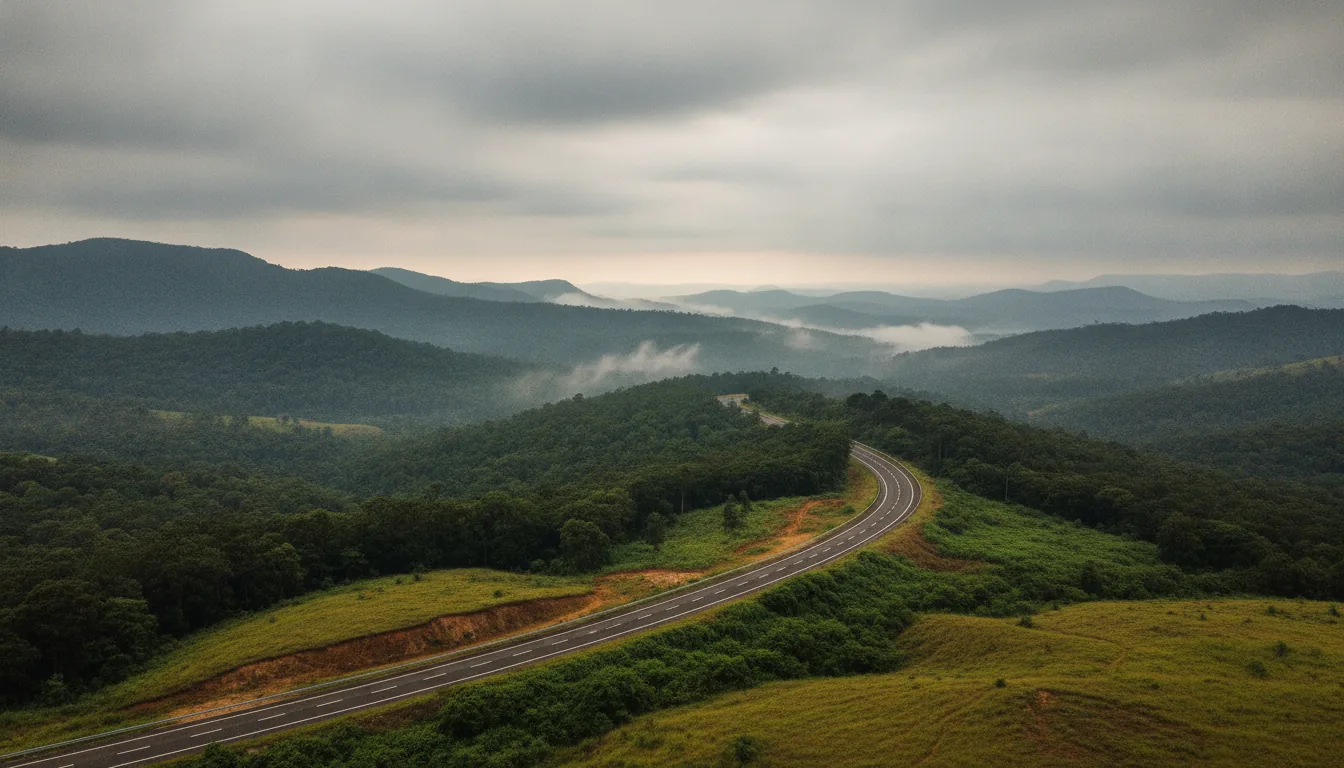
By road. Coorg has no railhead, so you reach it on NH-275, about 120 km from Mysuru and 138 km from Mangalore, with Kannur and Mangalore airports nearest by air. Time here is time on your own land.
NH-275 is the district’s spine, running east toward Mysuru and Bengaluru and west toward Mangalore; there is no railway line into Madikeri, so the road is how Coorg is reached and always has been. By air, Kannur International is the closest at roughly 90 km, with Mangalore International near 140 km. From Madikeri, Mysuru is about 120 km, Mangalore about 138 km and Kannur about 112 km.
What you do once you arrive is the part the Coorg search results get wrong. The ranking pages sell stays, tours and timings, because they assume you are a visitor. An owner is not visiting Coorg; an owner is going to their own coffee estate, to walk it in blossom, to see it under the monsoon, to know the ground their coffee, pepper and timber grow on. That is the difference this whole guide is about.
Frequently asked questions
Is Coorg famous for coffee?
Coorg, or Kodagu, is the largest coffee and pepper producing district in India and accounts for close to 44% of Karnataka’s coffee area. Its coffee is valued for clean beans and fine liquoring, and about 80% of the district’s production is exported.
Are there any coffee estates for sale in Coorg?
Coorg is active coffee country made up largely of small holdings, so land here does change hands. What Acres Community is building in the district is covered on the Coorg hub, and for current availability the right step is to enquire directly rather than read a price from a listing.
What makes Coorg different from Sakleshpur or Chikmagalur?
Coorg is the wettest, most Robusta-heavy and most spice-rich of the three Western Ghats coffee regions. Its heavier rainfall and dense polyculture of coffee, pepper and cardamom set it apart, as does its makeup of many small holdings rather than a few large estates.
What grows alongside coffee in Coorg?
Pepper and cardamom grow alongside the coffee, with oranges, vanilla and arecanut sharing the same shaded ground. Kodagu produces close to a quarter of India’s black pepper, and this polyculture is what shapes the microclimate a Coorg coffee estate depends on.
Coffee country you can belong to
Coorg is coffee country you can belong to, not just visit: robusta-led Coorg coffee under a canopy of pepper and cardamom, set high and wet in the Western Ghats, and farmed as one working estate on your behalf. If that is the coffee country you have been picturing, Acres is where to look next. Enquire to learn what is taking shape here.