
You typed “coffee estate Sakleshpur” and hit a wall of homestay listings and per-acre plot ads, so the question that brought you here stays unanswered: is this belt actually serious coffee country, or a green backdrop being sold hard? It is a fair doubt. Heritage is easy to claim and rare to prove, and the name gets used loosely.
DIRECT ANSWER
Yes, Belur-Sakleshpur is genuine, recognised coffee country. It sits in Hassan, one of Karnataka’s three historic coffee districts, and the Manjarabad belt beside Sakleshpur is a named Indian coffee origin, grown in the shade of the Western Ghats for well over a century. The pages ahead give you the dated, named proof.
Table of Contents
What makes Belur-Sakleshpur real coffee country, not just another farmland corridor
Belur-Sakleshpur is real coffee country because it sits inside Hassan, one of Karnataka’s three primary coffee districts, alongside Kodagu and Chikmagalur. Its coffee is shade-grown across the Malnad hills of the Western Ghats, and the Manjarabad belt beside Sakleshpur is a recognised Indian coffee origin.
The distinction matters. A farmland corridor is land waiting to be parcelled. A coffee district is a working landscape with a growing tradition, a recognised cup, and estates that have shipped beans for generations. Belur-Sakleshpur is the second kind. Karnataka is India’s largest coffee-producing state, contributing over 70 percent of national output, and Hassan sits in its top tier of coffee districts.
This is also where the belt separates itself from how it is usually sold online. Much of what ranks for Sakleshpur frames the region either as a weekend stay or as land measured out by the acre. The heritage below sits underneath all of that: a recognised origin and a living plantation culture that existed long before any listing did.
When did coffee first take root in this part of Karnataka
Coffee reached Karnataka in the 17th century, around 1670, when the Sufi saint Baba Budan planted seven Mocha beans carried from Yemen on the Chandragiri hills of Chikmagalur. From that single origin, coffee spread across the neighbouring Western Ghats hills into Hassan and the Sakleshpur belt.
Those seven beans are the start of coffee in India, not a legend added later. The hills where Baba Budan planted them, now called Baba Budan Giri, sit in Chikmagalur, the district next to Hassan. Coffee did not stay put. It followed the same shaded, high-rainfall slopes outward, and the belt around Sakleshpur inherited that lineage directly. The heritage the searcher is testing for is, quite literally, the same plant travelling the same hills into Sakleshpur, which raises the next question: is the coffee here recognised beyond the region, or only known locally?
Is Sakleshpur coffee actually recognised, or only known locally
Sakleshpur coffee is recognised well beyond the region. The Manjarabad belt around Sakleshpur is a named Indian coffee origin, the specialty trade treats Sakleshpur as a distinct, fruit-forward cup, and heritage estates such as Harley Estate ship washed Robustas and Arabica microlots worldwide.
Recognition shows up in three places. First, the name: Manjarabad, the belt beside Sakleshpur, sits among India’s recognised regional coffee origins rather than as unbranded farm produce. Second, the cup: specialty buyers treat Sakleshpur as a distinct origin with a light-roast-leaning, fruit-forward character, and its coffee is recorded under Hassan District, though the belt carries no standalone GI tag of its own. Third, the estates: Harley Estate, in the Manjarabad region near Sakleshpur, is a heritage plantation known internationally for washed Robustas and Arabica microlots.
That last point is the proof most listings skip. A belt that exports named microlots under its own reputation is not a backdrop. It is an origin, and origins are built on the land that grows them.
Why does the Belur-Sakleshpur belt grow coffee so well
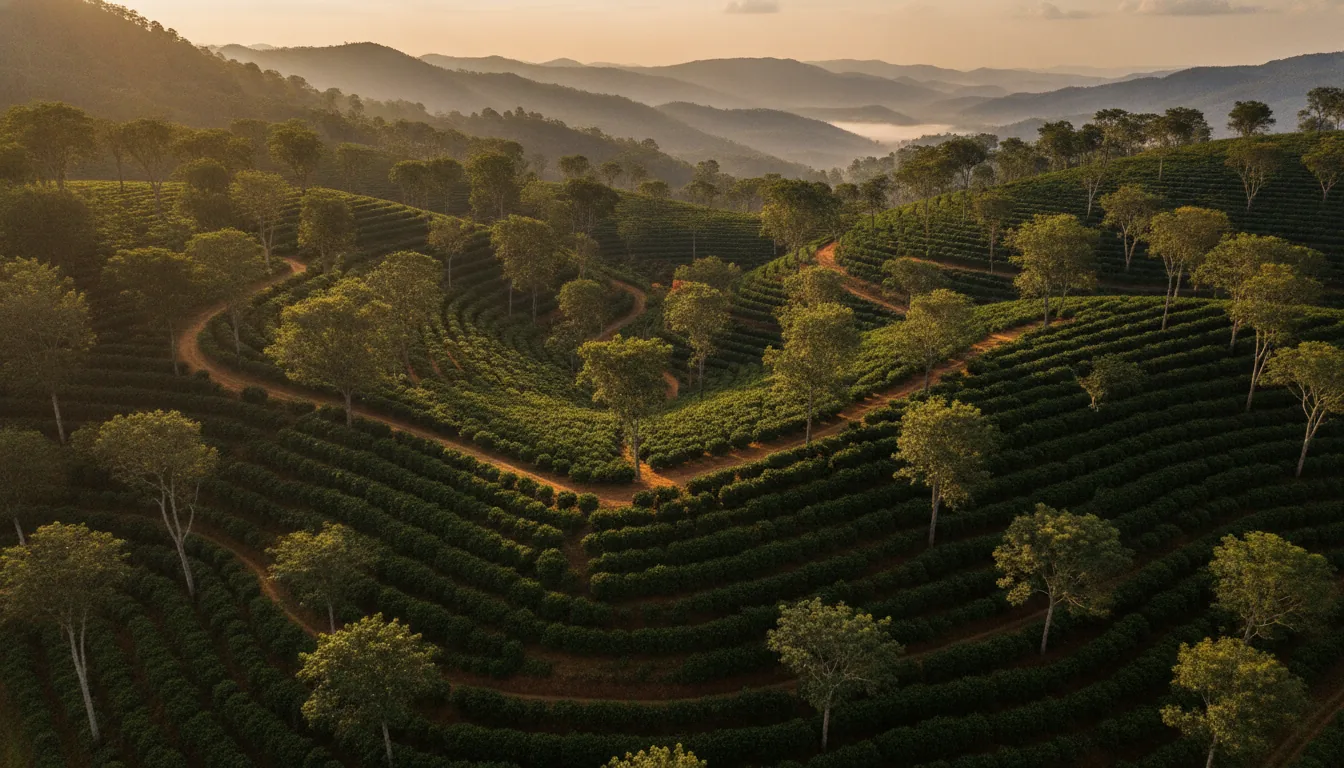
The belt grows coffee well because it sits in the Malnad hills of the Western Ghats at over 3,000 feet, with a temperate climate, heavy monsoon rainfall and deep shade. Arabica takes the higher slopes and Robusta the lower, intercropped with pepper under a forest canopy.
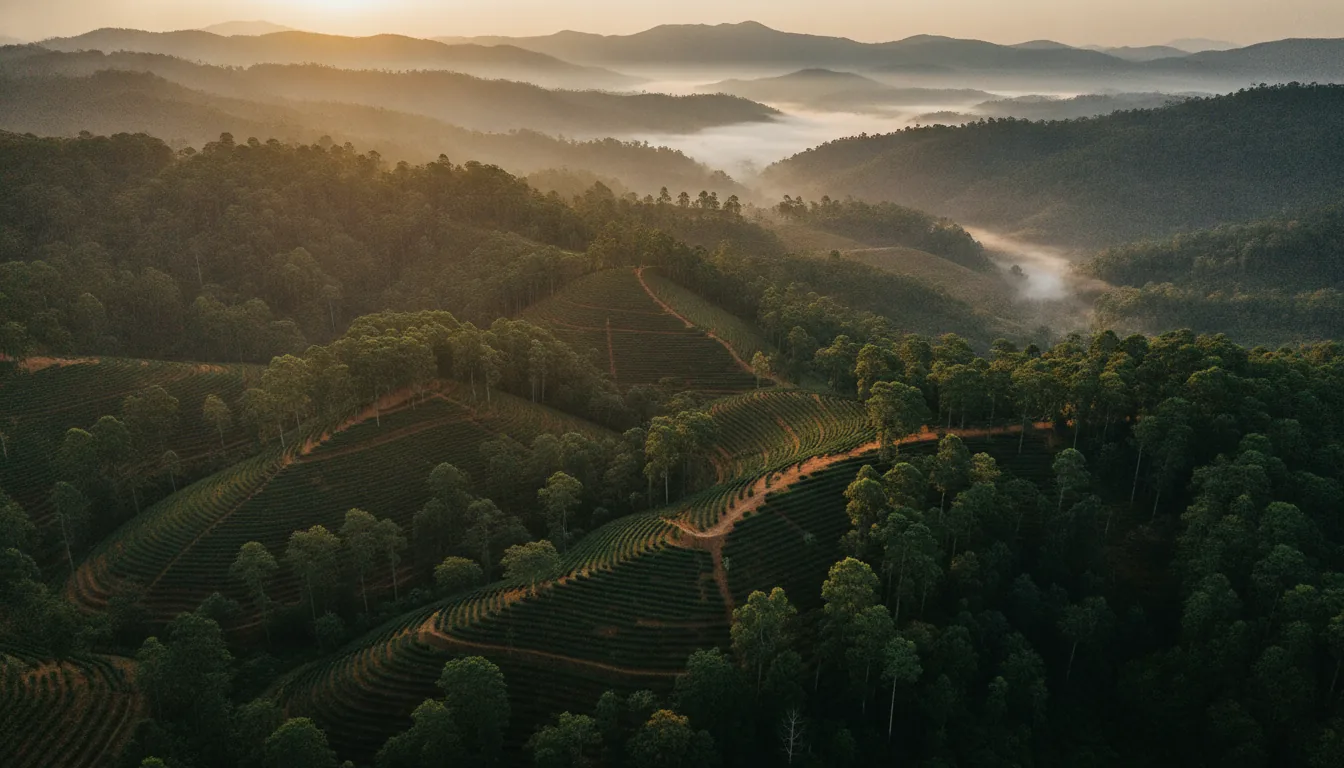
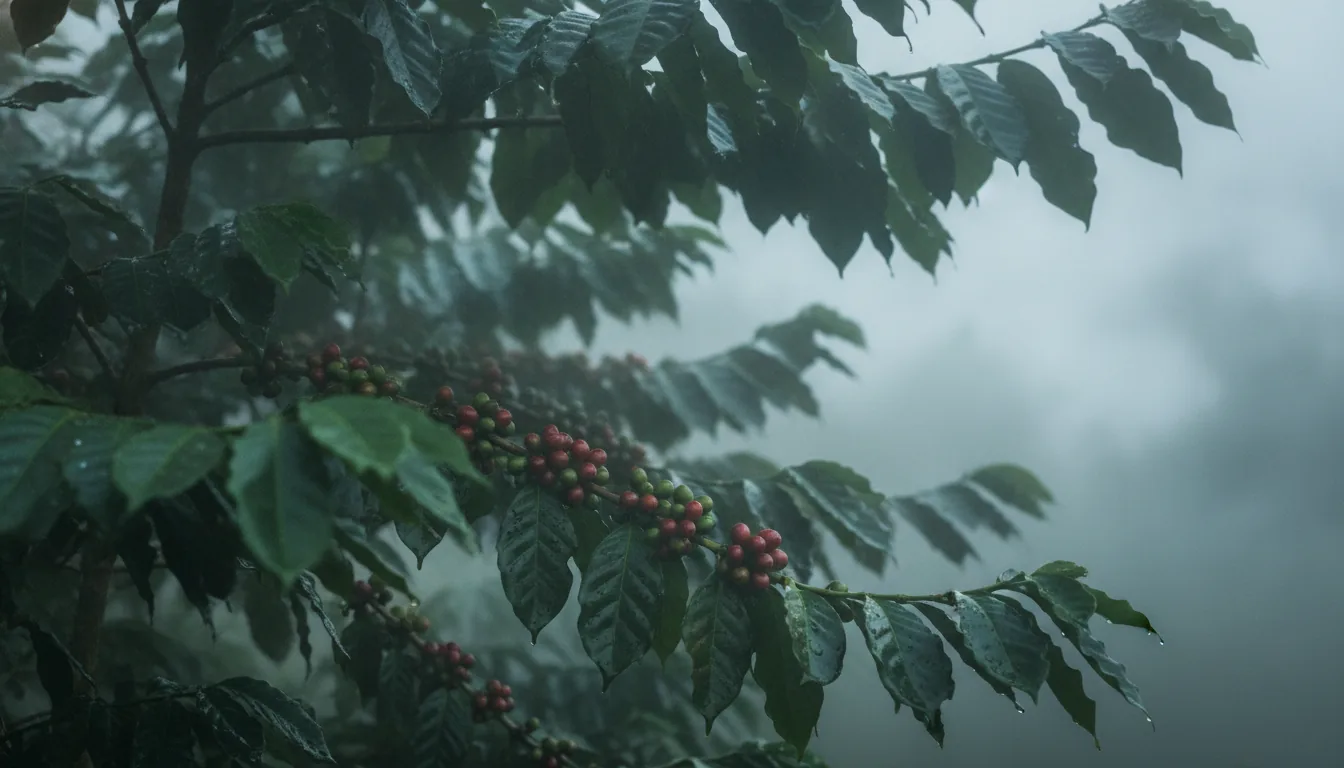
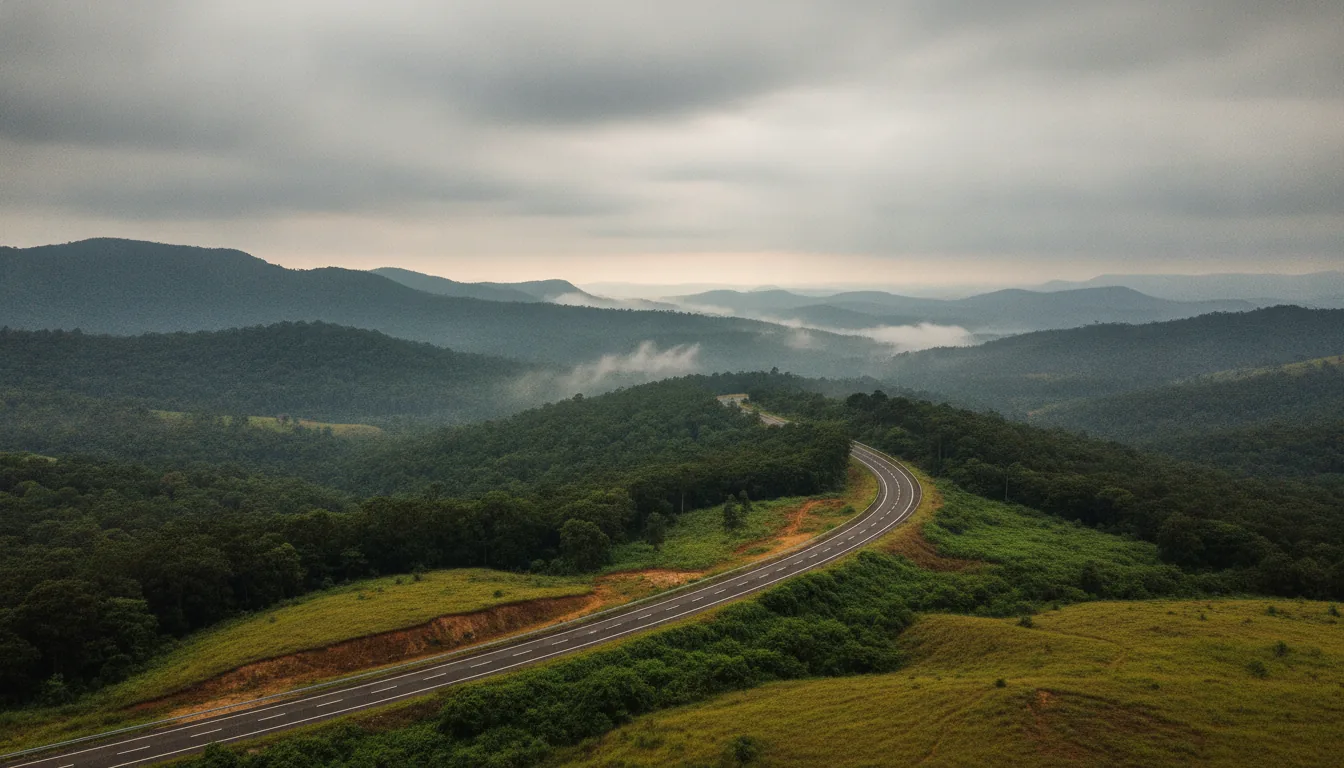
The terroir does the work. The Malnad belt of the Western Ghats is a recognised biodiversity hotspot, and Sakleshpur is a hill station rising above roughly 3,000 feet, cooler than the plains below. Indian coffee is almost entirely shade-grown under native forest and spice trees, which slows the cherry, lowers acidity, and gives the cup its character. Pepper vines climb silver oak between the coffee rows, and the same slopes carry cardamom and areca. It is one continuous working estate landscape, wrapped in monsoon mist, not a monoculture field. That mist and rainfall shape more than the coffee, which is where the region’s older story begins, at Belur.
What is Belur’s place in the region’s story
Belur is the historic half of the belt’s name and an early capital of the Hoysala empire. Its Chennakeshava temple, commissioned by King Vishnuvardhana in 1117 CE on the banks of the Yagachi river, was inscribed on the UNESCO World Heritage List in 2023.
Belur gives the belt a depth that coffee alone cannot. The Chennakeshava temple was built over about 103 years across three generations, and it has held continuous worship since 1117 CE. In 2023, together with the Hoysala temples at Halebidu and Somanathapura, it joined the UNESCO World Heritage List as the “Sacred Ensembles of the Hoysalas,” India’s 42nd World Heritage site. Belur sits in Hassan district, about 35 km from Hassan city, the same administrative home as Sakleshpur. So the belt’s name pairs a recognised coffee origin with a nine-century temple town, and the character does not stop at those two landmarks.
What else gives the region its character beyond the coffee
Beyond coffee, the region carries the star-shaped Manjarabad Fort, built in 1792 under Tipu Sultan, and the Hemavathi river, which rises in the Sakleshpur hills. Around them runs a working plantation culture of pepper, cardamom and areca, set among monsoon mist, waterfalls and hill forest.
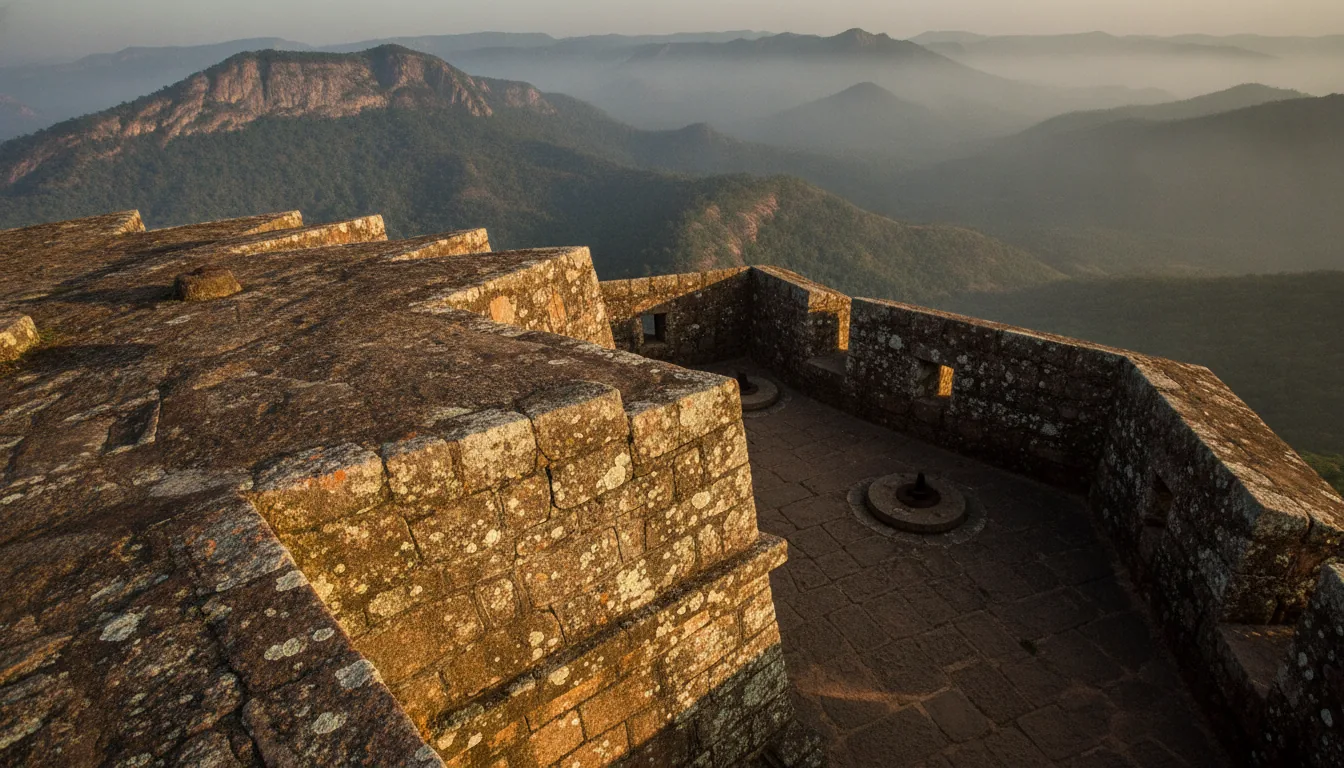
Manjarabad Fort, near Sakleshpur town, was built in 1792 under Tipu Sultan with French engineering help, and its unusual star shape ties the Manjarabad coffee name to a place you can actually stand in. The Hemavathi, a tributary of the Kaveri, rises in these hills and runs through the town. The surrounding taluk grows coffee, pepper, cardamom and areca that come into Sakleshpur town to be traded, the ordinary rhythm of a genuine plantation belt. This is a place people live and work in and grow from, which is exactly why one owner chose to plant roots here.
Why did Acres Community make Belur-Sakleshpur its flagship
Acres Community chose Belur-Sakleshpur as its flagship because the belt offers the rarest pairing in Indian coffee country: a recognised growing origin, dated heritage, and a living culture, all in one landscape. It is a place to own and belong to, not just to look at.
Everything on this page points to one conclusion. The coffee is real and recognised, the geography earns the cup, and the heritage is dated to 1117 CE and confirmed by UNESCO in 2023. While the world visits, you belong. That is why our first managed estate is rooted here.
You can see how the belt fits together across our Sakleshpur estate country, and if you want to picture where all of this lands, meet Euphora, our estate in the Belur-Sakleshpur belt. No listings, no pricing on this page: just the region, proven, and an invitation to belong to it.
Frequently Asked Questions
Why is Sakleshpur famous?
Sakleshpur is famous as a Malnad hill station in Hassan district, known for its shade-grown coffee estates, the star-shaped Manjarabad Fort, and its setting in the Western Ghats. It is one of Karnataka’s classic coffee-growing belts.
What is famous in Sakleshpur to buy?
Sakleshpur is known for its estate produce: shade-grown Arabica and Robusta coffee, along with black pepper, cardamom and areca grown across the surrounding taluk and traded in the town.
Which is the best place in Sakleshpur?
Sakleshpur’s best-known landmarks include the star-shaped Manjarabad Fort and the coffee-clad Malnad hills, with the UNESCO-listed Chennakeshava temple at nearby Belur, commissioned in 1117 CE, a short drive away.
Which is the best coffee estate in Sakleshpur?
The Sakleshpur belt is home to respected heritage estates, such as Harley Estate in the Manjarabad region, recognised internationally for washed Robustas and Arabica microlots. “Best” depends on what you value, but the belt’s coffee credentials are well established.