You have settled on Sakleshpur. Now you are picking the weekend, and that is where Sakleshpur weather starts to matter, because the same hill town hands you clear ridge views in January and warm, dripping mist in July. The town sits in Hassan district at about 932 m, on the edge of the Western Ghats, and it collects well over twice the rain that Hassan taluk does. This guide walks the year month by month on official normals rather than guesswork, so you can match the month to the trip you actually want, whether you are driving up from Bangalore for two days or building a week around a trek.
The short answer
October to March gives you the clearest, most comfortable weather for sightseeing and treks. June to September is the southwest monsoon: green, misty and properly wet, with waterfalls at volume and leeches on the trails. March to May runs warmest, and it is when the coffee blossoms.
On this page
What is Sakleshpur’s weather like month by month
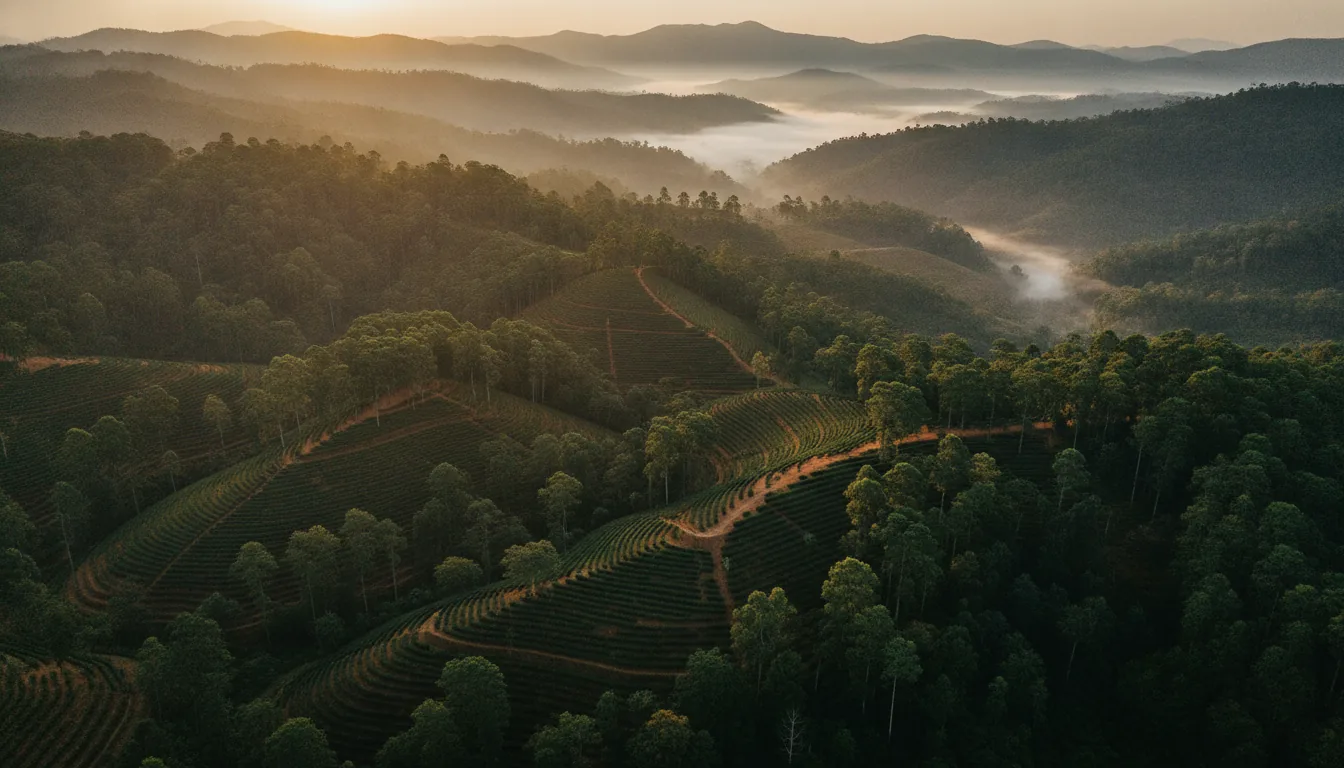
Sakleshpur stays mild through the year, with no harsh season. The southwest monsoon runs June to September and dominates the calendar, December to February brings the coolest nights, and March to May the warmest days. Rain here is far heavier than at Hassan.
The table below sets each month against its season, the temperature at the nearest India Meteorological Department observatory, what the rain is doing, and what that month is good for.
| Month | Season | Hassan, nearest IMD station: mean max / mean min (°C) | What the rain does | Good for |
| January | Winter | 28.8 / 13.9 | Dry. Almost no rain falls at Hassan in January. | Clear ridge views, easy treks, the tail of the arabica harvest |
| February | Winter | 30.8 / 15.8 | Still dry. Robusta blossom rain can arrive from late February. | Robusta harvest, cool mornings, long walks |
| March | Summer | 33.0 / 17.8 | Pre-monsoon blossom showers begin. | Coffee blossom, warm days, early starts |
| April | Summer | 33.3 / 19.7 | Blossom showers continue. Storms build through April and May at Hassan. | Coffee blossom in arabica areas, warm afternoons |
| May | Summer | 31.9 / 20.0 | The wettest of the three summer months at Hassan, by rainy days. | Last of the blossom season, hot days, building cloud |
| June | Southwest monsoon | 28.2 / 18.4 | The monsoon sets in. IMD takes its season as June to September. | Fresh green, filling waterfalls, slow days |
| July | Southwest monsoon | 26.5 / 18.4 | Peak monsoon. July has the most rainy days of any month at Hassan. | Mist on the ridges, waterfalls at volume. Leeches on trails |
| August | Southwest monsoon | 26.3 / 18.5 | Heavy and persistent. Evening air at Hassan is at its dampest. | Deep green estates, mist, full streams. Leeches on trails |
| September | Southwest monsoon | 27.6 / 18.4 | The last full monsoon month, easing towards the end. | Green cover, running streams, softer light |
| October | Post-monsoon | 28.6 / 18.7 | IMD takes the monsoon as withdrawn from the southern peninsula around 15 October, so early October can still bring heavy afternoon rain. | Waterfalls still full, greenery intact. Expect showers early in the month |
| November | Post-monsoon | 28.3 / 17.0 | Rain eases sharply. | Clear views, the best of the falls, arabica harvest begins |
| December | Winter | 28.5 / 14.7 | Dry. December to February are almost rainless at Hassan. | Coolest nights, clear trekking days, harvest underway |
Temperatures are IMD 1991-2020 normals for Hassan, the nearest IMD observatory, about 39 km east and at a similar height. Sakleshpur gets far more rain than Hassan, so read the rain column, not Hassan’s rainfall.
Two things to carry out of that table. The temperature swing across the whole year is small, roughly 26°C to 33°C by day at Hassan and 14°C to 20°C at night, so no month is ruled out on heat or cold alone. What changes your trip is water: how much is falling, how much is running in the streams, and how much is hanging in the air. That is where Sakleshpur parts company with the district headquarters down the road.
How much rain does Sakleshpur get, and why so much more than Hassan
Sakaleshpura taluk has a normal annual rainfall of 2,246.7 mm, against 845.6 mm for Hassan taluk and 1,142 mm for Hassan district. That is roughly two and a half times Hassan taluk’s rain, because Sakleshpur sits on the wetter Western Ghats edge.
Those are normals published by the Karnataka State Natural Disaster Monitoring Centre, or KSNDMC, the state body that records rainfall down to taluk and hobli level (checked Oct 2026). IMD publishes no rainfall normal at taluk level, which is why no monthly millimetre figure for Sakleshpur appears anywhere on this page. Annual normals exist; monthly ones do not.
The spread inside the taluk is wide enough to matter if you are heading to a specific pocket. By KSNDMC hobli normals, Hanbalu takes 2,377.3 mm, Sakaleshpur 2,246.7 mm and Hettur 2,218.3 mm, while Balegodu and Yaslur sit lower at 1,789.7 mm and 1,783.4 mm. Rain falls off as you move east, away from the crest.
Of Hassan district’s 1,142 mm, 754 mm comes from the southwest monsoon, and the northeast monsoon that follows in October and November contributes about 12 per cent of annual rainfall in what KSNDMC calls the Malnad region. If you have been checking a Hassan forecast to plan a Sakleshpur trip, this is the gap that catches people out: same district, same administrative headlines, very different rainfall. Our explainer on Sakleshpur in Hassan district shows how the two sit together, and our piece on why Belur-Sakleshpur is classic coffee country explains why this edge of the Ghats grew into coffee country. The source data sits with KSNDMC at ksndmc.org.
All that water arrives in a concentrated burst, and the burst has a name.
What is the monsoon like in Sakleshpur – June to September
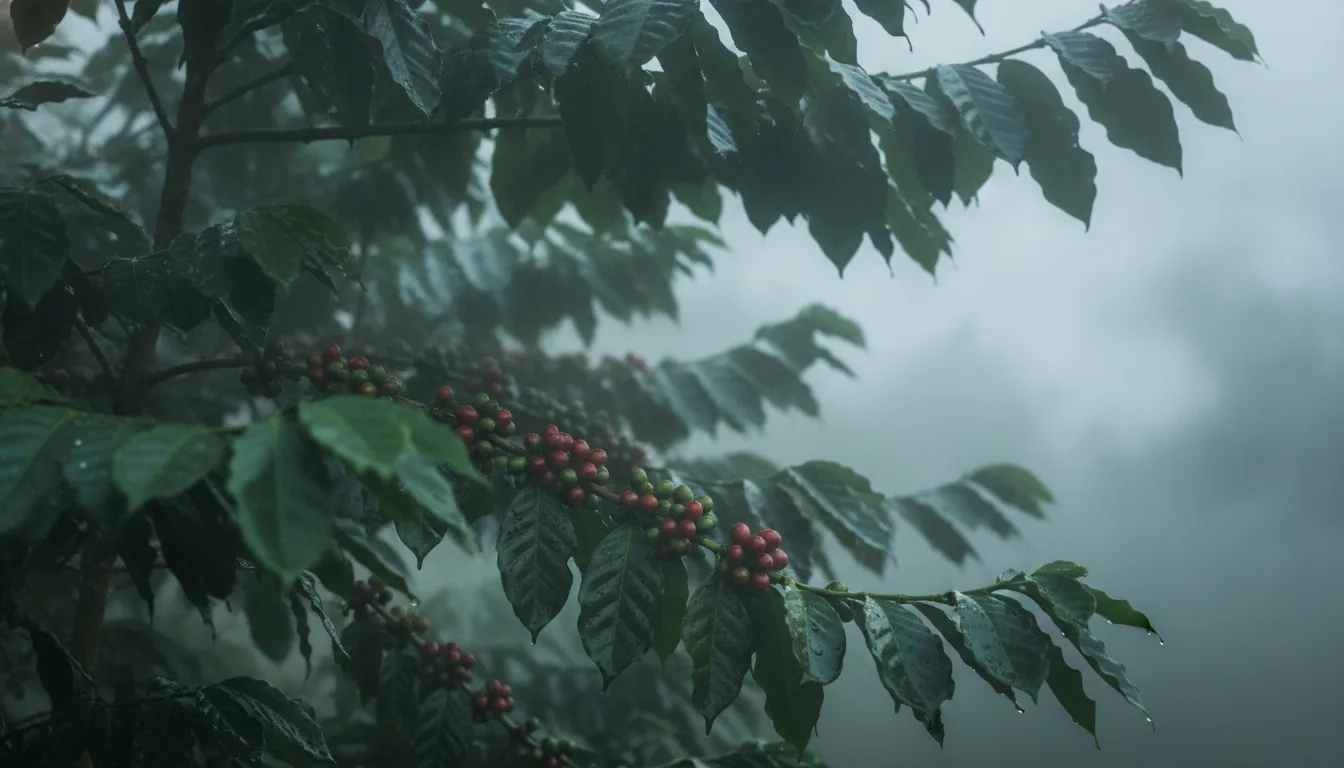
The southwest monsoon is IMD’s June to September season, and it sets the terms completely. Expect long wet spells, clouds sitting low on the ridges, waterfalls at full volume and leeches on every walking trail. Plan slow days, not a packed itinerary.
IMD puts monsoon onset over Kerala at around 1 June, and KSNDMC records onset over Karnataka as normally arriving by the first week of June (checked Oct 2026). From there the rain is not a shower you wait out. It is the weather.
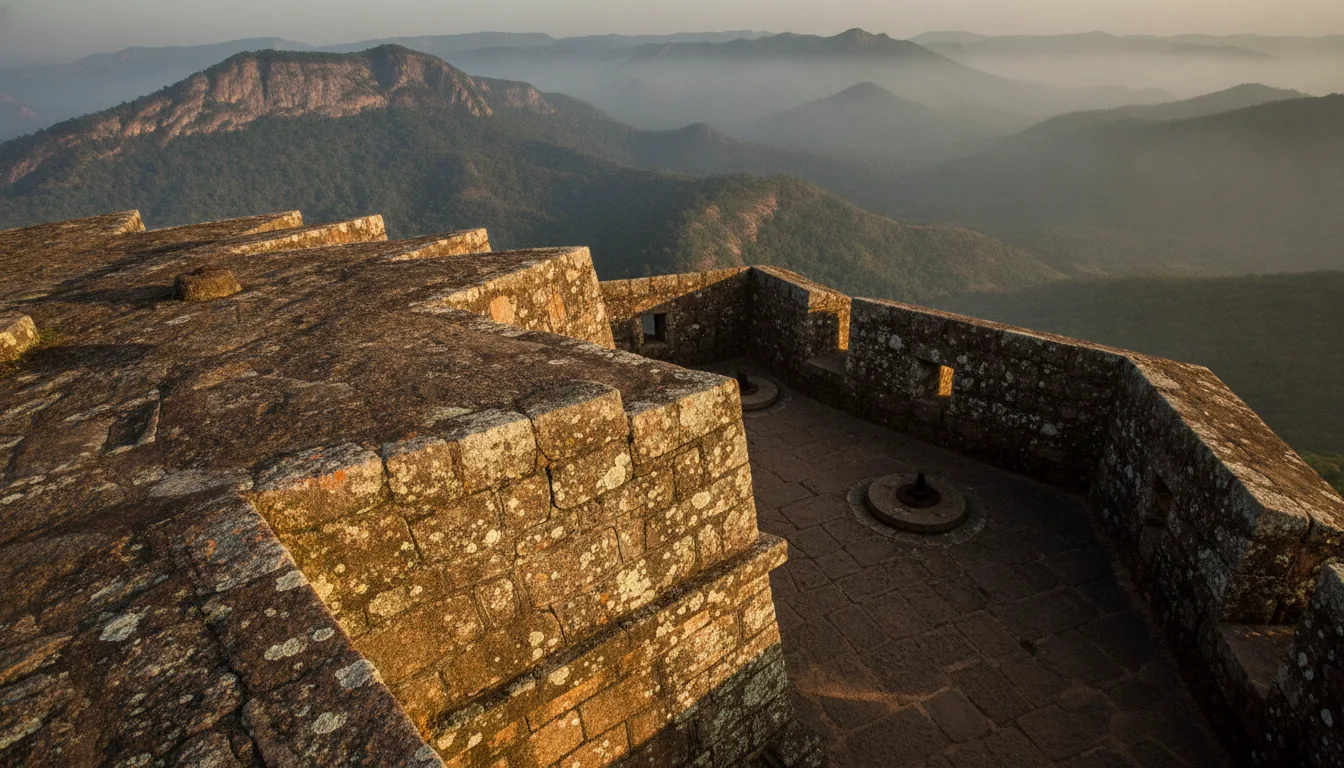
Mist is the signature of these months, and it is old news here. Tipu Sultan named his hill fort above the town Manjarabad after the fog that wrapped the hill; the fort stands at 988 m, and Karnataka Tourism says the Arabian Sea can be seen from it on a very clear day. In monsoon you will more likely get fog than the sea. Our guide to Manjarabad Fort in Sakleshpur covers the fort itself. Evening humidity at Hassan peaks at 82 per cent in July and 83 per cent in August in the IMD normals, which tells you what the air feels like on the wetter side of the district: clothes do not dry, camera lenses fog, and stone steps stay slick.
The Hemavathi, which rises in the Western Ghats near Javali at about 1,230 m and runs through Hassan district past the town, is at its strongest in this season.
Leeches, honestly
The monsoon is the peak breeding season for leeches, and on Western Ghats trails they find you. The bites are very itchy and the itch can last three to ten days, which is longer than most people expect. Knee-high anti-leech socks are the practical answer. Do not use salt or fire to remove a leech.
Add slippery trails, poor visibility on viewpoints and streams that rise fast, and the honest read is that monsoon in Sakleshpur rewards a different kind of trip. Karnataka Tourism puts it well: the monsoon season turns Sakleshpur into a green dream, perfect for slow travel. Short walks, long verandah hours, and no schedule to miss.
By the back end of the season, the rain starts to let go.
Is October to November a good time to visit Sakleshpur
November is among the best months here, the monsoon gone and the waterfalls still running hard. October needs reading carefully: IMD takes the monsoon as withdrawn from the southern peninsula around 15 October, so the first half still brings heavy afternoon rain.
There is a figure worth knowing before you book an early-October weekend. In the IMD normals, October is Hassan’s wettest month of all, with 168.6 mm over 8.2 rainy days. That is the station on the drier side of the district. Treat early October as a late monsoon week with better odds, not as the dry season, and keep the plan loose.
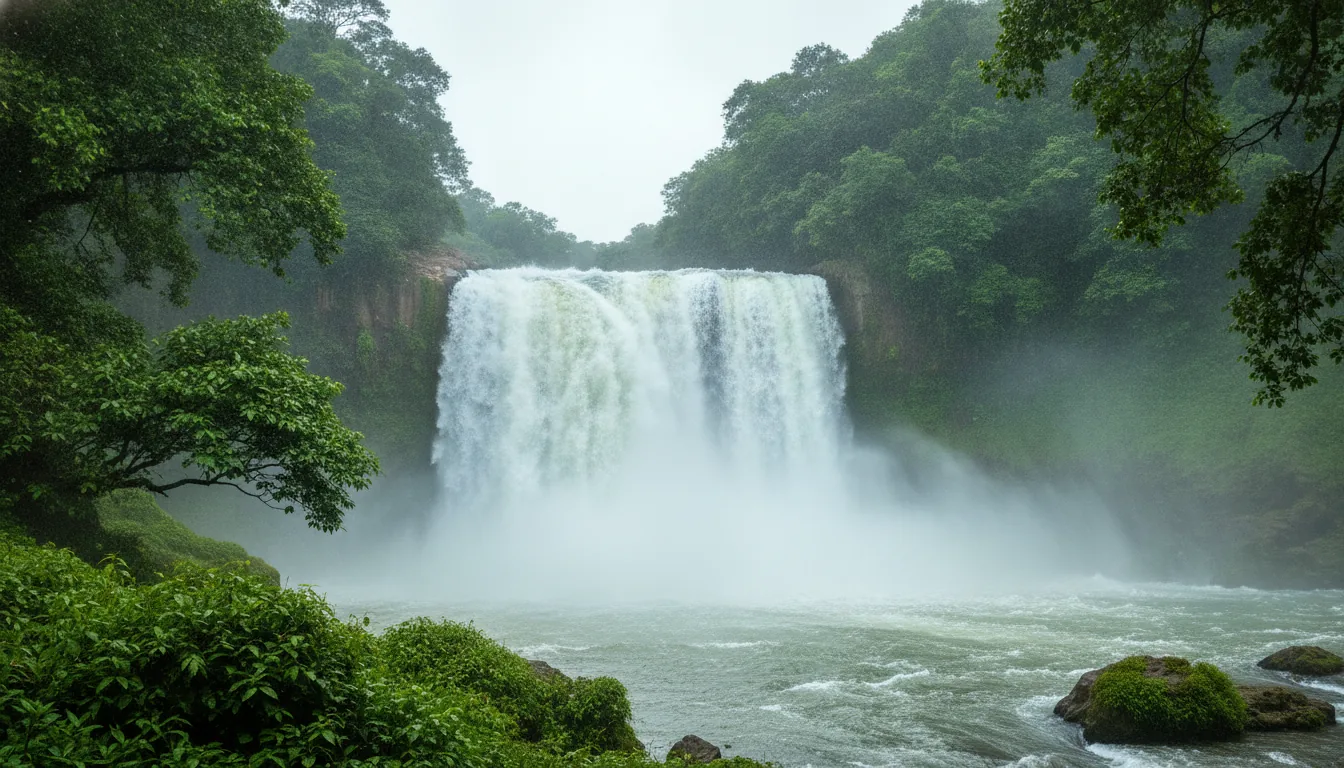
What that buys you is the best waterfall viewing of the year. Karnataka Tourism notes that post-monsoon the gushing and cascading waterfalls add beauty to the area, and that is the window: the catchments are still full from four months of rain, but the sky has cleared enough to see them. By November the air has dried, the greenery is intact and long views open up from the ridges and viewpoints around the taluk.
Push into December and the year turns quiet and clear.
What is winter like in Sakleshpur – December to February
Winter, December to February, is the driest and coolest stretch of the Sakleshpur year. At Hassan, the nearest IMD station, mean minimums drop to 14.7°C in December and 13.9°C in January, with a record low of 5.6°C in January. Days stay clear and walkable.
These are the near-rainless months in the normals: 6.0 mm at Hassan in December, 1.1 mm in January, 3.5 mm in February, with under one rainy day in each of December and January. Pack a layer for the nights and early mornings and the daytime takes care of itself. Karnataka Tourism rates the town best visited October to May for comfortable trekking weather, and notes that most of the treks are of beginner’s level, which makes winter the easiest window for anyone walking with mixed fitness in the group.
Two cautions stay live even in the dry months. Karnataka Tourism flags wildlife in the area, including elephants, bison, sambar and wild boar, so stick to known routes and go with someone local. And trails that look dry can still be greasy under leaf litter in shaded plantation stretches. Jenukal Gudda, the highest point in Hassan district, sits in this taluk and is a winter walk rather than a monsoon one.
Winter is also the season the estates are busiest. The arabica harvest normally runs November to January and the robusta harvest December to February, so the roads carry crop, the drying yards are full and the whole taluk smells of coffee being processed. That rhythm is worth understanding on its own terms, and it starts three seasons earlier.
What is Sakleshpur like in summer – March to May
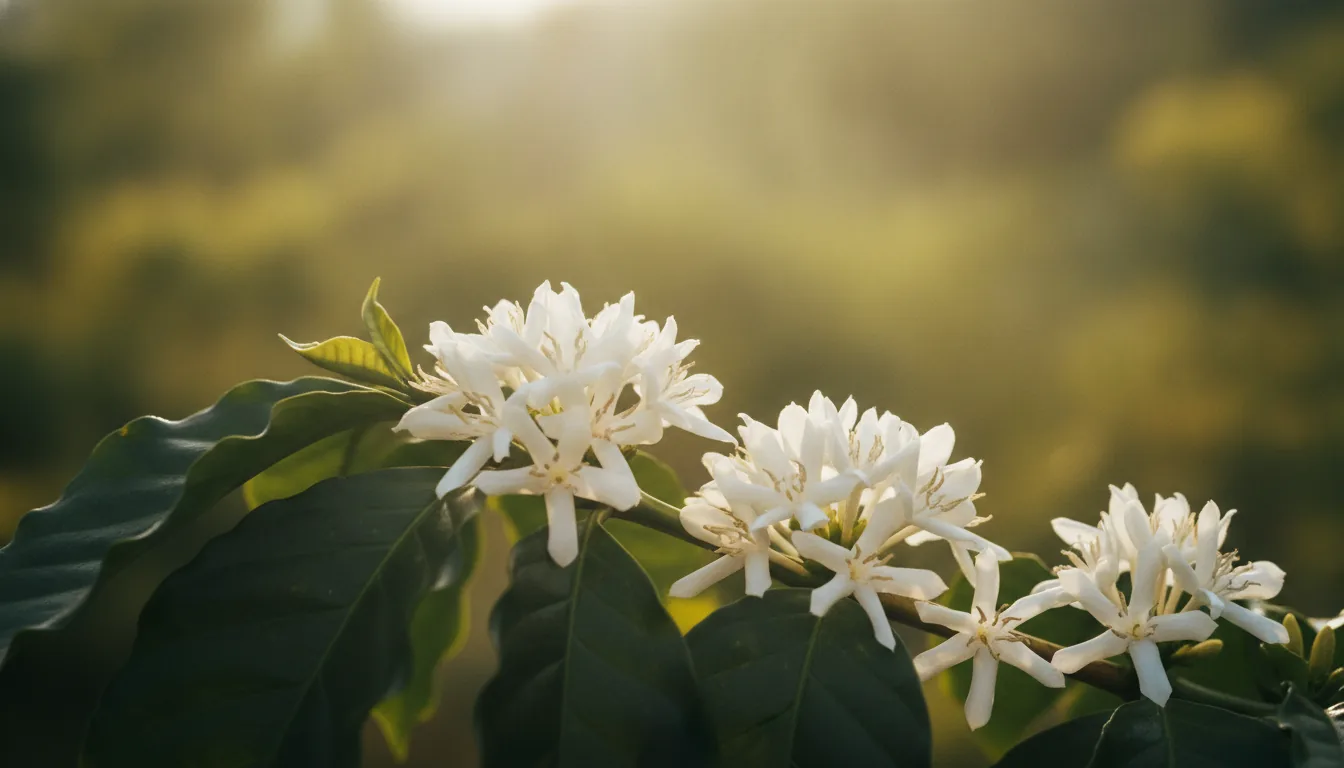
March to May is the warmest part of the Sakleshpur year. At Hassan, mean maximums reach 33.0°C in March and 33.3°C in April, against a record high of 37.8°C. It is also coffee blossom season, set off by the pre-monsoon blossom showers.
That record high was logged in both April and May, and it is the only month pair that reaches it. Those blossom showers fall across March to May, and the timing is not loose. Robusta needs its blossom rain from late February to mid-March; arabica areas need theirs by mid-April. Once the blossom showers end, plant flowering is complete, and the backing showers that follow within 15 to 20 days are the ones growers watch most closely. Arrive in the right fortnight and the estates around town are in flower. Arrive a month out and you get the heat without the show.
The rain builds steadily through this stretch. Storms build through April and May at Hassan, where rainy days climb from 1.1 in March to 4.3 in April and 5.8 in May. Expect hot, bright mornings and clouds stacking up by late afternoon, especially in May. Start early, carry water, and keep walking hard for the first half of the day.
One summer-only sight sits downstream on the Hemavathi: the Shettihalli Rosary Church, which stands part-submerged for much of the year, can be walked up to only when the water level drops in the summer months.
So each season has something it does better than the others, which makes the real question narrower than “when should I go”.
When is the best time to visit Sakleshpur
Karnataka Tourism’s answer is October to March for clear weather and comfortable temperatures, and October to May if the trip is built around trekking. That is the right default. The sharper answer depends on what you came for, so pick your line below.
Best time by kind of trip
- Clear sightseeing, viewpoints and photography: October to March. December to February are the surest, with the fewest rainy days in the IMD Hassan normals.
- Trekking: October to May, per Karnataka Tourism, with December to February the most comfortable inside that window.
- Waterfalls at full volume: June to September for raw power, late October and November for the best balance of water and visibility.
- Mist, deep green and slow travel: June to September. This is the monsoon trip, and it is a real one, just not a busy one.
- Coffee blossoms: March to May, late February to mid-March in robusta areas and up to mid-April in arabica areas.
- Coffee harvest: November to January for arabica, December to February for robusta.
- Travelling with family or with anyone who will not enjoy a soaking: December to February. Driest, clearest, least to go wrong.
The flip side is worth saying plainly, since people search for the worst time to visit as often as the best. There is no bad month here, but June to September are the toughest months for driving the ghats, for long treks and for anyone who dislikes being permanently damp. If those are your plans, move the trip.
For what to build the days around, see our guide to places to visit in Sakleshpur. If you are still deciding between hill towns rather than months, our Sakleshpur vs Coorg vs Chikmagalur comparison lays the three side by side without picking a winner. Karnataka Tourism’s own Sakleshpur page is on karnatakatourism.org.
Once the month is fixed, the bag follows from it.
What should you pack for each season
Pack for the season, not the average. Karnataka Tourism’s advice is to carry rain gear during the monsoon, June to September. Winter nights want a layer, March to May wants sun cover, and any monsoon trail wants knee-high anti-leech socks.
Karnataka Tourism also makes the obvious point worth repeating: daylight hours are best for sightseeing and treks, so pack a head torch only as a backup rather than a plan.
June to September, southwest monsoon
- Rain gear that actually works: jacket plus a dry bag or liner for the pack.
- Knee-high anti-leech socks for any trail walking, plus shoes you accept will get soaked.
- A second set of clothes kept dry, because nothing air-dries at 83 per cent evening humidity.
- Grippy footwear for slick steps and plantation paths.
October and November, post-monsoon
- A light rain layer for early October, which can still catch a wet afternoon.
- Normal walking shoes. Trails are drying but shaded stretches stay damp.
December to February, winter
- A fleece or jacket for nights and early mornings, when Hassan normals put minimums near 14°C.
- Layers you can shed, since days warm up well.
March to May, summer
- Sun protection: hat, sunscreen, and more water than you think.
- A packable rain layer for the blossom showers and late-afternoon storms.
One more monsoon decision sits outside the bag, and it is the one that can end a trip before it starts.
Is it safe to drive on the ghat roads in the monsoon
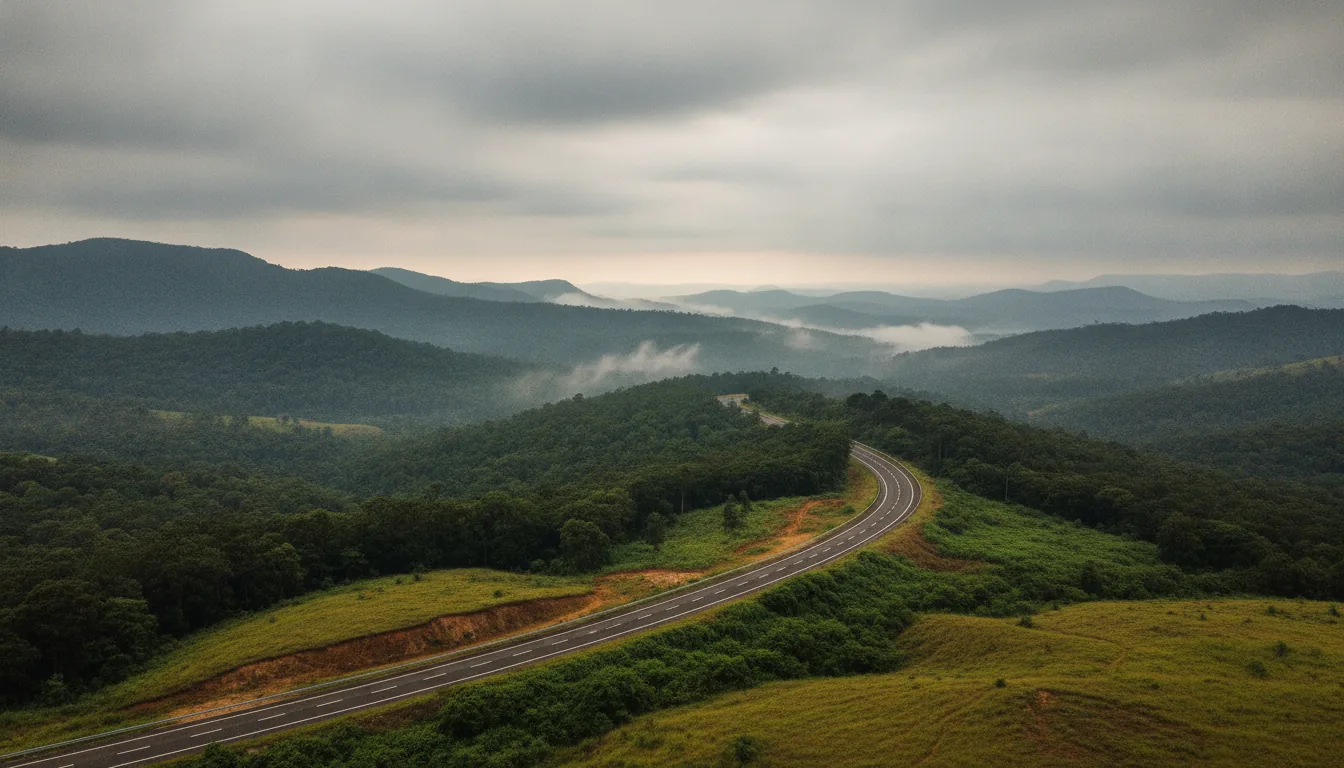
Treat the ghats with respect between June and September. The Shiradi Ghat stretch of NH75 has closed after rain-triggered landslides, with traffic diverted to the Charmadi and Sampaje ghats. Check IMD’s district warnings for Hassan and Dakshina Kannada, plus local announcements, before you drive.
The history is specific enough to take seriously. A landslide after overnight rain on the Shiradi Ghat section of NH75, near Donigal in Hassan district, disrupted Bengaluru to Mangaluru traffic, and the Deputy Commissioner of Hassan stopped vehicle movement through the stretch. A repeat closure near Doddataplu in Sakleshpur taluk shut the Shiradi Ghat highway again after heavy evening rain, leaving vehicles stranded on both sides.
This page makes no claim about current road status, roadworks or timings, because that changes week to week and a guide is the wrong place to read it. IMD issues four colour-coded weather warnings based on the intensity of the weather system, and its district pages are the right source on the morning you travel. Check mausam.imd.gov.in for the Hassan and Dakshina Kannada district forecast and warnings, and look for local announcements before committing to a ghat crossing. If you are coming up from Bangalore, our Bangalore to Sakleshpur distance and route guide covers the drive in detail.
For everyone who lives with these seasons rather than visiting them, the same calendar reads differently.
How do Sakleshpur’s seasons shape a coffee estate’s year
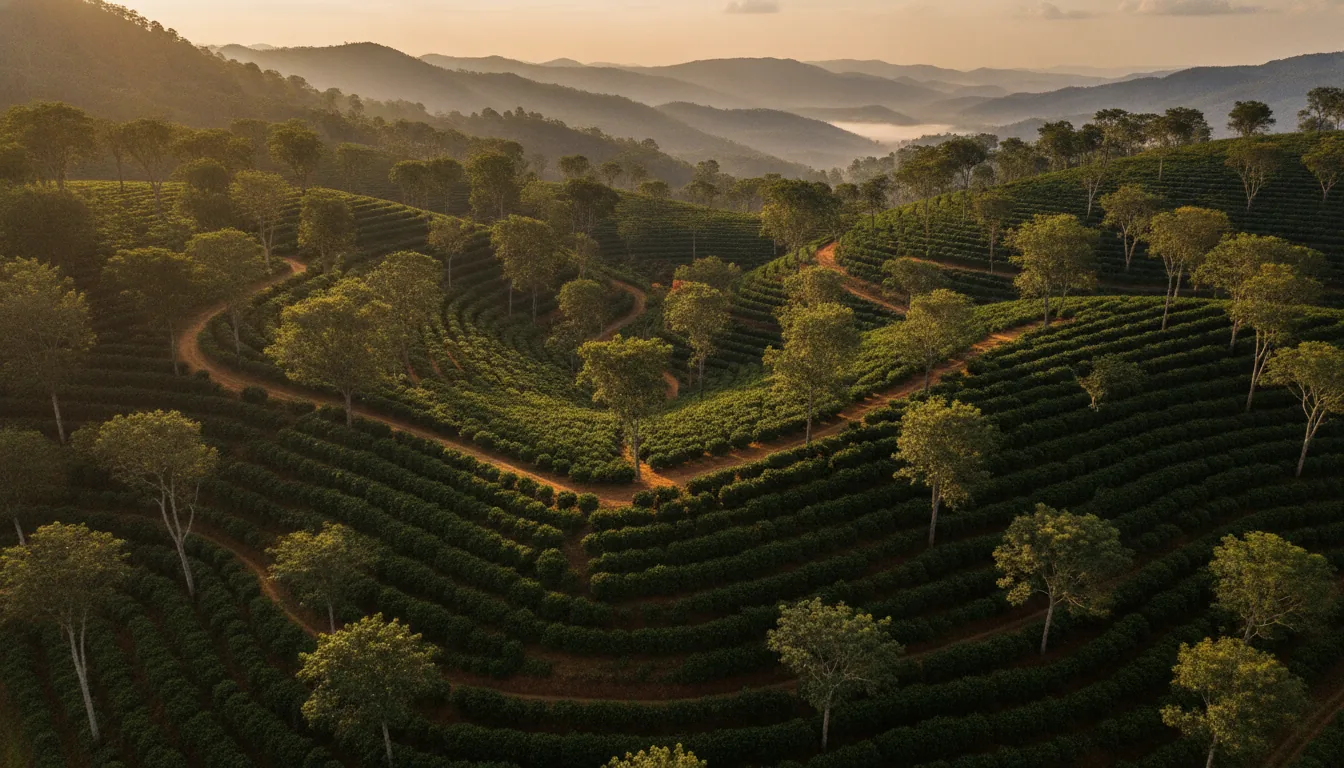
The estate year runs on the same weather you are planning around. Blossom showers in March to May complete flowering, the June to September monsoon carries the growth, and harvest follows: arabica November to January, robusta December to February. Sakleshpur grows both.
Put those together and the calendar stops being about comfort and starts being about work. Late February to mid-March rain sets the robusta flowering; arabica needs its blossom showers by mid-April; the backing showers 15 to 20 days later decide how well the flowering holds. Then four months of monsoon do the growing, and from November the picking starts and runs through February. Karnataka Tourism describes Sakleshpur as home to both arabica and robusta estates, often intercropped with spices and fruit trees and known for misty plantations, and that mist is the same one you will be driving through in July. Our guide to Sakleshpur coffee estates covers the belt itself, and our guide to how a three-crop estate is cared for covers the work each season demands.
Coffee is rarely alone on these slopes. The same acres carry pepper vines climbing the shade trees and timber standing over both, which is why a walk through an estate in August looks like forest rather than farmland, and why the pepper plantation has a rhythm of its own alongside the coffee.
One practical note. The estates around Sakleshpur are private working land, not attractions. Admire them from the public roads, and do not walk in.
Frequently asked questions
Is Sakleshpur cold or hot?
Neither, in any extreme. At Hassan, the nearest IMD observatory, the annual normals are 29.3°C mean maximum and 17.6°C mean minimum, with a record low of 5.6°C in January and a record high of 37.8°C. Expect mild days year round and cool nights in winter.
Is it going to rain in Sakleshpur?
By season: almost certainly in June to September, often in early October, rarely from December to February. For a live weather forecast or a warning on the day you travel, use the India Meteorological Department district pages for Hassan at mausam.imd.gov.in. A month-by-month guide cannot answer today.
Is Sakleshpur good to visit now?
It depends entirely on the month. December to February give the clearest and driest conditions, March to May the heat and the coffee blossom, June to September the mist and the full waterfalls with wet trails, and October to November the best mix of water and visibility. Check the month table above against your plan.
Is Sakleshpur a hilly area?
Yes. The town has an average elevation of about 932 m and sits on the edge of the Western Ghats in Hassan district. Jenukal Gudda, at about 1,380 m, is the highest peak in Hassan district and lies within Sakleshpur taluk.
How many days are sufficient for Sakleshpur?
One or two days covers the main sights comfortably. A single day works for the fort and one waterfall; two lets you add a trek or a viewpoint without rushing either. Day plans are set out in our guide to places to visit in Sakleshpur.
Coffee country you can own – Euphora, a half-acre of managed coffee estate in the Belur-Sakleshpur belt
While the world visits, you belong. These are the seasons you would hold a piece of: the blossom showers in March, the monsoon that does the growing, the harvest that fills November to February, on half an acre registered in your own name and farmed, secured and maintained for you.
See Euphora, our managed coffee estate, browse our coffee estates for sale in Sakleshpur, or start with Acres Community’s managed coffee estates. Enquire for current pricing.