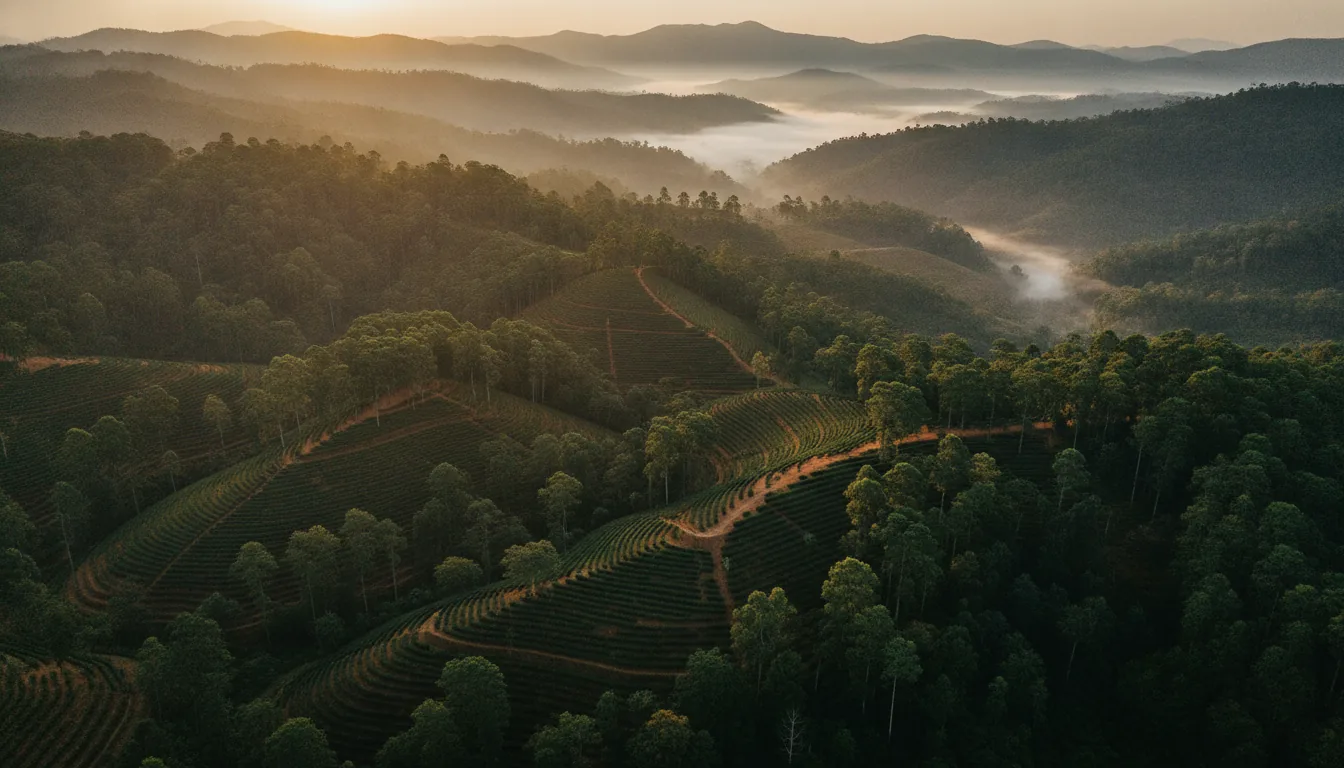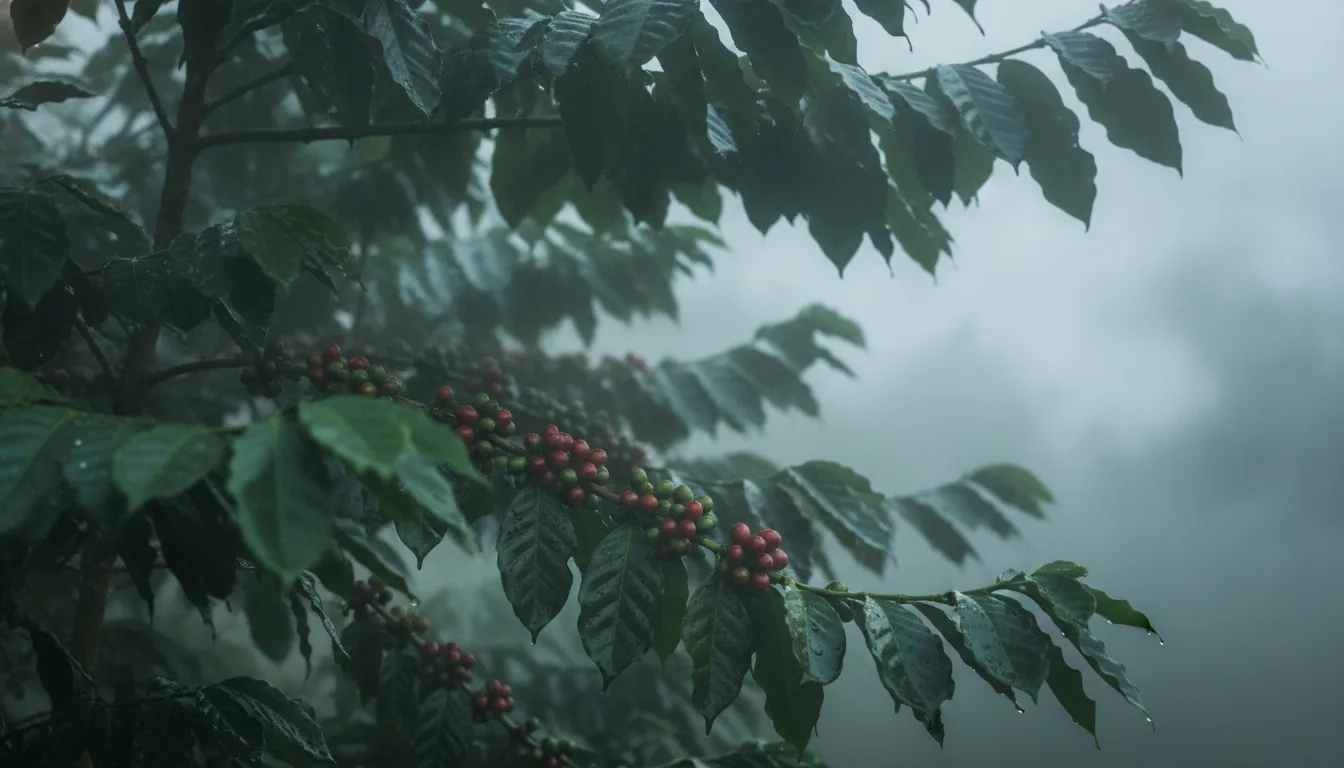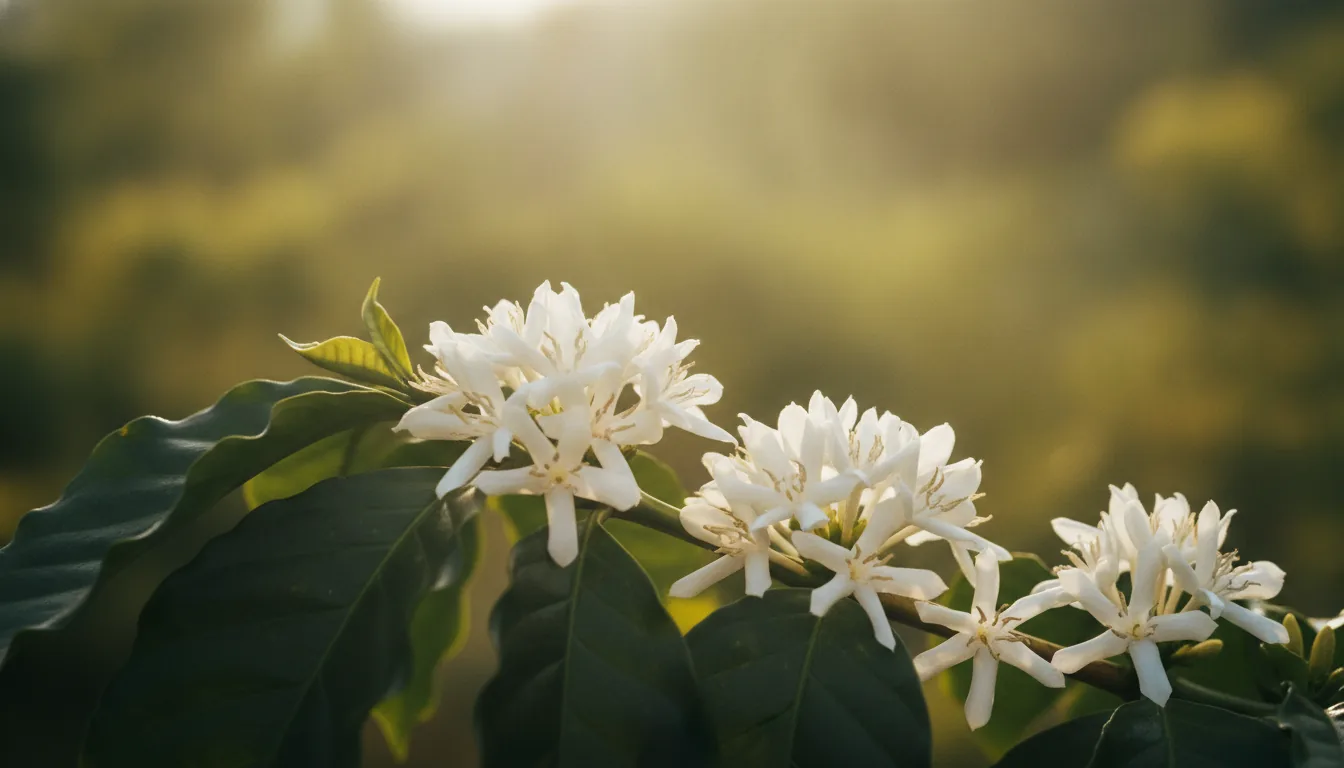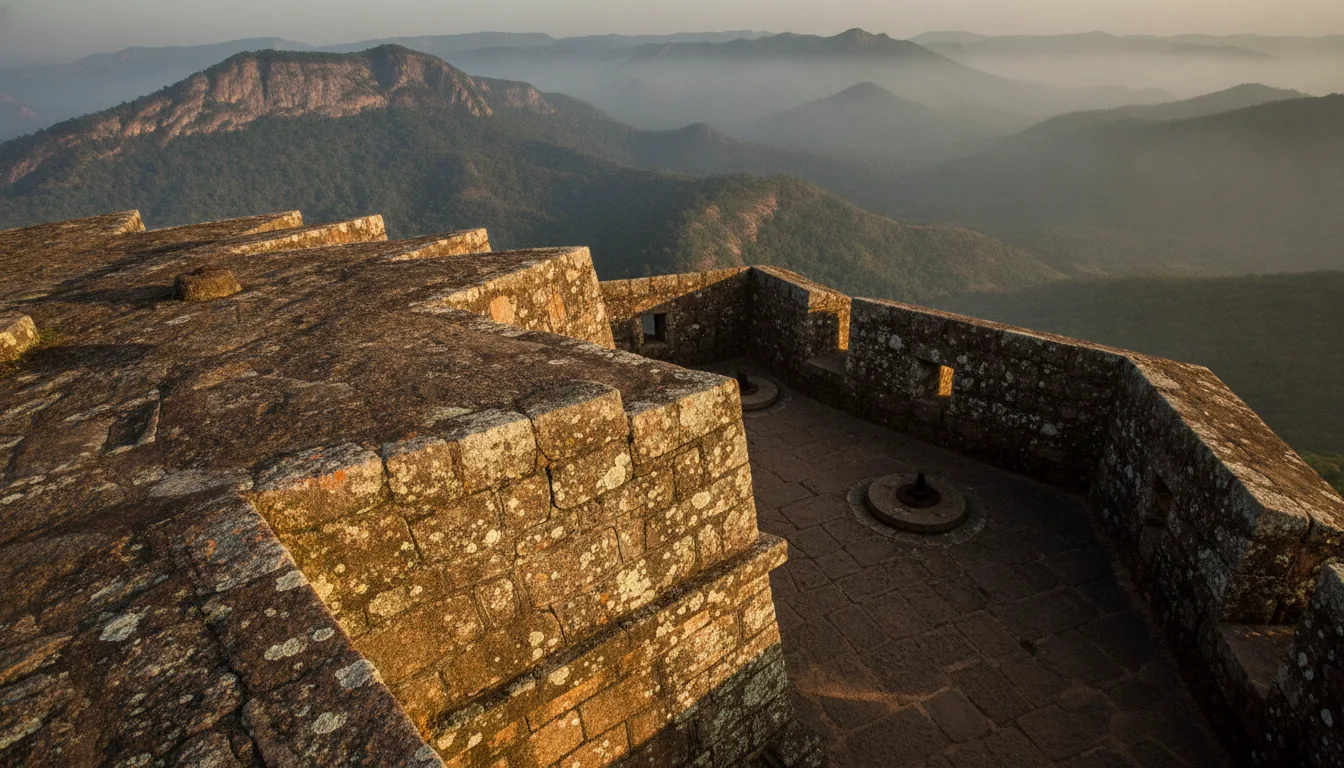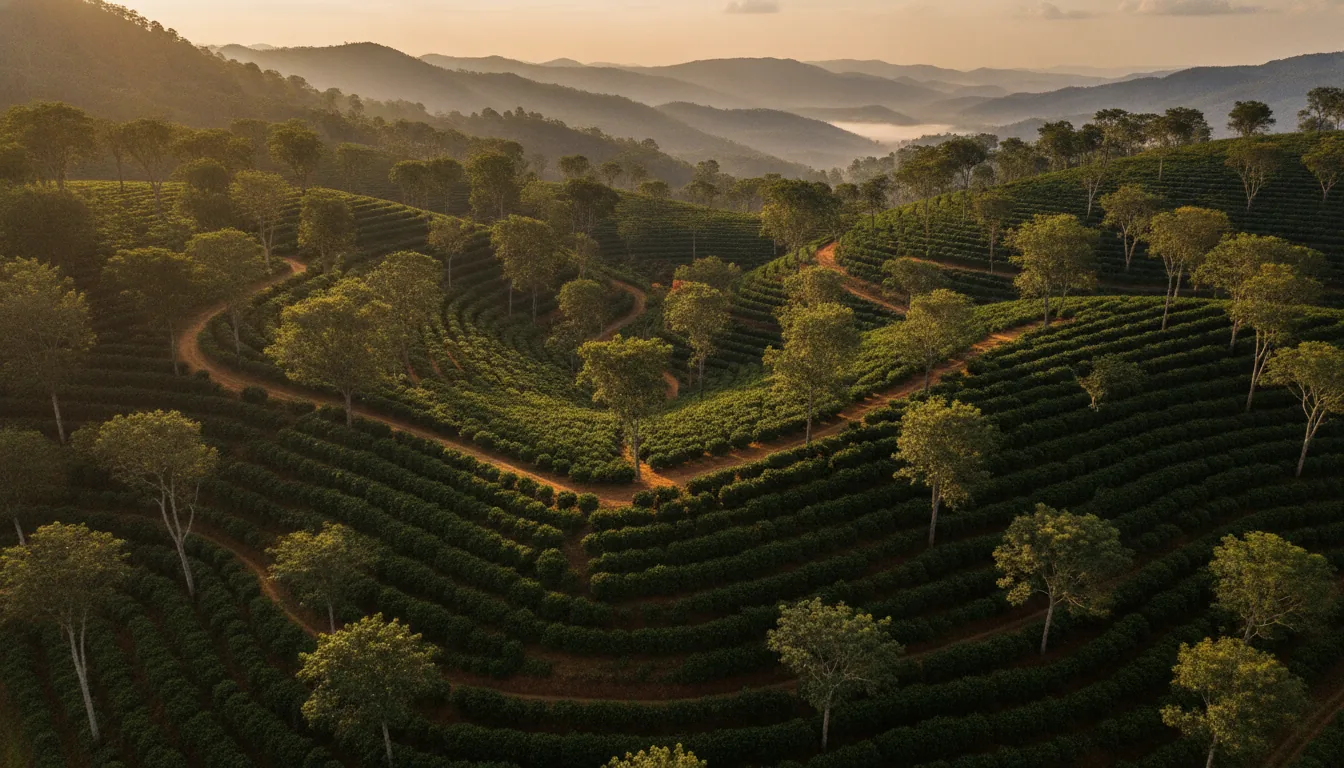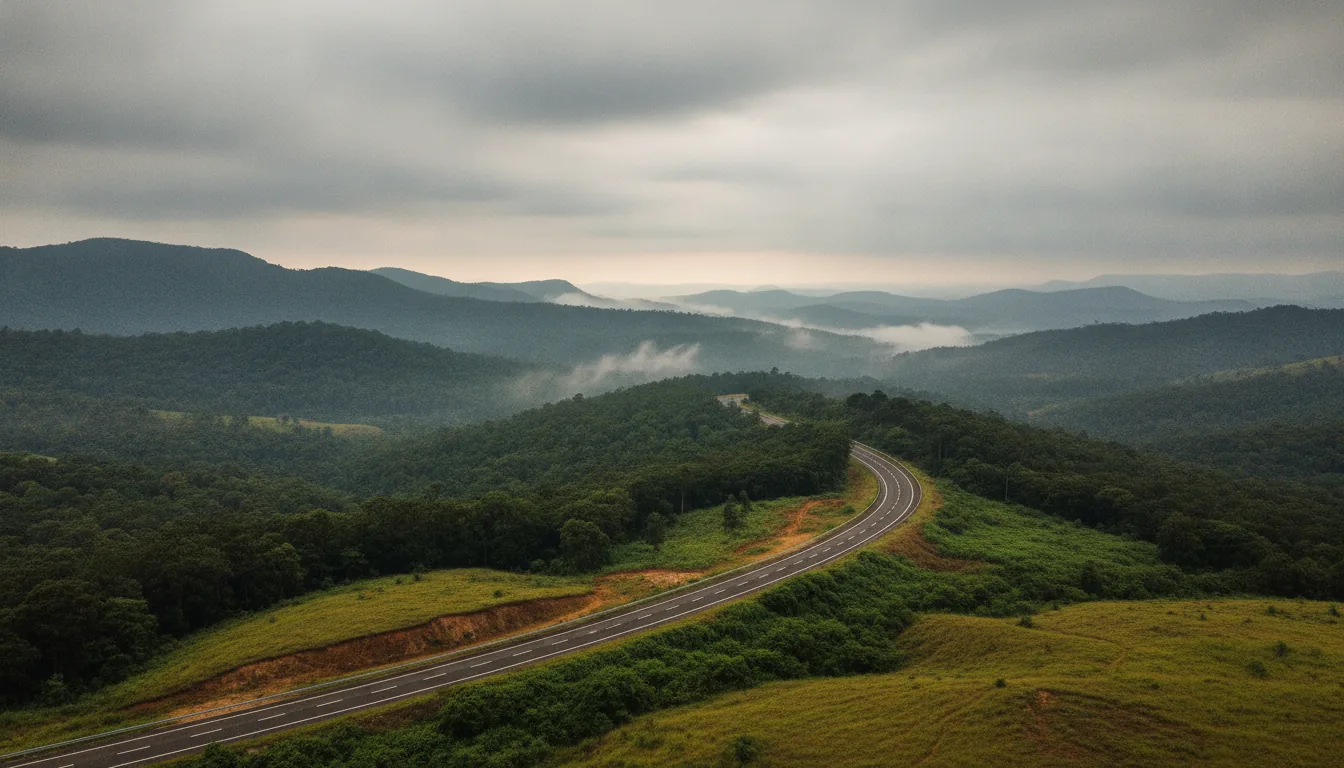
Real coffee country starts about four and a half hours west of the city. Search for a coffee plantation near Bangalore and you will find everything from farm-visit days on the city’s edge to full estates in the hills, all under the same few words. This guide sets out where the nearest coffee estate land actually is, how the three hill belts compare on the drive, and what owning a piece of it looks like.
The short answer
The nearest coffee plantation near Bangalore sits in the Belur-Sakleshpur belt of Hassan district, about 220 to 240 km away on NH75. Chikkamagaluru is about 245 to 250 km out, and Kodagu, still widely called Coorg, about 255 to 270 km. All three belts sit in the hills of the Western Ghats, and Euphora, in Belur-Sakleshpur, is the estate Acres Community has opened today.
At a glance
- Closest belt to the city – Belur-Sakleshpur, about 220 to 240 km, roughly 4.5 to 5.5 hours on NH75.
- Real coffee country – The estates are in the Western Ghats hills, not on the plains around the city.
- Visit your own land – Close enough to walk your own estate on a Saturday and be home on Sunday.
- Euphora is open now – A managed coffee, pepper and timber estate in the Belur-Sakleshpur corridor.
In this guide
Where is the nearest coffee estate land to Bengaluru
The nearest coffee estate land to Bengaluru is in the Belur-Sakleshpur belt of Hassan district, about 220 to 240 km away on NH75. Chikkamagaluru follows at about 245 to 250 km, and Kodagu at about 255 to 270 km to Madikeri.
| Belt | District | Approx. distance from Bengaluru | Approx. drive | Main road corridor | Elevation (Coffee Board) | Rainfall (Coffee Board) | Coffee grown | What Acres has here |
| Belur-Sakleshpur | Hassan | About 220 to 240 km | About 4.5 to 5.5 hours | NH75 via Nelamangala and Hassan | 900 to 1,100 m (Manjarabad region) | 1,000 to 2,500 mm | Arabica and Robusta | Euphora, open now |
| Chikkamagaluru | Chikkamagaluru (Chikmagalur) | About 245 to 250 km | About 5 to 5.5 hours | NH75 to Hassan, then north | 700 to 1,200 m; 1,000 to 1,500 m on the Bababudangiris | 1,000 to 4,500 mm; 1,750 to 2,200 mm on the Bababudangiris | Arabica and Robusta | No current Acres estate. Register interest |
| Kodagu (Coorg) | Kodagu | About 255 to 270 km, to Madikeri | About 5 to 7 hours | NH275 west via Mysuru, Hunsur and Kushalnagar | 750 to 1,100 m | 1,000 to 2,500 mm | Arabica and Robusta | No current Acres estate. Register interest |
Distances are approximate road distances from central Bengaluru and vary by start point and route. Elevation and rainfall ranges are the Coffee Board of India’s figures for each growing region.
The three belts are closer to each other than any of them is to Bengaluru. They run as one stretch of hill country, the Malnad, along the Western Ghats. Sakleshpur is the shortest drive of the three, and the Belur-Sakleshpur coffee belt is where the Acres Community estate sits. For a fuller side-by-side on climate, crops and character, see our piece comparing the three coffee belts.
The distances tell you where the estates are. They do not tell you why they are there, and that is the part most listings skip.
Why are there no coffee estates right next to Bengaluru
Coffee estates sit in the hill belts because coffee needs heavy monsoon rain, shade and slope, not height alone. The Coffee Board of India records Karnataka’s coffee production in three districts only: Kodagu, Chikkamagaluru and Hassan. No other district in the state appears in its table.
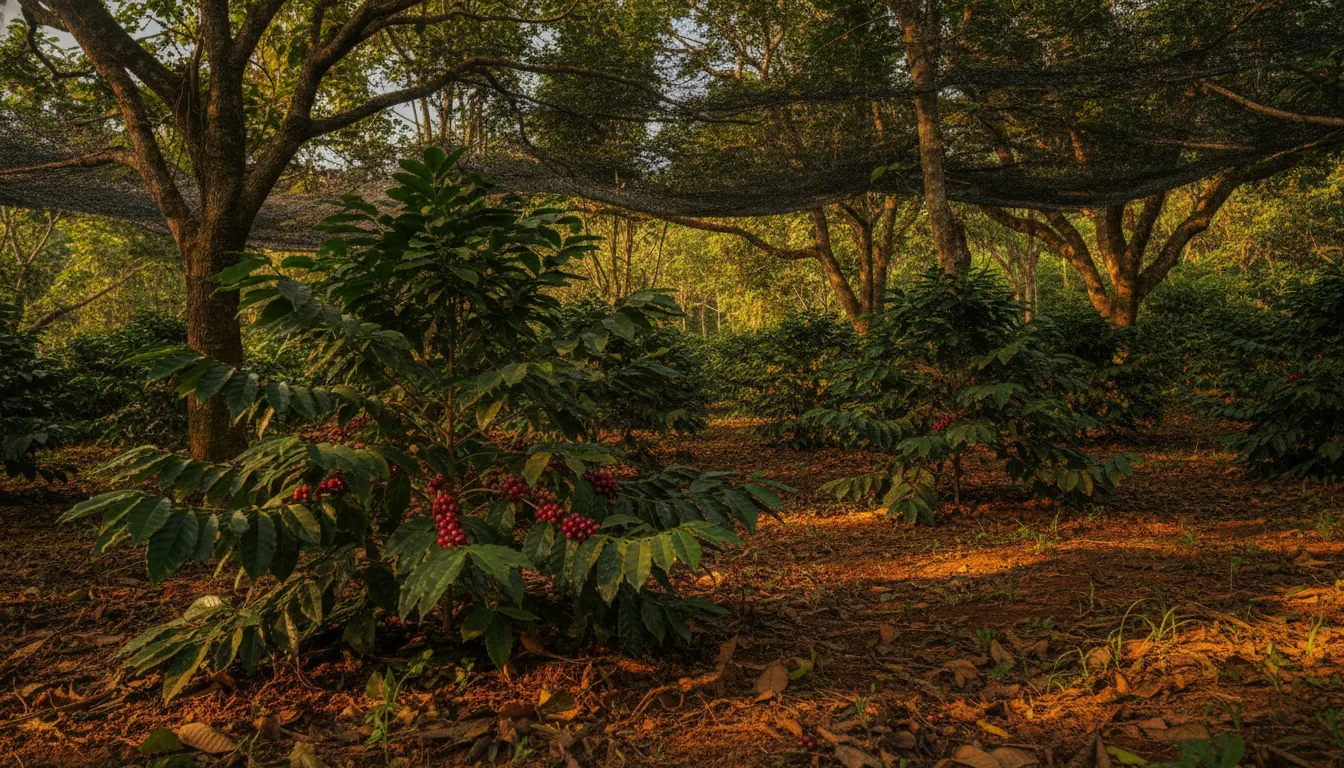
All Indian coffee is grown under a two-tier mixed shade canopy of evergreen trees, and the Coffee Board of India counts nearly 50 shade species across the country’s plantations. Arabica wants 1,000 to 1,500 m of elevation, 1,600 to 2,500 mm of rain a year and gentle to moderate slopes. Robusta sits lower, at 500 to 1,000 m on 1,000 to 2,000 mm.
Bengaluru is on the Mysore Plateau, part of the larger Deccan Plateau, at an average elevation of about 920 m. Height is not what separates the city from the belts. The rain is. Bengaluru gets roughly 1,000 to 1,100 mm a year, well short of what Arabica needs, and the plateau has none of the forest shade the Ghats carry.
A few farms on the city’s edge do grow coffee, usually as part of a farm visit, and those are real coffee plants on real land. They are not coffee estate countries. It is also why there is no coffee estate land within about 100 km of Bengaluru, even though “near Bengaluru” gets used loosely in listings. Ask for the district and the belt and the distance becomes clear. For the state-wide view of what is actually on the market, start with our guide to coffee estates for sale in Karnataka.
Once the land is settled as hill country, the road becomes the real question.
What is the drive like to each coffee belt
Each belt is a half-day drive west of Bengaluru on one of two corridors. Sakleshpur and Chikkamagaluru both run out on NH75 through Nelamangala and Hassan. Kodagu runs south-west on NH275 through Mysuru, Hunsur and Kushalnagar to Madikeri.
- Sakleshpur: NH75 via Nelamangala and Hassan. About 4.5 to 5.5 hours.
- Chikkamagaluru: NH75 to Hassan, then north. About 5 to 5.5 hours.
- Kodagu: NH275 west via Mysuru, Hunsur and Kushalnagar to Madikeri. About 5 to 7 hours.
There is also the train. Sakleshpur has its own railway station on the Bengaluru to Mangaluru line, served by day trains such as the Gomteshwara Express and by overnight trains to the coast, so some owners take the train one way.
Our Bangalore to Sakleshpur route guide covers the turn-by-turn drive, where to stop and what the road is like in the monsoon. Once you are up there, our guide to things to do around Sakleshpur covers the rest of the weekend.
The drive matters for one reason above all. It decides how often you actually come.
How often can you visit your own estate from Bengaluru
At about four and a half to seven hours each way, any of the three belts is a two-day trip, and Belur-Sakleshpur is the shortest run. Leave Bengaluru on a Saturday morning and you can be walking your own land by the afternoon.
That rhythm only works if the land does not need you. On a managed estate it does not. The farming, the security, the roads, the fencing and the water all carry on between visits, which is what professionally managed means in practice. You come up because you want to, not because something has gone wrong while you were away.
It is a different relationship with the hills than a booking. You are not a guest with a checkout time, and the gate is yours. That shift is the move from visiting to owning, and the distance is what makes it repeatable instead of annual.
So what exactly do you own when you own a managed half-acre?
What does a managed half-acre near Bangalore actually give you
A half-acre of managed coffee estate is a properly registered piece of land in your own name, with its own land record. Managed means the estate is run for you: farming and crop care, security, roads, fencing and water, and a dedicated relationship manager.
Half an acre is the minimum. Larger parcels are available, and our piece “5 acres or 50” walks through how owners think about size. The crops are coffee, pepper and timber, worked as one estate rather than as separate smallholdings, which is how a managed coffee estate works.
The ownership itself is ordinary land ownership. You can sell your half-acre independently, with the company holding first right of refusal. It passes to your family as land, not as a share in a company.
Which leaves the practical question.
Is there a coffee estate for sale near Bangalore right now
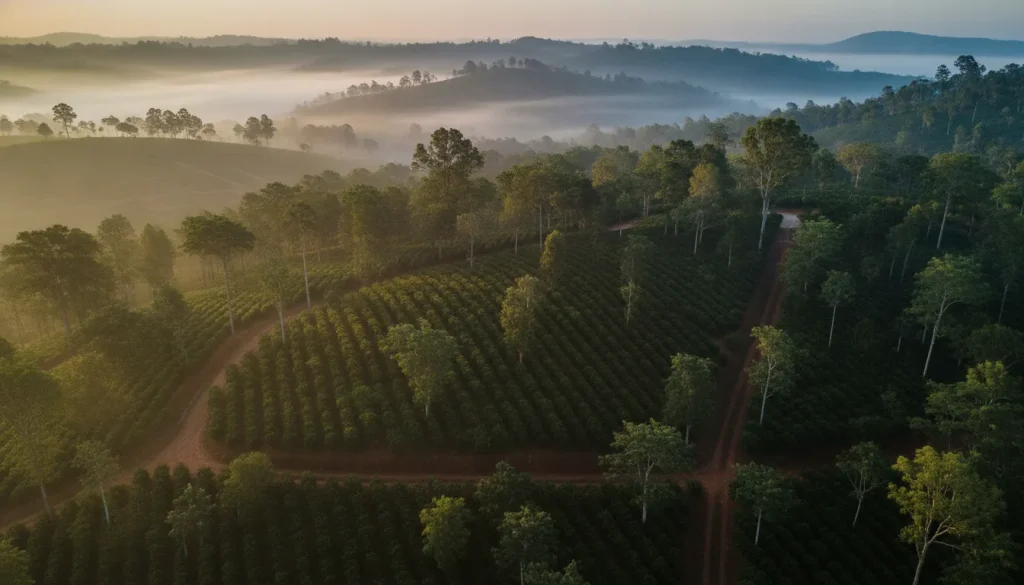
Yes. Euphora is a 17-acre managed coffee, pepper and timber estate in the Belur-Sakleshpur corridor of the Western Ghats, the belt closest to Bengaluru. Owners buy a half-acre of managed coffee estate or more, each parcel registered in their own name.
Euphora, our managed coffee estate in Sakleshpur, is the project Acres Community is selling today. If you want to read the belt before the estate, our page on coffee land for sale in Sakleshpur covers what is on the market across Hassan district.
Acres Community has no estate on sale in Chikkamagaluru or Kodagu at present. If one of those belts is where you want to be, register your interest and we will come back to you when there is something to show. In the meantime, our guides to Chikmagalur coffee country and owning a piece of Kodagu cover both belts, and our pages on land for sale in Chikmagalur and land for sale in Coorg cover what is listed there.
Enquire for current pricing, book a site visit to Euphora, or register interest for Chikkamagaluru or Kodagu.
Coffee estates near Bengaluru – common questions
Where is the nearest coffee estate to Bangalore?
The nearest coffee estate land to Bangalore is in the Belur-Sakleshpur belt of Hassan district, about 220 to 240 km out on NH75. There is no coffee estate within about 100 km of the city. Chikkamagaluru and Kodagu both lie further west.
Where are the major coffee-growing areas in Karnataka?
Karnataka’s coffee comes from three districts: Kodagu, Chikkamagaluru and Hassan. The Coffee Board of India’s district table lists no others for the state. All three sit in the Western Ghats hill belts, west and north-west of Bengaluru.
Which district in Karnataka is the largest producer of coffee?
Kodagu. The Coffee Board of India’s post-blossom estimate for 2026-27 puts Kodagu at about 1,31,420 MT, ahead of Chikkamagaluru at about 1,02,155 MT and Hassan at about 45,700 MT. Those three districts account for all of Karnataka’s recorded coffee production.
Is Karnataka the largest producer of coffee in India?
Yes. The Coffee Board of India’s post-blossom estimate for 2026-27 puts Karnataka at about 2,79,275 MT against an all-India total of about 4,04,000 MT. That is close to 70 percent of the country’s coffee, so no other state is near it.
Where was the first coffee plantation located in Karnataka?
The Bababudangiris, in Chikkamagaluru district. The Coffee Board of India calls the range the birthplace of coffee in India. The hills run between about 1,000 and 1,500 m and take 1,750 to 2,200 mm of rain a year, which suits Arabica.
Does coffee grow in Bengaluru itself?
A few farms on the city’s edge grow coffee as part of a farm visit, so a coffee plantation in Bangalore is not impossible. There is no commercial coffee estate in Bangalore. The city gets roughly 1,000 to 1,100 mm of rain a year, against the 1,600 to 2,500 mm Arabica needs.
How long is the drive from Bangalore to a coffee estate?
About 4.5 to 5.5 hours to Sakleshpur, 5 to 5.5 hours to Chikkamagaluru, and 5 to 7 hours to Madikeri in Kodagu. Times are approximate and change with where you start in the city and with traffic.
Come and see the belt closest to the city
While the world visits, you belong. Euphora is open in Belur-Sakleshpur, the coffee belt closest to Bengaluru, and a half-acre of managed coffee estate is registered in your own name. Acres Community can take you through what is available now.