Sakleshpur is a Western Ghats town in Hassan district, Karnataka, sitting on the banks of the Hemavathi river at an average elevation of 932 m, about 220 km from Bengaluru on NH75. Most lists of places to visit in Sakleshpur copy each other, disagree on how far things are, and skip the part you actually need: how to fit it all into the time you have. This guide gives you 15 spots across the Malnad (Malenadu) hills around town, where each one sits from town, an at-a-glance table, and ready plans for one day and for two.
The short answer
The headline places to visit in Sakleshpur are Manjarabad Fort, Sri Sakleshwara Swamy Temple, the Bisle Ghat viewpoint, Jenukal Gudda and Agni Gudda for hill walks, Manjehalli and Mookanamane falls for water, and the Hoysala temples at Belur and Halebidu. The things to do in Sakleshpur fall into four kinds: a fort and temples, waterfalls, hill treks and ghat views, and coffee-country drives. One day covers the town ring. Two days add either the ghats and hills or the Hoysala heritage day to the east.
Sakleshpur tourist places at a glance
Directions and approximate distances are from Sakleshpur town. Published distances for several of these spots disagree, so check the route on a map before you drive.
| Place | Where it is from town | Time needed | Best season |
| 1. Sri Sakleshwara Swamy Temple | In town, by the Hemavathi bridge | Quick stop (under 1 hr) | Year round |
| 2. Manjarabad Fort | Just outside town to the southwest, off NH75 | 1 to 2 hours | October to May |
| 3. Hemavathi riverfront in town | In town | Quick stop (under 1 hr) | Year round |
| 4. Agni Gudda | West of town, near Agani village | Half day | October to May |
| 5. Manjehalli Falls (Abbi Falls) | Out of town, a short walk from Manjehalli hamlet | Half day | Post-monsoon |
| 6. Magajahalli Falls (Hanbal) | Northwest, about 21 km, just past Hanbal | Half day | Post-monsoon |
| 7. Mookanamane Falls | South-southwest, on the Bisle forest side | Half day | Post-monsoon |
| 8. Bisle Ghat viewpoint | South-southwest, on the road toward Kukke Subramanya | Half day | October to May |
| 9. Jenukal Gudda | West, in Hanbalu hobli, beside Bettada Byraveshwara Temple | Full day | October to May |
| 10. Bettada Byraveshwara Temple | About 35 km west-northwest | Half day | October to May |
| 11. Coffee-country drives (Hanbal, Yeslur, Belagodu) | Loops out of town in several directions | Half day | Year round |
| 12. Shiradi Ghat on NH75 | West of town, toward Mangaluru | Half day | October to May |
| 13. Chennakeshava Temple, Belur | About 37 km north-east | Half day | Year round |
| 14. Hoysaleswara Temple, Halebidu | About 50 km north-east, beyond Belur | Half day | Year round |
| 15. Shettihalli Rosary Church | East-southeast, toward Hassan | Half day | Summer, to walk out to it |
In this guide
What is Sri Sakleshwara Swamy Temple, and why is it the town landmark
Sri Sakleshwara Swamy Temple is the Shiva temple that gives Sakleshpur its name, standing near the Hemavathi bridge in the middle of town, a short walk from the KSRTC bus stand. It is the natural first stop on any trip here.
The temple sits inside the town itself, so you can walk to it from the bus stand or park nearby and be done inside an hour. It suits every kind of visitor, including families with small children and anyone who arrives late on a Friday night with a full Saturday ahead.
No official timing is published for the temple, so plan around daylight rather than a posted schedule, and ask locally if you want to catch a particular puja. Karnataka Tourism’s advice for the town applies here: daylight hours are best for sightseeing. From the temple it is a short drive southwest to the spot most people actually come to Sakleshpur for, the star-shaped fort on the hill.
What is Manjarabad Fort, and is it worth the climb
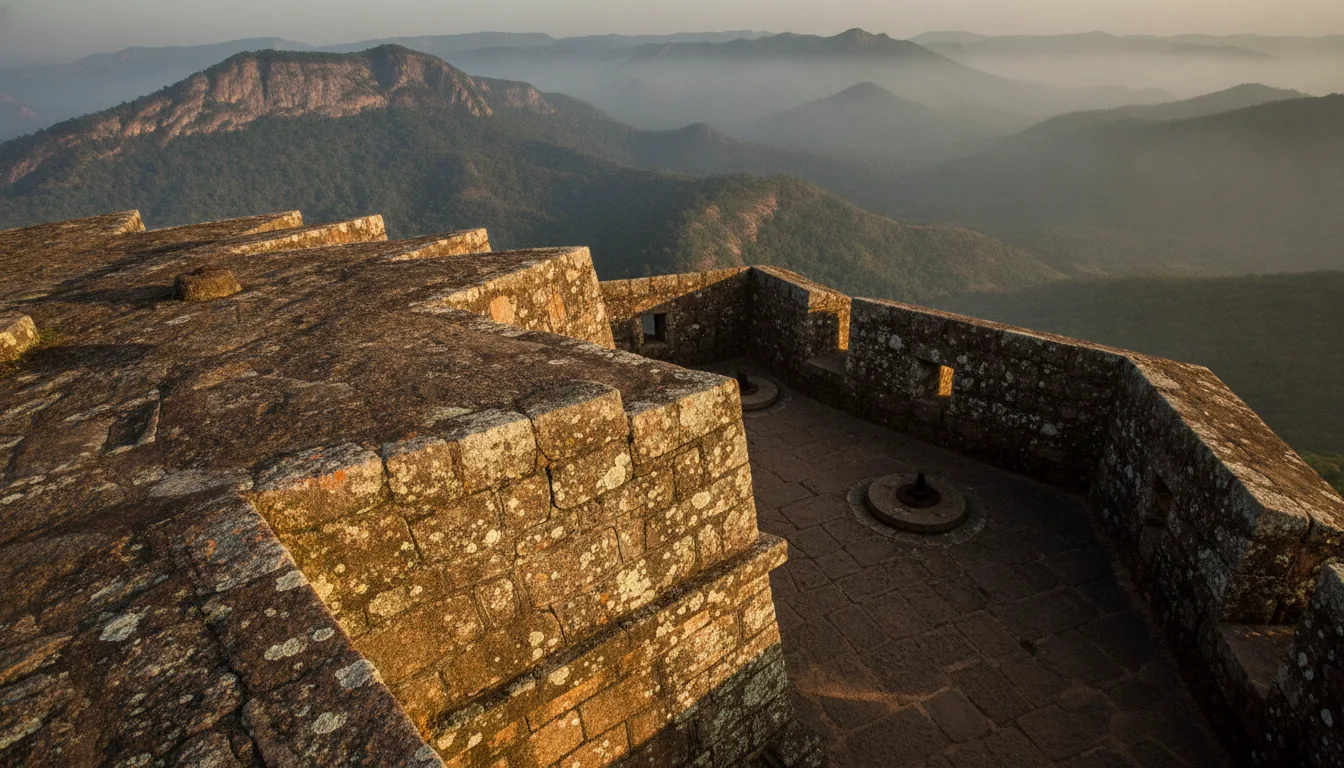
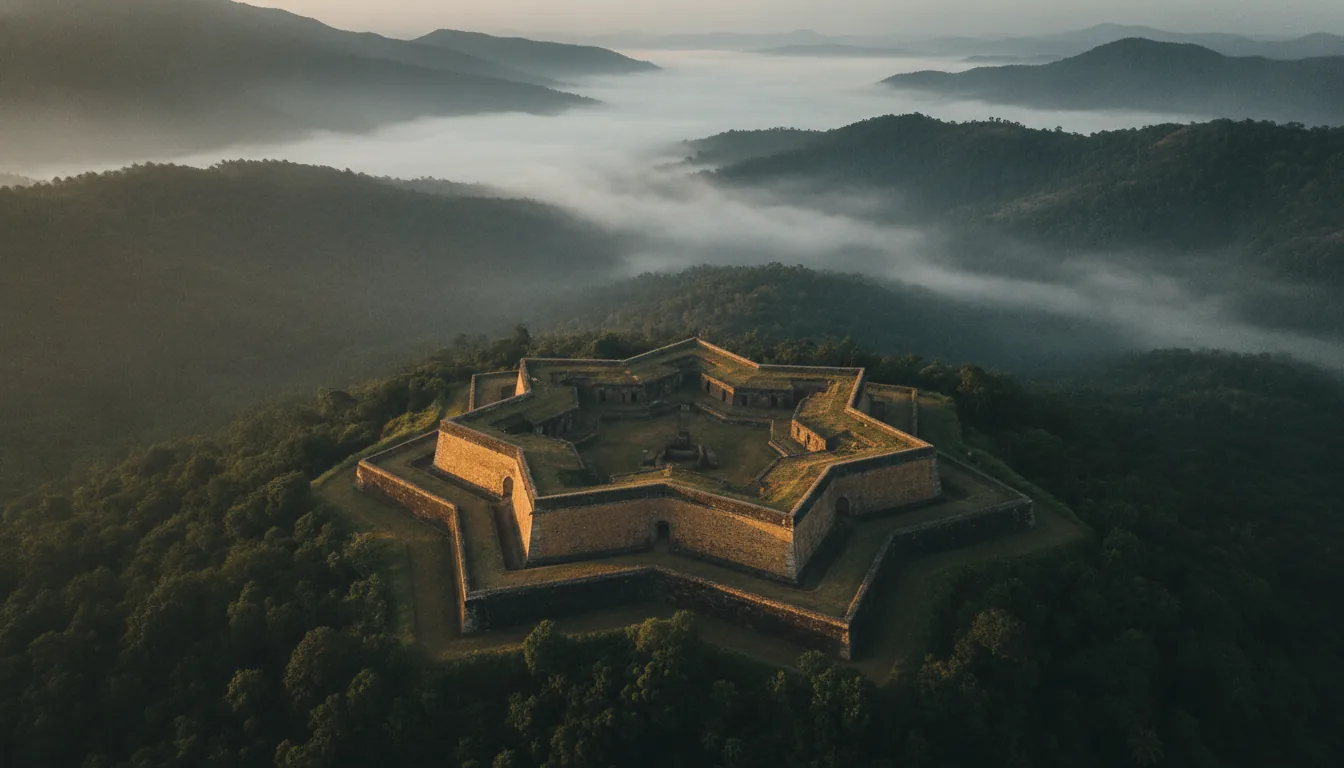
Manjarabad Fort is an eight-pointed star fort built in 1792 under Tipu Sultan, sitting on a hill at 988 m a short drive southwest of Sakleshpur town, just off NH75. Yes, it is worth the climb, and it is the most recognised sight in the area.
The design is the reason to come. The outer walls are granite and lime, laid out as an eight-pointed star, and two cellars beside a deep well inside the fort were used to store gunpowder. From the walls you look out over the Western Ghats in every direction, which is why it fills up toward sunset.
There is a stepped climb of about 250 steps from the road to the gate. It is steady but exposed, and the steps hold water through the monsoon, so wear something with grip if you are visiting between June and September. Karnataka Tourism lists the fort as open 8 am to 6 pm with no entry fee (checked Oct 2026), though some pages give a 5 pm close, so plan to be there well before late afternoon.
Our full guide to Manjarabad Fort covers its history, the climb and the parking in detail. Back in town, the river the temple stands beside is worth ten quiet minutes of its own.
What is there to do at the Hemavathi riverfront
The Hemavathi riverfront in Sakleshpur is a short, easy stop rather than a destination, right in town. Sakleshpur sits on the banks of the Hemavathi at the foot of the Western Ghats, and the river is visible from the bridge in the centre.
Go early in the morning, when mist is still sitting on the water and the town has not fully woken up. It suits anyone who wants fifteen quiet minutes between two bigger stops, and it works as the natural pause between the temple and the fort if you are doing the town ring.
Treat it as a viewing stop, not an activity. The river carries serious volume in the monsoon, and Sakleshpur taluk gets a lot of it: Hethur hobli recorded 4,305 mm of rain in 2022. Stay well back from the bank between June and September.
The Hemavathi returns twice more on this list, once at Shettihalli where a church stands in its reservoir, and once as the river the whole district is shaped around. For now the next stop goes up, to one of the best-known hill walks in the taluk.
How hard is the trek up Agni Gudda
Agni Gudda is a trekking hill west of Sakleshpur town, near Agani village, listed by Karnataka Tourism among the main draws here. Outlook Traveller calls the terrain rugged and the trek a bit challenging, so treat it as a half-day effort rather than a stroll.
Published distances for Agni Gudda vary widely from one list to the next, and that is the difference between a pre-breakfast walk and half a day gone. Drop a pin on Agani village and check the drive on a map before you set out.
It suits reasonably fit walkers and older children. Karnataka Tourism’s window of October to May applies: the grass is high and the rock is slick through the monsoon, and most treks in the area are beginner level but still unmarked.
Before you go, ask in town whether a forest permit is needed. Karnataka’s official forest trekking portal is Aranya Vihaara (aranyavihaara.karnataka.gov.in), and it is worth checking there too. The same caution applies to the bigger hill further down this list, and our Sakleshpur trekking guide covers route detail for both. First, water.
Is Manjehalli Falls (Abbi Falls) worth the detour
Manjehalli Falls, also called Abbi Falls, is a waterfall listed by Karnataka Tourism, outside Sakleshpur town and reached by a short walk from Manjehalli hamlet. It is worth the detour after the monsoon, when the flow is full, and it is the easiest of the three waterfalls on this list to reach.
Published distances for this one vary from list to list, so set the pin on a map before you drive rather than trusting a copied figure.
Muddie Trails warns of slippery rocks and strong flow in the monsoon, and that warning is the whole safety story here. Waterfalls in this belt are at their best post-monsoon, when the water is still high but the rocks are no longer under it.
One naming caution. The Abbi Falls near Sakleshpur is not Coorg’s Abbey Falls, and at least one popular Sakleshpur list mixes the two up. “Abbi” simply means waterfall in Kannada, and the word is attached to more than one fall around here. If a blog gives you a route to “Abbey Falls” from Sakleshpur, check which district it is actually in before you drive. The second waterfall sits out toward the coffee villages.
Where is Magajahalli Falls, and how is it different from Manjehalli
Magajahalli Falls is a waterfall listed by Karnataka Tourism, northwest of Sakleshpur town, about 5 km beyond Hanbal and roughly 21 km from town. It is listed separately from Manjehalli Falls, though several travel pages treat the two as one.
Treat the name carefully. Karnataka Tourism lists Magajahalli and Manjehalli as two separate falls, but the spellings are close enough that one map pin can end up serving both. If you are planning both into a single day, confirm on the map that you are looking at two different pins.
The falls sit near Hanbal, which is coffee village territory rather than a tourist strip, so the drive out is half the point. Go post-monsoon for flow, and give it a half day with the drive included.
Our Hanbal village guide covers the village and the estates around it. The third waterfall lies in the opposite direction, south toward the Bisle forest.
What is Mookanamane Falls like
Mookanamane Falls lies south-southwest of Sakleshpur town, in the forest country on the road toward Bisle, which makes it the quietest of the three waterfalls on this list. It pairs naturally with the Bisle Ghat viewpoint further along the same side of the taluk.
Because it sits off the main sightseeing circuit, it rarely carries the crowd that the fort pulls at sunset. That is its appeal and also its risk: less infrastructure, fewer people around if something goes wrong, and no official notice board telling you what the water is doing.
Go post-monsoon, keep off wet rock, and pair it with the Bisle Ghat viewpoint so one drive covers both. The wildlife caution for the Bisle forest applies here too, so keep to daylight.
That is the water on this list. The next three entries go higher, into the ghat section, where the view stops being about a single spot and starts being about the whole range.
What can you see from the Bisle Ghat viewpoint
From the Bisle Ghat viewpoint, south-southwest of Sakleshpur town on the road toward Kukke Subramanya, you look across three districts at once: Hassan, Kodagu and Dakshina Kannada. The ranges in view include Pushpagiri, also known as Kumara Parvatha, at about 1,712 m, along with Dodda Betta, Patta Betta and Enni Kallu. The forest department built the viewing platform there.
The platform is about 5 km west of Bisle village, which means the last stretch is a forest road rather than a highway. Outlook Traveller describes it as scenic though a bit uneven, and that is the right expectation to set.
This is also the one stop on the list with a real wildlife caution. Karnataka Tourism names elephants, bison, sambar and wild boar in the Bisle forest. Do not walk the road at dawn or dusk, do not get out of the car to photograph animals, and do not plan this as a late-evening stop.
Published figures for the drive disagree, so check it on a map before you set off. Our Bisle Ghat viewpoint guide covers the platform and the road in. The biggest hill walk in the taluk sits in a different direction, to the west.
Is Jenukal Gudda a full-day trek
Yes. Jenukal Gudda rises west of Sakleshpur town, in Hanbalu hobli, to about 1,380 m, the highest point in Hassan district. The trek starts close to Bettada Byraveshwara Temple, and Outlook Traveller rates it moderately challenging. Plan a full day, not an afternoon.
Published distances for the drive out vary more than for any other spot on this list, so set the pin before you leave. You will also see Jenukal Gudda called the second highest peak in Karnataka on several pages. It is not: Mullayanagiri, Kudremukh and a good number of other Karnataka peaks stand higher.
It pairs with Bettada Byraveshwara Temple next door, and most people do the two together as one long day out. Go October to May. As with Agni Gudda, ask locally whether a forest permit is needed rather than assuming.
Our Sakleshpur trekking guide carries the route details. The temple next door is the easier half of the day.
What is special about Bettada Byraveshwara Temple
Bettada Byraveshwara Temple sits on a hilltop about 35 km west-northwest of Sakleshpur town, right on the Hassan and Chikkamagaluru district border, with its listed address at Maragunda, Mudigere. A motorable road runs almost to the top, and a 2.5 km stepped climb is the alternative for anyone who wants to walk it.
The road is what makes this one unusual. Most hilltop temples in the belt mean a climb, but here you can drive almost the whole way, which puts a Western Ghats hilltop within reach of grandparents and small children on the same trip.
An annual Abhishek is held here in January, and that is the one date in the year worth planning around if you want the temple at its busiest. No official daily timing is published, so treat daylight as the window.
Pair it with Jenukal Gudda next door if you have a full day and the legs for a trek. Otherwise it works on its own as a half-day drive. From here the roads run back through the part of Sakleshpur with no ticket, no gate and no viewpoint sign: the coffee itself.
Can you drive through Sakleshpur’s coffee country
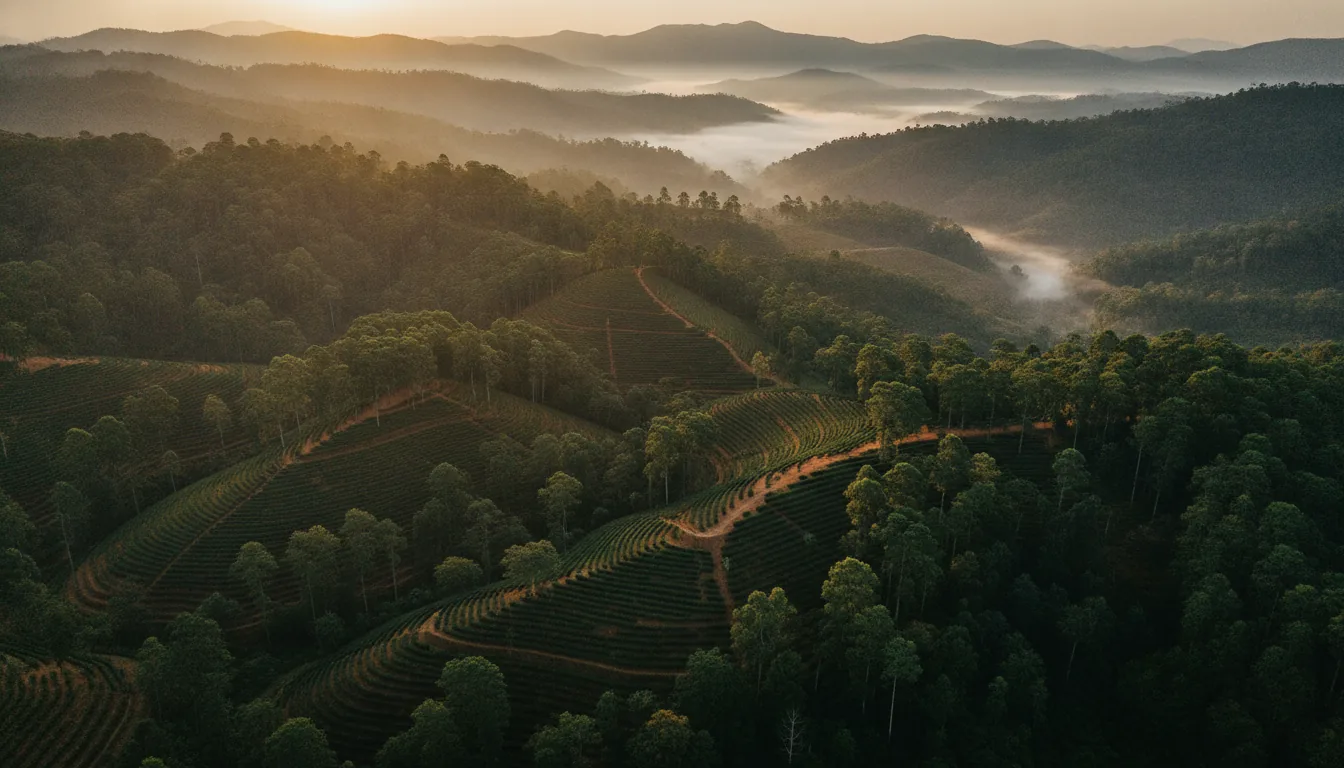
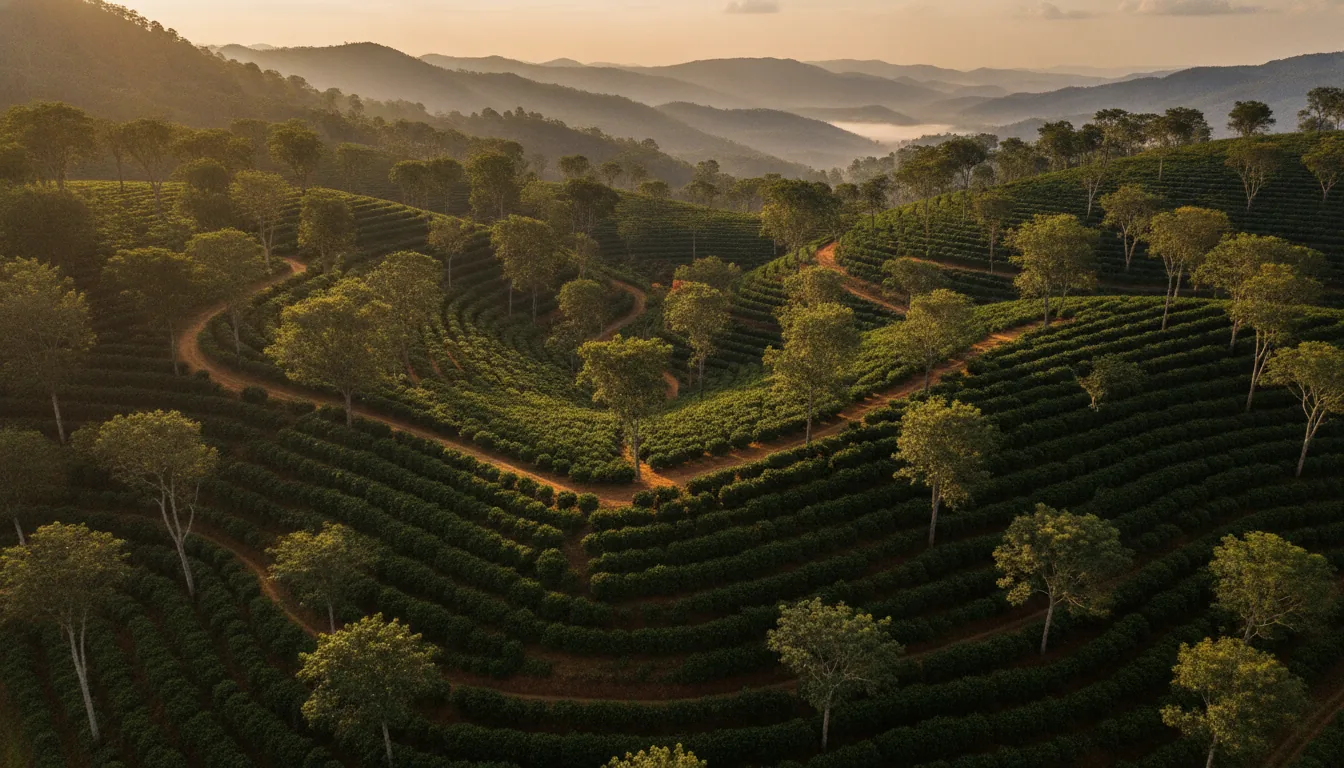
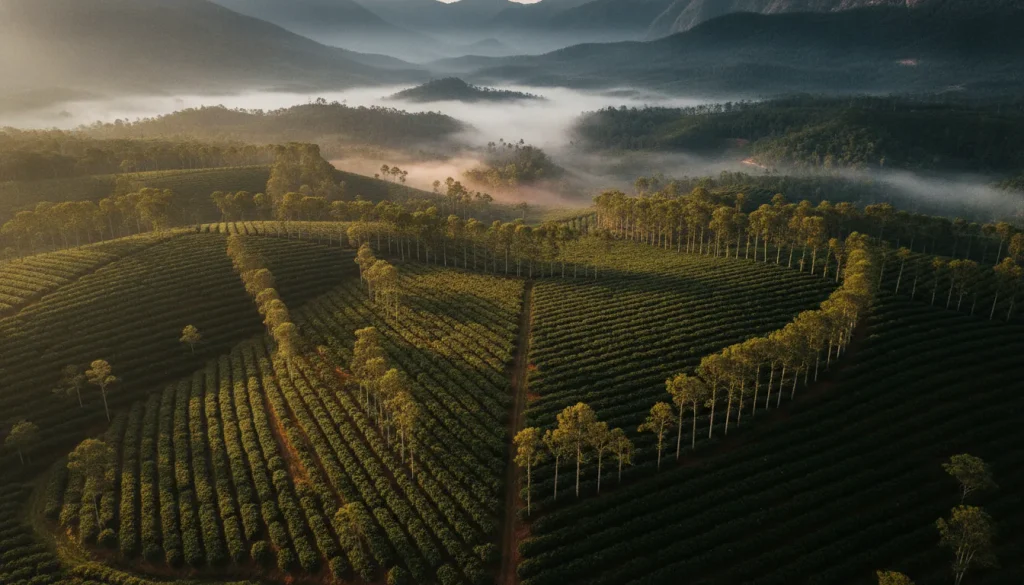
Yes. Coffee and spice plantations are one of Karnataka Tourism’s highlighted Sakleshpur experiences, and the roads through Hanbal, Yeslur and Belagodu run between them. The plantations are private land, so the drive is the experience and the gate is where it stops.
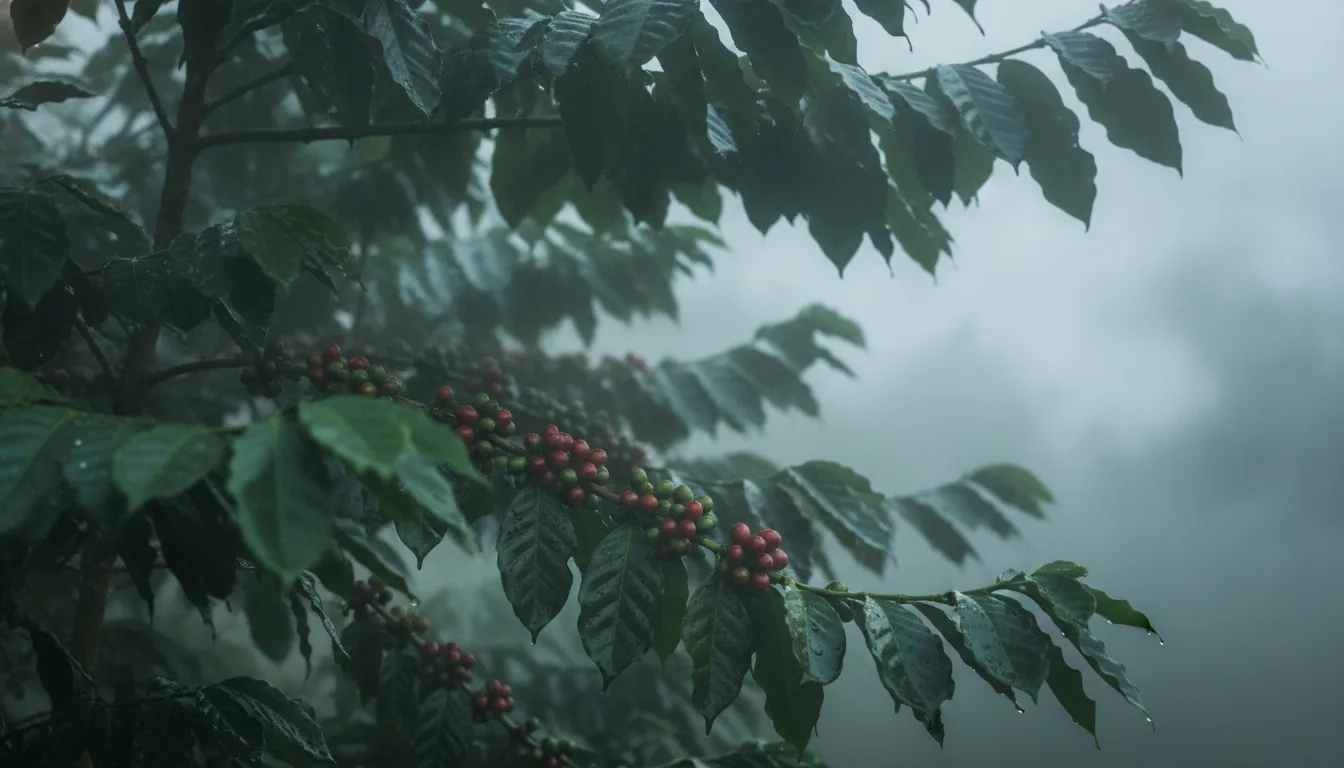
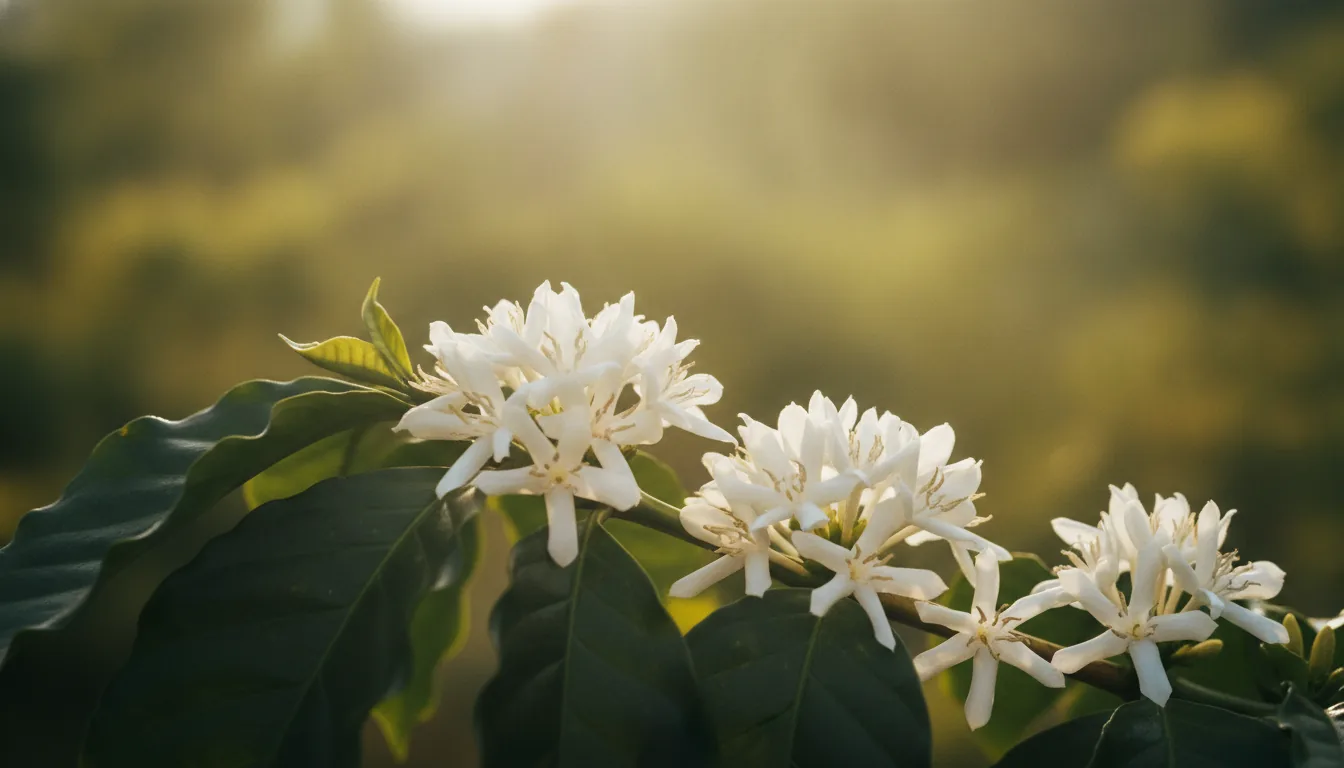
The Malnad belt around Sakleshpur grows coffee, black pepper, cardamom, cinnamon and areca nut, often on the same holding, which is why the drive smells different in different months. Shade trees, pepper vines on the trunks and coffee underneath are the pattern you will see repeating for kilometres.
One rule matters here. Every plantation you pass is someone’s working land and often someone’s home, so enjoy it from the public road and do not walk in for a photograph without being asked in.
If you want to understand what you are driving past, our piece on Sakleshpur’s coffee heritage covers why this belt grows what it does, and our guide to coffee, pepper and timber crop care covers how a working estate is run through the year. Our guide to Sakleshpur coffee estates maps the belt itself.
Our Hanbal village guide and our piece on the coffee villages of Yeslur and Belagodu go deeper into the villages themselves. The most dramatic drive in the area is not a plantation road at all. It is the highway west.
Is the Shiradi Ghat drive on NH75 worth doing
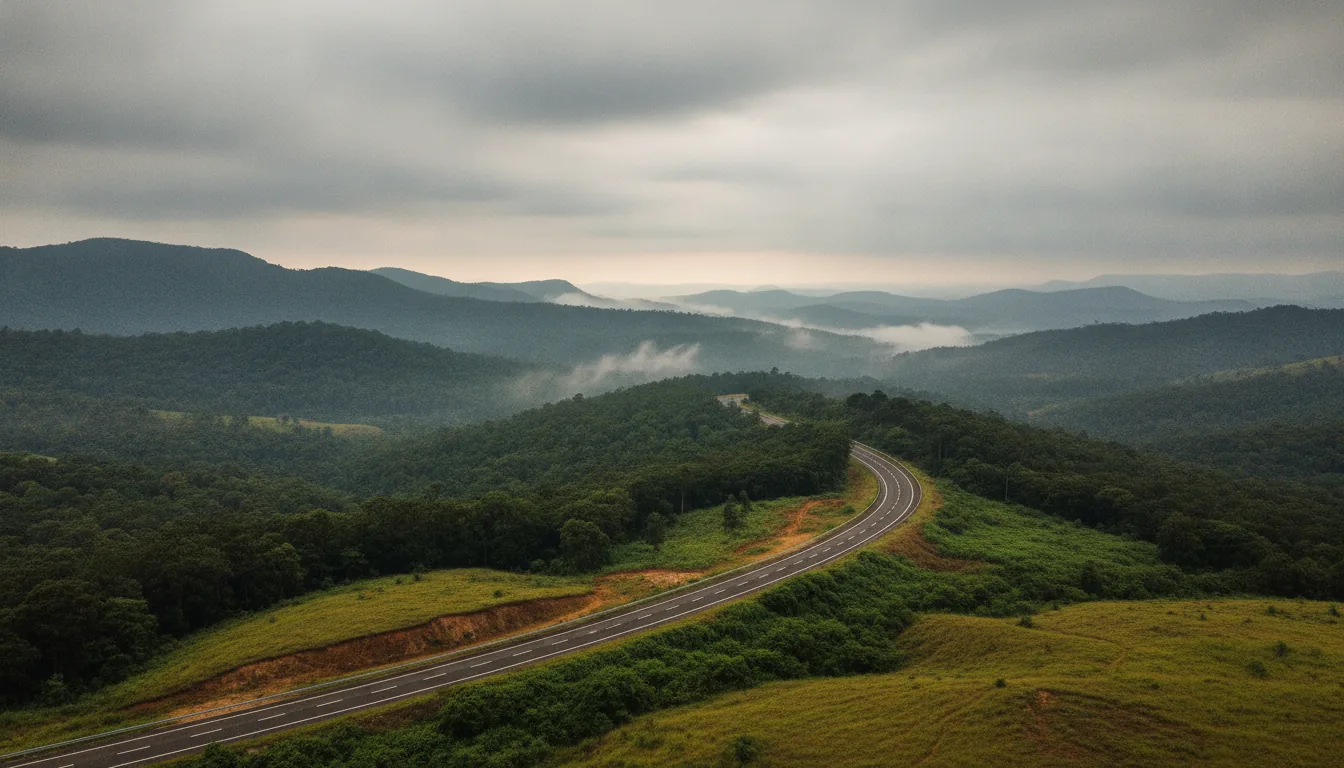
Shiradi Ghat is a ghat section of roughly 35 km on NH75, running from Marana Halli to Adda Hole through the Western Ghats on the Bengaluru to Mangaluru route. It is worth driving for the descent itself, and Sakleshpur sits at the top of it.
Sakleshpur’s position on NH75 is why the town became a stop in the first place. The highway runs through it, and west of town the road begins its drop toward the coast through dense forest, with the ghats closing in on both sides.
Treat this as a drive, not a destination with a parking lot. There is no single viewpoint to aim for, and the road’s condition changes through the year, especially in the monsoon, so check locally on the day.
Out and back from town is a half day, and October to May is the comfortable window. Head east instead of west, and the road takes you out of the ghats and into something completely different: two of the finest temples in India.
Why is Chennakeshava Temple at Belur a must-see
Chennakeshava Temple at Belur, about 37 km north-east of Sakleshpur town, was built in 1117 CE under King Vishnuvardhana and is part of UNESCO’s Sacred Ensembles of the Hoysalas, inscribed in 2023. It is the biggest heritage draw near Sakleshpur.
The reason to go is the carving. Hoysala temple work is dense, figurative and done at a scale that does not photograph well, which is why so many travel pages mention Belur without telling you anything about it. You need to stand in front of it.
Belur is in Hassan district, the same district as Sakleshpur, and our explainer on which district Sakleshpur is in shows how the two fit together. It suits everyone, in any season, and like Halebidu it works as well in heavy monsoon as in January.
Give it half a day with the drive, or a full day if you are adding Halebidu, which is the usual pairing. Confirm opening hours locally before you go. Our Belur Chennakeshava temple guide goes deeper. Its twin sits a short drive further east.
What should you see at Hoysaleswara Temple, Halebidu
Hoysaleswara Temple at Halebidu, about 50 km north-east of Sakleshpur town beyond Belur, was built in 1121 CE and founded by Ketamalla Dandanayaka. The Archaeological Survey of India lists it as “Not Ticketed” and open “Sunrise To Sunset” (checked Oct 2026).
That timing comes from the ASI’s own listing on asimustsee.nic.in, so it is the one to plan around.
Some travel sites list Halebidu as closed on Fridays. The ASI listing does not say so, but if it matters to your plan, call ahead.
Halebidu and Belur share the same UNESCO inscription and are almost always done as one day. Our guide to Halebidu’s Hoysaleswara temple has the full detail. The last stop on this list is the strangest, and whether you can reach it depends entirely on the month.
Can you visit Shettihalli Rosary Church, and when
Shettihalli Rosary Church stands in the Hemavathi backwaters east-southeast of Sakleshpur, closer to Hassan than to the town, and was built around 1860 by French missionaries. You can walk right up to it in summer, and in the monsoon you can only see it part-submerged.
The church was abandoned when the reservoir behind the Gorur dam flooded the village it served. What is left is a roofless shell sitting in water for part of the year and on dry ground for the rest.
The month decides the trip. In the monsoon the water is high and the church is partly submerged, which is the photograph everyone knows, but it also means viewing it from a distance. In summer the backwaters pull back and you can walk across the dry bed to the walls.
Because it sits on the Hassan side, it makes a natural add-on to Belur and Halebidu on the same eastward day. More of the district beyond Sakleshpur is covered in our guide to Hassan tourist places. With all fifteen placed, the question becomes how many of them fit in the time you have.
How do you plan one day in Sakleshpur
The places to visit in Sakleshpur in one day are the town ring: Sri Sakleshwara Swamy Temple, Manjarabad Fort, the Hemavathi riverfront, one waterfall and a coffee-country drive. That covers the town properly, and it works as a day trip from Bengaluru only if you leave very early.
The order that works, with stops grouped by direction rather than by fame:
- Start at Sri Sakleshwara Swamy Temple in town, early, before the heat.
- Drive southwest to Manjarabad Fort and do the climb while the light is still soft.
- Come back through town and stop at the Hemavathi riverfront for a short break.
- Head out to Manjehalli or Magajahalli Falls, whichever is easier from where you are staying, and give it the middle of the day.
- Finish on a coffee-country drive through Hanbal or Yeslur on the way back in, ending at the fort again if you want it at sunset.
With family, including small children or grandparents, cut the waterfall and add Bettada Byraveshwara Temple instead, since the road runs almost to the top and there is no climb unless you want one.
Drive times between these stops depend on the road and the season, so fix the order on a map before you set out. If one day feels tight, it probably is.
How do you plan two days in Sakleshpur
Two days in Sakleshpur means the town ring on day one, then a choice on day two: the ghats and hills, or the Hoysala heritage day to the east. Pick one direction. Trying to cover both is what breaks most two-day plans.
Day 1 – The Town Ring
Run the one-day plan above: temple, fort, riverfront, a waterfall and a coffee drive. Stay in or around Sakleshpur.
Day 2 – Choose One Direction
- Option A – The ghats and hills: Head south-west or west. Either the Bisle Ghat viewpoint with Mookanamane Falls on the way, taking the morning for the forest road and the platform, or Bettada Byraveshwara Temple paired with the Jenukal Gudda trek if you want a full walking day. Do not try to combine Bisle and Jenukal.
- Option B – The Hoysala heritage day: Head east to Chennakeshava Temple at Belur and Hoysaleswara Temple at Halebidu, and add Shettihalli Rosary Church if you are travelling in summer, when you can walk out to it.
With a third day, add the option you did not take on day two, plus the Shiradi Ghat drive west of town in the morning.
Travellers often ask whether Sakleshpur, Coorg or Chikmagalur is the better choice. They suit different trips rather than ranking against each other, and our Sakleshpur vs Coorg vs Chikmagalur comparison lays out the differences without picking a winner. Before you drive, a few things are worth knowing.
What should you know before you go
Before you go, four things matter in Sakleshpur: the monsoon makes waterfalls and hill roads dangerous, the Bisle forest has elephants, walking on the railway line is a criminal offence, and every plantation you pass is private property.
- Monsoon: The rain here is not incidental. Hethur hobli in Sakleshpur taluk recorded 4,305 mm in 2022. Karnataka Tourism’s advice is October to May for comfortable trekking weather, with rain gear from June to September, and daylight hours for sightseeing and treks. Waterfalls are at their best post-monsoon, when flow is high but the rock is walkable.
- Wildlife: Karnataka Tourism names elephants, bison, sambar and wild boar in the Bisle forest. Keep to the vehicle, avoid dawn and dusk on forest roads, and do not stop for animals.
- The railway line: You will find Sakleshpur blogs recommending a walk along the railway track toward Kukke Subramanya Road, a ghat line of about 55 km with 57 tunnels and more than 200 bridges. It is a live line. Trespassing on railway property without lawful authority is an offence under Section 147 of the Railways Act, 1989, carrying up to six months’ imprisonment, a fine up to Rs 1,000, or both. We are not giving directions for it.
- Forest permits: Karnataka’s official forest trekking portal is Aranya Vihaara. Check there, and ask in town whether Jenukal Gudda or Agni Gudda needs a permit before any forest trek.
- Private land: Coffee estates here are working farms and homes. Enjoy them from the road.
- What to wear: Shoes with grip, a layer for the evening, and rain gear from June to September.
- Getting here: There is no airport in Sakleshpur. The nearest railhead is Sakleshpur Railway Station, and buses and taxis run from Mangaluru, Bengaluru and Hassan. Bengaluru is about 220 km by road and 220 km by rail, Mangaluru is 130 km by rail, Bengaluru airport is about 240 km out and Mangaluru airport about 150 km. Karnataka Tourism’s page for the town, on karnatakatourism.org, has more.
Frequently asked questions
What is Sakleshpur famous for?
Sakleshpur is famous for Manjarabad Fort, its coffee and spice plantations, and its position in the Western Ghats on the Hemavathi river in Hassan district. The belt grows coffee, black pepper, cardamom, cinnamon and areca nut. The town itself sits at about 932 m on NH75.
Is 1 day enough for Sakleshpur?
One day is enough for the town ring: Sri Sakleshwara Swamy Temple, Manjarabad Fort, the Hemavathi riverfront, one waterfall and a coffee-country drive. It is not enough to add the Bisle Ghat viewpoint, a hill trek, or Belur and Halebidu. Those need a second day.
Which is the famous temple in Sakleshpur?
Sri Sakleshwara Swamy Temple is the famous temple in Sakleshpur. It is a Shiva temple near the Hemavathi bridge in the centre of town, and it gives the town its name. The nearest major temples beyond it are Bettada Byraveshwara on its hilltop and the Hoysala temples at Belur and Halebidu.
Is it possible to take a one-day trip from Bangalore to Sakleshpur?
It is possible but tight. Bengaluru to Sakleshpur is about 220 km by road on NH75, so a same-day return leaves you only a few hours in town, enough for the temple and Manjarabad Fort and little else. Our guide on how to get from Bangalore to Sakleshpur has the full route.
What is the best time to visit Sakleshpur?
October to March is the best time to visit Sakleshpur for clear, comfortable weather, and Karnataka Tourism’s window for trekking runs October to May. Carry rain gear from June to September. Waterfalls are at their best post-monsoon, and Shettihalli Rosary Church is only walkable in summer. Our guide to Sakleshpur weather month by month has the details.
Coffee country you can own – Euphora, a half-acre of managed coffee estate in the Belur-Sakleshpur belt
Everything above is a place you visit and then leave. Some people who make this drive a few times start asking a different question: what would it take to own a piece of it?
Euphora, our managed coffee estate, is a working coffee, pepper and timber estate in the Belur-Sakleshpur belt, sold as half-acre units, each one properly registered in the buyer’s own name with its own land record. Half an acre is the minimum and larger parcels are available. Managed covers the farming and crop care, the security, the roads, fencing and water, and a dedicated relationship manager for each owner. While the world visits, you belong.
For more on the belt and on ownership, see our guides to coffee estates for sale in Sakleshpur and across Karnataka, what a weekend at your own coffee estate looks like, and why urban Indians are choosing to own coffee country rather than just visit it. Enquire for current pricing.