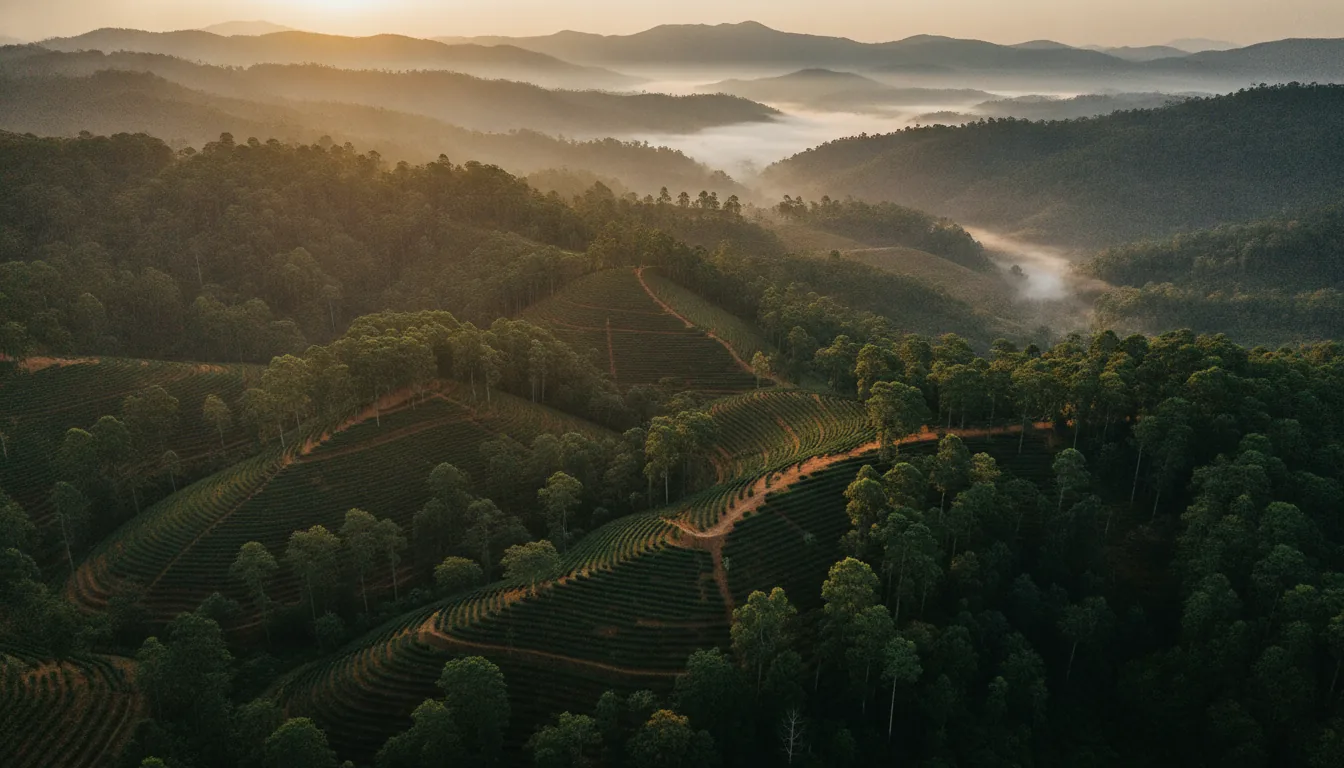

You have found an estate that feels right. The coffee, the pepper vines, the timber, the quiet of the Western Ghats. Now a practical question sits between you and it: what actually happens next, and how long until the land is legally yours?
This page walks the real Karnataka buying process in order, from your first enquiry to the day your name sits on a registered title deed and in the land records. No jargon, no pricing, no guesswork. Just the sequence, so nothing about ownership feels uncertain.
DIRECT ANSWER
Owning a coffee estate in Karnataka follows a set order: you enquire, visit the estate, then book it. A sale deed is drafted and registered in your name at the Sub-Registrar’s Office. Finally, mutation updates the land records so the estate officially shows as yours.
Table of Contents
How does the buying process start, and what happens after I enquire
The process starts with an enquiry. You reach out about a specific estate, a relationship manager responds with its details and current availability, and together you plan a visit. Enquiry carries no commitment. It simply opens the conversation and confirms the estate is genuinely available to own.
At this first stage you are gathering clarity, not signing anything. When you enquire about Euphora, our live estate in the Belur-Sakleshpur belt, the relationship manager shares what the estate holds today: its coffee, pepper and timber, its size and its setting, and how the land is looked after week to week.
When you enquire, the first conversation is about the specific estate and how it is managed. That framing matters, and the rest of the process follows from it.
What happens during a site visit to the estate
A site visit is when you walk the actual estate. You see the coffee, pepper and timber growing, check the boundaries against the survey sketch, and understand how the land is managed on the ground. It is the step where an estate stops being photographs and becomes real land you can stand on.
You are visiting as a future owner seeing your own land, not as a guest. The relationship manager walks the estate with you, points out the survey number and boundary markers, and shows how the four parts of the managed model work in practice: agronomy, security, the roads, fencing and irrigation, and the person who keeps it all running.
On-ground checks matter here. Boundary stones, fencing lines and the survey sketch should all agree, which is why walking the land in person is part of buying well and not an optional extra.
How do I reserve or book the estate I want
After a visit, you reserve the estate through a booking or agreement to sale. This records your intent to buy and the estate’s key details, and takes it off the table while the sale deed is prepared. Any specific booking terms are confirmed directly with Acres Community, for current pricing and conditions.
A booking is the bridge between deciding and owning. It fixes which estate is yours in principle and gives both sides time to prepare the paperwork properly. From here the process moves from conversation into legal documents.
What is a sale deed, and how is the estate registered in my name
A sale deed is the legal instrument that transfers ownership from the seller to you. It is best drafted by a registered advocate, then executed and registered at the Sub-Registrar’s Office. Under Section 17 of the Registration Act, 1908, registering a property sale of this kind is compulsory.
The sale deed is the heart of the transaction. A registered advocate drafts it so the Karnataka-specific clauses, the parties, the survey details and the correct Sub-Registrar jurisdiction are all captured correctly.
Registration is not a formality you can skip. An unregistered sale deed is not admissible as primary evidence of ownership, so the registered deed is what makes your ownership stand up. The sale deed registration process is what turns an agreement into legal title in your name.
What is stamp duty, and how is it worked out
Stamp duty is the state tax paid to register the sale, with a registration fee alongside it. Both are calculated on the higher of your actual sale value or the government guidance value for that land. Guidance value can be checked, and duty paid, online through Karnataka’s Kaveri portal.
The guidance value, sometimes called the circle rate, is the government’s benchmark for the land. Duty is worked out on whichever is higher, the price agreed or that benchmark. Payment can be made online through the Kaveri 2.0 portal, Karnataka’s Department of Stamps and Registration system, or through SHCIL e-stamping.
Rates and amounts change and depend on the specifics of the estate, so treat this as how the calculation works rather than a quote. Your own advocate confirms the exact figures for your transaction. This page describes the process; it is not legal or financial advice.
Where and when does registration actually happen
Registration happens in person at the Sub-Registrar’s Office that covers the estate’s location. The parties and witnesses attend, usually for about two to four hours, and the registered deed is typically returned the same day. Registration should be completed within four months of signing the sale deed.
An appointment at the Sub-Registrar’s Office can be booked through the Kaveri portal. Physical presence is required for most sale deeds, so you or your authorised representative, the seller and the witnesses all attend on the day.
One point worth holding onto: the Sub-Registrar registers the document, but does not verify clear title. Title is checked beforehand, through the Encumbrance Certificate and the chain of previous ownership, which is why due diligence sits ahead of this step, not after it.
After registration, is the estate fully mine – What is mutation
Not quite yet. Registration transfers legal title, but your name still has to reach the revenue records through mutation. For estate land, mutation updates the RTC, the Record of Rights, Tenancy and Crops, so the government formally recognises you as the holder. Mutation is the real finish line, not registration.
This is the step buyers relax into too early. A registered deed proves the sale happened, but until mutation is done the land records may still show the previous owner. That gap can cause friction later on proof of ownership, on any future borrowing, and on resale.
For rural estate land, mutation is processed through the Bhoomi portal and the Village Accountant at the Taluk level, reaching the Tahsildar’s office. On payment of registration charges, the Sub-Registrar triggers a J-slip to the Tahsildar, which starts mutation. Apply within about ninety days of registration, and check the RTC around forty-five days in to confirm your name has appeared. Standard rural mutation usually takes roughly thirty to ninety days.
In short, registration and mutation are two different things. The registered sale deed transfers legal title; mutation updates tax and revenue records so government, banks and future buyers all recognise the ownership. For the deeper picture of what ownership and title really mean, the ownership hub goes further.
What documents will I hold as the owner
As the owner you hold the registered sale deed in your name, the updated RTC showing you as the holder, and a clean Encumbrance Certificate. Supporting papers include the survey sketch with boundaries, the latest tax-paid receipts, and the chain of title from previous owners.
Each document does a specific job. The registered sale deed is your primary proof of the transfer. The RTC, also called the Pahani, is the key Karnataka land record and, once mutated, shows you as the holder and the nature and extent of your interest.
The Encumbrance Certificate, drawn from the registration system, shows the registered transactions and any charges over the land across a period, commonly thirteen to thirty years. It shows what is registered rather than clear title on its own, which is why it is read together with the chain of title. The survey number and survey sketch fix the parcel and its boundaries.
Held together, these papers describe a freehold title in your name.
For a closer look at the documents you actually receive and what each one proves, that title deep-dive covers it in full.
How is a managed estate bought and registered
“Managed” describes the service: a professional team runs the estate for you across agronomy, security and upkeep. The purchase itself follows the same sale-deed registration and mutation steps described above, and what you own on a specific estate is set out in that estate’s title and land records.
How does Acres Community support me through the process
A relationship manager guides you through each step, from enquiry and site visit to registration and mutation. Because the estate is professionally managed, agronomy, security, roads, fencing and irrigation, ownership stays straightforward after the paperwork is done. You own the land; the day-to-day running is handled for you.
The managed model is why buying here is meant to feel clear rather than daunting. Through the steps above, one person stays with you as the point of contact. After ownership, that same managed structure keeps the estate cared for, so owning an Acres Community estate does not turn into a second job. While the world visits, you belong.
FREQUENTLY ASKED QUESTIONS
How do I start the process of buying an estate with Acres Community?
You start with an enquiry about a specific estate, such as Euphora in the Belur-Sakleshpur belt. A relationship manager shares its details and availability and arranges a site visit. There is no commitment at this stage; it simply opens the conversation.
Will the estate be registered in my name, and what title do I get?
Yes. The sale deed is registered in your name at the Sub-Registrar’s Office, giving you a freehold title. Registration of a property sale like this is compulsory under Section 17 of the Registration Act, 1908.
After registration, is the estate fully mine, or is there another step?
There is one more step: mutation. Registration transfers legal title, but mutation updates the RTC land records so your name appears there too. Apply within about ninety days, and check the RTC around forty-five days after registration to confirm it reflects you as the holder.
What documents will I hold as the owner once the process is complete?
You hold the registered sale deed in your name, the RTC updated to show you as the holder, and a clean Encumbrance Certificate. These sit alongside the survey sketch, the latest tax-paid receipts and the chain of title from earlier owners.
What does ‘managed’ mean in the buying process?
“Managed” means a professional team runs the estate for you: agronomy, security, and upkeep of roads, fencing and irrigation. The purchase follows the standard sale-deed registration and mutation steps, and a relationship manager guides you through each one.
Once you understand the process, the next step is simple
see the land. You can enquire about Euphora, our estate in the Belur-Sakleshpur belt, and arrange a visit. Enquire for current pricing and availability, and a relationship manager will take you from that first conversation through to a registered title deed in your name.
To understand what sits behind that title first, read more on what ownership and title really mean. And for later on, when the estate is yours, here is how selling or passing on your estate later works.