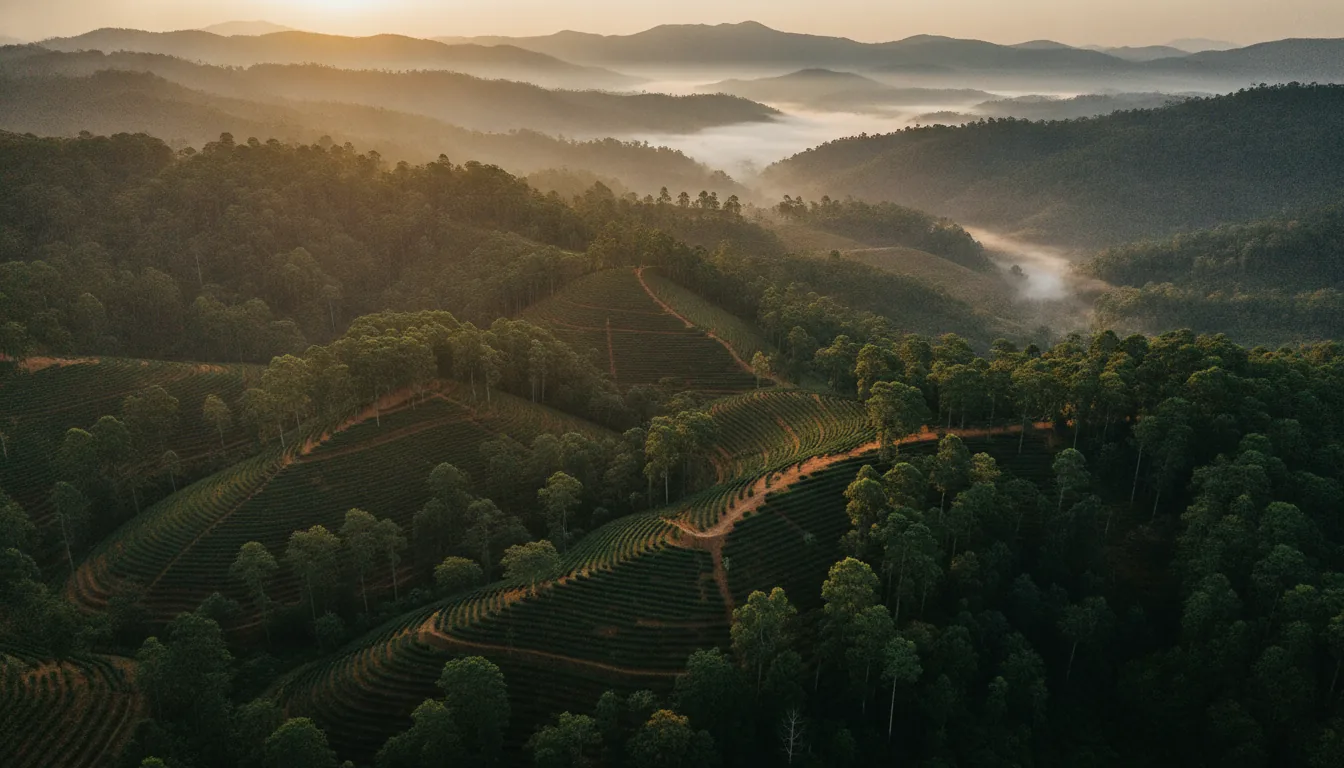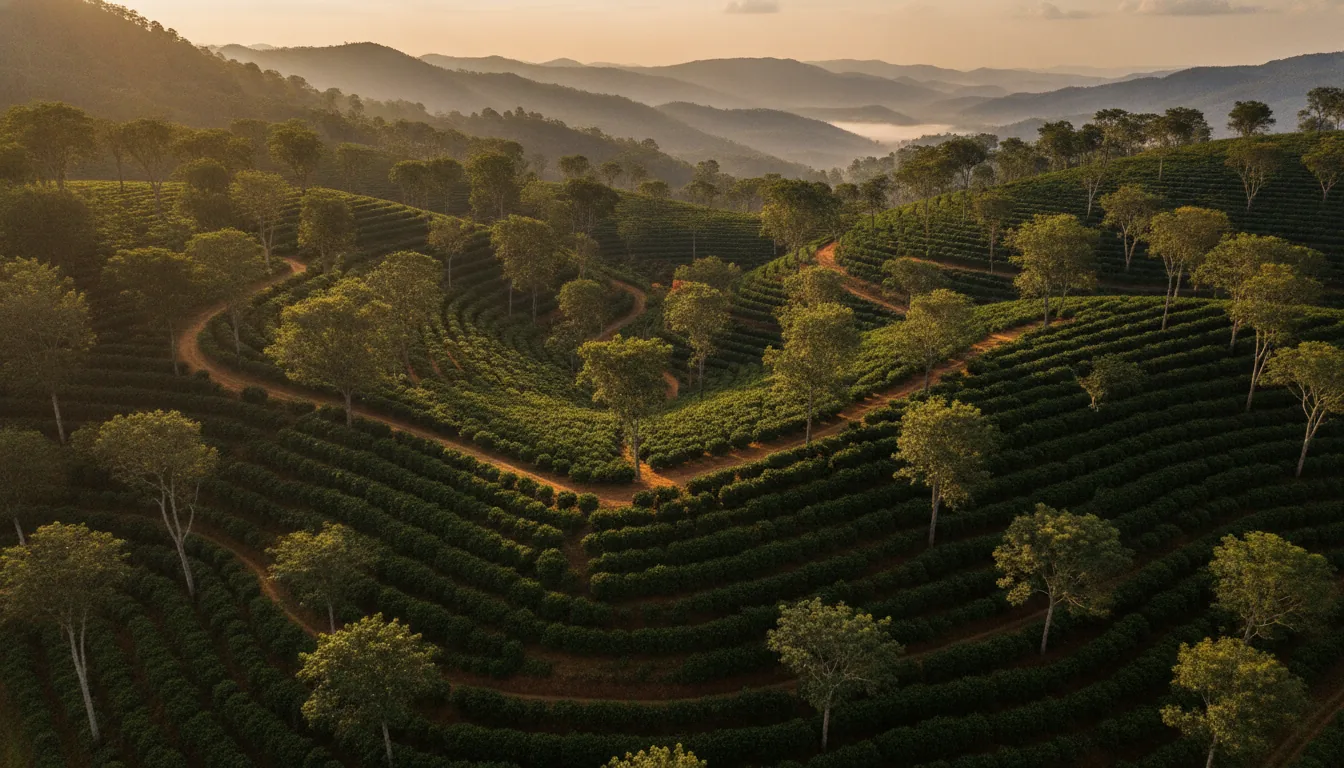

You want to own coffee country in the Western Ghats. The real choice is not where, but how: buy raw plantation land and run it yourself, or own a managed estate where a professional team runs it for you. This page sets the two side by side, in plain operational terms.
DIRECT ANSWER
The core difference is who does the work. With raw plantation land, you personally carry title due diligence, agronomy, security, fencing, roads, irrigation and every upkeep task. With a managed estate, a professional operator carries that ongoing physical work for you.
Table of Contents
What is the difference between a managed estate and raw plantation land
A managed estate is a plantation that a professional operator runs on your behalf, handling agronomy, security and upkeep. Raw plantation land is unmanaged land you buy and run yourself, carrying every task from title checks to daily labour.
The distinction this page settles is operational: who runs the land. On raw plantation land, every task is yours, from title checks to daily labour. On a managed estate, a professional operator runs the land for you, keeping the coffee, pepper and timber cultivation going in the Western Ghats. What follows is what each of those two paths actually demands, task by task, starting with everything raw plantation land asks of you.
What do you have to do yourself with raw plantation land
With raw plantation land you handle everything yourself: title due diligence, agronomy planning, hiring and supervising labour, fencing and demarcation, access roads, water and borewells, and securing the property against encroachment. The land is yours, and so is every task.
Two burdens define raw land: the buying, then the running.
On the buying side, Karnataka opened farmland to any Indian citizen when the Land Reforms (Amendment) Act, 2020 repealed Sections 79A and 79B, removing the old requirement to be a registered agriculturist. That made purchase possible, not simple. The verification still falls to you: tracing the title back through the mother deed over decades, pulling the Encumbrance Certificate, checking the RTC or Pahani and survey records, confirming legal heirs, and mutating the record into your name once the sale closes. Miss one and the ownership you paid for can be contested later.
On the running side, raw land often arrives without the basics in place. Where the seller has not built them, you arrange your own borewell and water, fencing, and access roads, and a soil test, commonly through a Krishi Vigyan Kendra, is a standard first step before planting. After that comes the part that never ends: the ongoing upkeep. Which is where the difference with a managed estate begins to show.
What does a managed estate handle for you
A managed estate hands the ongoing physical work to a professional operator. That team runs security, fence and road upkeep, irrigation and borewell servicing, and the farming cycle for coffee, pepper and timber, so you own the land without coordinating labour yourself.
Map it against the raw-land task list and the picture is clean. Every job you would personally coordinate on raw land, a managed model absorbs. The operator handles security and fence upkeep, maintains the access roads, services irrigation and borewells, and runs the day-to-day farming so the crop cycle stays on schedule. Agronomy sits at the centre of this: the soil planning, pest management and harvest care that a raw-land owner would arrange piecemeal become a continuous professional layer on a managed estate.
This is the “managed” in managed estate. In Acres Community’s model it means four things working together: agronomy, security, the physical infrastructure of roads, fencing and irrigation, and a relationship manager as your single point of contact. You can read the full picture of what a managed estate actually includes. The value is not that work disappears. It is that the work is done, by people whose job it is, whether or not you are there. Which raises the situation that makes this matter most: the owner who lives three hundred kilometres away.
What happens to a plantation when the owner lives in a city
When the owner lives in a city, unmanaged plantation land is exposed to neglect, crop decline and boundary disputes. Day-to-day supervision and labour are hard to arrange from a distance, and land can sit unused for years once active cultivation drops off.
This is the core reality for the Belonging Buyer: an urban professional or family who will visit their land, not live on it. That distance changes the risk. Rural land left unattended is more exposed to encroachment and illicit occupation than a locked apartment, and on the ground it is fencing, clear demarcation and maintained access roads that actually hold ownership. Families based in cities often stop managing rural property altogether, and parcels can sit idle for years once the active work stops.
For an absentee owner running raw land, the load is constant: labour has to be hired and supervised, irrigation kept running, fences and boundaries watched, and the crop cared for through its season, all coordinated from afar. A managed estate is the direct answer to that gap. The supervision that an absentee owner cannot provide in person is provided for them, on site, as the operator’s standing job. This is also where a fair question comes up: if someone else runs it, is a managed estate just a plot in a shared community? That question is about ownership rather than management, and the two are worth separating clearly.
Is a managed estate the same as buying a small farm plot
Management and ownership are two separate questions. “Managed” describes who runs the land: a professional operator runs it on your behalf. What you actually own on a specific estate is defined by that estate’s own title and land records, which a lawyer can verify before you buy.
Which is right for you – running it yourself or owning a managed estate
Choose raw plantation land if you want hands-on control and can be present to run agronomy, labour and upkeep yourself. Choose a managed estate if you want to own coffee country but cannot be on site daily to run it yourself.
Be honest about your own life, because that is what the decision turns on. Raw plantation land rewards presence. If you can live near the estate or visit constantly, enjoy the agronomy, and want to shape every decision, running it yourself is genuinely satisfying, and the effort is the point. The trade is real: the due diligence, the labour supervision, the security and the upkeep are yours, permanently.
A managed estate suits the owner whose life is elsewhere. If your work and family keep you in a city, if you want to belong to a real, cared-for estate rather than a maintenance project, and if the fear of land sitting neglected outweighs the wish to run it hands-on, the managed model is built for exactly that. You own coffee country in the Western Ghats, and someone whose job it is keeps it alive between your visits. While the world visits, you belong.
Frequently Asked Questions
Is it worth buying a managed estate instead of running plantation land yourself?
It is worth it when you cannot be on site to run the land yourself. A managed estate removes the ongoing burden of agronomy, security and upkeep by assigning it to a professional operator, so ownership does not depend on your daily presence. Judge it on effort and risk, not on any promise of income.
Do you have to farm the land yourself on a managed estate?
No. On a managed estate the operator runs the farming cycle, labour, security and upkeep for you. Your role is that of owner, not day-to-day farmer, which is the core reason the managed model exists for buyers who live away from the land.
What happens to a plantation if the owner can’t visit often?
Unmanaged plantation land can decline when the owner is away, with risks of neglect, encroachment and boundary disputes, and labour is hard to supervise from a distance. A managed estate covers that gap by keeping supervision, security and crop care running on site whether or not the owner is present.
Is a managed estate the same as a small plot in a farm community?
Management and ownership are separate questions. “Managed” means a professional operator runs the land for you. What you actually own on a specific estate is defined by that estate’s title and land records, which a lawyer can verify before you buy.
What do you actually own with a managed estate?
The management is a service layer, and the ownership is separate from it. What you own on a specific estate is set out in its title and land records, which sit outside this comparison.
Own coffee country without running it
Owning coffee country does not have to mean running it. If a professionally managed estate in the Western Ghats fits the life you actually lead, explore Acres Community’s managed ownership model and enquire for current availability and pricing.